Seminar Programme
We encourage visitors to give a research seminar while on La Palma. Please contact the seminar organiser (details given at the bottom) if you would like to give a presentation. We invite staff from other institutions on site to attend. These seminars take
place in our sea-level base in Santa Cruz de La Palma, on the 6th floor of Mayantigo building. Some of these seminars
are organised together with Mercator telescope.
Other institutions at the Roque de Los Muchachos Observatory organise seminars, such as TNG and NOT
or GTC, at a nearby location in San Antonio (10 min by car/bus from Santa Cruz, see next
Google map). Other seminars are organized by the
IAC in La Lagune, Tenerife, usually being broadcasted and archived using online streaming video or videoconferencing facilities. The La Palma astronomy student journal club also organises seminars.
Seminars in 2020
To be announced soon, please check later.
Past Seminars:
|
Date: Tuesday 10 March 2020
| Time: 11:00 hrs
| Place: Mayantigo building 6th floor meeting room
|
Title:
Early cluster evolution
|
Speaker, Affiliation: Prof. Dr. Pavel Kroupa, The Argelander-Institut fur Astronomie (AIfA), University of Bonn, Germany
|
|
Abstract:
Stars can be mathematically modelled as being formed as multiple systems formed at the same time in spherical embedded clusters. Observational constraints imply these to be very compact with half mass radii rh/pc = 0.1(M/Msun)^0.13 and a wide range of stellar masses M (10 to many millions). These embedded clusters need to expand within a few Myr to achieve the radii of open and globular clusters and this can only be achieved by the expulsion of a significant amount of residual gas. The stellar-dynamical processes within the embedded clusters shape the multiplicity properties of Galactic-field stars and low-mass dwarf galaxies ought to have a much higher binary fraction than massive elliptical galaxies. Massive stars, formed in the mass segregated embedded clusters, eject each other efficiently from their birth clusters. These stellar-dynamical processes may be important for the emergence of multiple populations in embedded clusters which are not older than a few Myr by modulating infalling molecular gas into the cluster along molecular cloud filaments. They result in a field-population of runaway and slow moving O stars which is largely consistent with the observed isolated O stars.
|
Slides: PDF.
Additional material:
Cluster animation 3000 stars;
Cluster animation 30000 stars
|
|
Date: Friday 21 February 2020
| Time: 10:30 hrs
| Place: Mayantigo building 6th floor meeting room
|
Title:
Juan Valderrama y Aguilar, a forgotten pioneer of the Astronomy in the Canaries
|
Speaker, Affiliation: Dr. Jorge Sanchez Almeida, Instituto de Astrofisica de Canarias (IAC)
|
|
Abstract:
Early 21st century, on a date still undetermined. A stranger leaves at the IAC library seven logbooks with astronomical
observations made more than a hundred years ago (1886-1891), in Madrid and Santa Cruz de Tenerife, by someone called Juan
Valderrama y Aguilar (JVyA). The logbooks sleep in the library for another ten years until we discovered them by chance.
We were surprised by the quality and meticulousness of the drawings that illustrate the logbooks, the fact that Juan
Valderrama's papers were cited in the ADS (Astrophysics Data System) and, above all, that the community of professional
astronomers working in the canaries had never heard of him. Could JVyA be an astronomer living in Santa Cruz de Tenerife
whose existence has remained unnoticed to the official history of the astronomy in the Canary Islands? (Science was not a
major Canarian export in those days, so, it would be like finding a needle in a haystack).
The answer to the previous question is "yes." JVyA is a complete stranger to the official history, but it has a scientific
biography worth remembering. Outside the local official science and the university environment, JVyA was, however, well
connected to the world of modern astronomy of the time. His first paper can be regarded as the first astronomy paper by
a Canarian in an international journal (Valderrama, 1886, L'Astronomie, Vol. 5, Page 388), and was published when he was
only 17. M. Vazquez Abeledo and I wrote a brief biography of JVyA that claims its figure of astronomer, which was
published by Cabildo de Tenerife in 2018. In the talk I will present JVyA as well as some of his astronomical contributions.
|
Slides: PDF
|
Seminars in 2019
|
Date: Tuesday 10 December 2019
| Time: 11:00 hrs
| Place: Mayantigo building 6th floor meeting room
|
Title:
Using Galactic Archaeology to Uncover the Formation History of S0 Galaxies
|
Speaker, Affiliation: Thomas Davison, ING and PhD student, University of Central Lancashire, UK
|
|
Abstract:
Of the many galaxy types in the universe, S0's are amongst the most mysterious. The exact mechanism of S0 galaxy formation is hotly
debated with contradictory formation methods proposed. In my most recent work, I have used the EAGLE cosmological simulations to predict
the distribution of ex-situ stellar populations within S0 galaxies. These predictions were set in context with observable parameters such
as stellar mass and surface brightness, which has allowed us to compare to observational data. By utilising recent advancements in full
spectral fitting software, I have extracted the fractions of ex-situ populations from low signal-to-noise galaxies imaged in the SDSS
survey, and calibrated these fractions using the EAGLE simulations. With a robust pipeline for extracting ex-situ populations from galaxies,
I now intend to apply the same technique to resolved S0's using MUSE IFU data, to build maps of ex-situ locations within galaxies.
Combining this information with full star-formation history (extracted during the spectral fitting process) we expect to accurately
identify the specific methods of formation for S0 galaxies.
|
Slides: PDF
Additional material:
EAGLE simulations multi component (74 MB, avi movie)
|
|
Date: Friday 29 November 2019
| Time: 11:00 hrs
| Place: Mayantigo building 6th floor meeting room
|
Title:
Extremely low-mass white dwarfs : the story so far
|
Speaker, Affiliation: Alina Istrate, Radboud University, Nijmegen, Netherlands
|
|
Abstract:
Extremely low-mass white dwarfs (ELM WDs) represent a new class of helium-core white dwarfs characterized by a mass smaller than ~0.3
Msun and with surface gravity in the range 5 < log g < 7. Today we know of the existence of more than 100 such objects, with the majority
of them found in binary systems with more massive CO WDs. From an evolutionary point of view, they are most likely the result of binary
evolution as they are not expected to form from single stars within a Hubble time. The new wealth of data raised questions regarding
some puzzling properties of these stars such as, for example, the presence of metals in the atmospheres of young bloated ELM proto-WDs
and the recent discovery of pulsations in a couple of proto-ELMs.
In this talk I will review the latest theoretical and observational efforts regarding the formation and evolution of (proto-) ELM WDs.
|
|
Date: Thursday 7 November 2019
| Time: 11:00 hrs
| Place: Mayantigo building 6th floor meeting room
|
Title:
ISIS neutron and muon source: an insight inside the materials
|
Speaker, Affiliation: Diego Alba Venero, UKRI, STFC, United Kingdom
|
|
Abstract:
The discovery of new materials is driving force in the progress of civilization.
Understanding the science behind their properties is of paramount importance for the
development of new materials which raise some extreme appealing for basic research.
At STFC ISIS laboratories we use neutrons and muons for studying the structure and
dynamics of materials of any kind, from exotic magnetic phases to drug delivery
system or planet formation.
|
Slides: PDF
|
|
Date: Friday 11 October 2019
| Time: 11:00 hrs
| Place: Mayantigo building 6th floor meeting room
|
Title:
Detecting dark matter
|
Speaker, Affiliation: Prof. Pavel Kroupa, The Argelander-Institut fur Astronomie (AIfA), University of Bonn, Germany &
Astronomical Institute, Charles University, Prague, Czech Republic
|
|
Abstract:
Neither the standard model of particle physics nor direct detection
experiments have yielded any need nor any evidence for the existence
of cold or warm dark matter particles. These are only hypothesised
to exist if general relativity is extrapolated from the Solar-system
scale to galaxies and beyond. Cases in point are the observed
non-Keplerian, flat rotation curves of disk galaxies which are the
by far dominant population of galaxies and the missing mass
phenomenon in galaxy clusters. I will discuss the possibility of
confirming the existence of such dark matter particles using
Chandrasekhar dynamical friction. Explicit test cases are the
satellite galaxies of the Milky Way, the M81 group of galaxies and
Hickson compact groups. The observed positions and motion of the
galaxies in these systems show that the action of dynamical friction
on the speculative dark matter halos is not evident in the data. The
systems behave dynamically as if the extended dark matter halos do
not exist. Thus, the orbits of the Milky Way satellite galaxies do
not seem to be decaying sufficiently with time, nor are the compact
galaxy groups merging. Corroborative evidence comes from the highly
symmetric distribution of all non-satellite galaxies in two 1.5Mpc
extended, 50kpc-thick planes in the Local Group around the axis
joining the Milky-Way and Andromeda galaxies. This symmetric
arrangement of matter on Mpc scales remains entirely unexplained by
current cosmological and dynamical theory, and is largely ignored by
the community, despite being based on the very best extragalactic
data at hand (because the involved galaxies are the nearest galaxies
to the Milky Way). Further corroborative evidence comes from the
five nearest major galaxies having three highly pronounced
disk-of-satellite systems, which together falsify the standard
dark-matter-based cosmological model with more than five sigma
confidence. The evidence thus gathered consistently and unanimously
shows that dark matter particles cannot be present. The observed
dynamics therefore cannot be Newtonian, but must, in the classical
limit, essentially be Milgromian, and cosmological theory needs a
major repositioning. As a consequence, our ability to deduce the
physics of galaxy evolution from observation is probably wrong as it
is at present based on assuming the standard cosmological model is
valid.
|
Slides: PDF
|
|
Date: Monday 7 October
| Time: 11:00 hrs
| Place: Mayantigo building 6th floor meeting room
|
Title:
The impact of bars on star formation in disc galaxies
|
Speaker, Affiliation: Prof. Phil James, Astrophysics Research Institute, Liverpool John Moores University
|
|
Abstract:
Bars have long been known to have a strong influence on galaxy evolution,
e.g. as drivers of so-called secular processes. In recent years, colleagues
and I have been studying the effect of strong bars on the spatial
distributions and overall rates of star formation within disc galaxies,
motivated by the discovery of a characteristic suppression pattern we term
the 'star formation desert'. I will describe tests of the causes and
implications of this behaviour, using both observations and computer
simulations, and its potential use in age dating bars and probing stellar
radial migration.
|
|
Date: Tuesday 10 September 2019
| Time: 15:00 hrs
| Place: Mayantigo building 6th floor meeting room
|
Title:
The systematically varying stellar IMF and some implications thereof
|
Speaker, Affiliation: Prof. Pavel Kroupa, The Argelander-Institut fur Astronomie (AIfA), University of Bonn, Germany &
Astronomical Institute, Charles University, Prague, Czech Republic
|
|
Abstract:
Some ultra-compact dwarf galaxies have large dynamical mass to light (M/L) ratios
and also appear to contain an overabundance of LMXB sources, and some Milky Way
globular clusters have a low concentration and appear to have a deficit of low-mass
stars. These observations can be explained if the stellar IMF becomes increasingly
top-heavy with decreasing metallicity and increasing gas density of the forming
object. The thus constrained stellar IMF then accounts for the observed trend of
metallicity and M/L ratio found amongst M31 globular star clusters. Since the
galaxy-wide IMF (gwIMF) is made up of the IMFs of all embedded cluster forming in a
galaxy, it becomes possible to calculate the gwIMF. This calculation shows that the
systematically varying IMF accounts for the overall shift of the observationally
deduced gwIMF from top-light to top-heavy with increasing star formation rate
amongst galaxies. This is an important self-consistency check between star
formation on pc scales and galaxy-wide stellar populations. The implications of
this for observations of extremely young very massive star-burst clusters observed
at a high redshift which may appear quasar-like will be discussed based on our
recent work (Jerabkova et al. 2017).
|
Slides: PDF
Additional material:
Cluster animation 3000 stars;
Cluster animation 30000 stars
|
|
Date: Friday 30 August 2019
| Time: 11:00 hrs
| Place: Mayantigo building 6th floor meeting room
|
Title:
Commissioning of a new ING DIMM at ORM
|
Speaker, Affiliation: MSc Student Luke Holden, ING and Sheffield University, UK
Project advisor: Neil O'Mahony, Isaac Newton Group
|
Abstract:
For a number of years, three different DIMMs have provided seeing measurements at three different locations at ORM. These include the ING's RoboDIMM near the William Herschel Telescope, the TNG'S DIMM near the Telescopio Natizional Galileo and the IAC's DIMM near the GranTeCan. In September 2018 the ING commissioned a new DIMM, 'R2D2', located in the ING DIMM tower near the WHT. R2D2 is based off of the TNG DIMM and represents an improvement over the older RoboDIMM in many ways. In this talk i'll discuss the problems we faced in the commissioning of R2D2, how we solved them and the current status of the DIMM. In addition, I'll talk about local seeing variations across the observatory site using seeing measurements from R2D2 and the other DIMMs.
|
Slides: PDF
|
|
Date: Friday 30 August 2019
| Time: 11:30 hrs
| Place: Mayantigo building 6th floor meeting room
|
Title:
Evolution of light pollution at ORM over the last decade
|
Speaker, Affiliation: MSc Student Luke Holden, ING and Sheffield University, UK
Project advisor: Dr. Chris Benn, Isaac Newton Group
|
Abstract:
The skies above ORM are amongst the darkest in the world, thanks to the strict regulation of street lights and other light sources on La Palma. This lighting mostly consists of low-pressure sodium (LPS) lamps, which narrowly emit NaD (5890/6A) doublet photons. In this talk, I will discuss the use of INT and WHT archival data to measure the evolution of the NaD line intensity over the past three decades at ORM, as well as how this intensity depends on weather conditions and position across the sky.
|
Slides: PDF
|
|
Date: Thursday 25 July 2019
| Time: 12:00 hrs
| Place: Mayantigo building 6th floor meeting room
|
Title:
Gemini Observatory: where we are now, and future prospects
|
Speaker, Affiliation: Dr. Rene Rutten, Associate Director of Chile Operations, Gemini Observatory
|
Abstract:
The Gemini telescopes have been in operation for nearly two decades, and during that time they have made a very significant impact in astronomical discoveries through innovative instrumentation combined with exploring novel operational methods. But the world of astronomy is very dynamic and new challenges are on the horizon. Two major changes are planned for the future to meet those challenges: preparing the observatory for the era of multi-messenger astronomy, and the prospect of becoming a key player in a large, new organization, the National Center for Optical-Infrared Astronomy, that will encompass several federally funded ground-based telescopes. I will highlight the current status of Gemini Observatory, and its near-term instrumentation and operational prospects. Next, I will explain our future plans to be prepared for the era of multi-messenger astronomy, and how the plans are unfolding for the new National Center that is being formed.
|
|
Date: Tuesday 11 June 2019
| Time: 15:00 hrs
| Place: Mayantigo building 6th floor meeting room
|
Title:
THELI image processing of faint dwarf elliptical galaxies observed in near infrared
| | Speaker, Affiliation: Drd. Viktoria Pinter,
The University of Craiova, Romania; ING Erasmus+ visiting student
| Abstract:
Dwarf galaxies are the most common types in the Universe. They can be separated into two main groups:
early-type dwarfs (ETD) which include dwarf ellipticals (dEs) and dwarf spheroidals (dSphs), and late-
type dwarfs (LTD) which include star forming dwarf irregulars (dIs) and blue compact dwarfs (BCDs).
As some previous work suggested that strong evolutionary links between ETDs and LTDs
(Vaduvescu and McCall, 2005) and between dEs and dSphs (Ivkovich and McCall, 2019), the aim of my
PhD thesis is to study dEs using deep near infrared imaging mainly using a few existing archives.
Upon revising the literature, my galaxy sample contains 131 dEs: 19 in the Local Volume (LV),
34 in Virgo, 48 in Coma and 30 in Fornax clusters, which probably represent a "complete" sample of
dEs in the nearby Universe. Recently we observed 11 of these LV members using the WHT-LIRIS, collecting
huge amount of data for the remaining 120 from archival images (about 5 TB).
The data mining pre-selection was made using the MASFO online tool, then using the ESO and CADC
databases to download the raw FITS images.
We used mainly THELI for the image reduction, then IRAF to solve a few problematic cases. The whole
image reduction took quite much time and needed lots of space, and we used 3 computers in this process.
To derive photometric zero-points, we used the Photometry Pipeline script written by Michael Mommert.
During this seminar I will present some THELI guidlines for succesful data reduction in NIR, the
photometry pipeline for deriving the automated zeropoint and I will show some reduced images, including
the WHT targets which probably map most deeply 11 dEs from the LV to be studied in my thesis further.
|
|
Date: Monday 6 May 2019
| Time: 11:00 hrs
| Place: Mayantigo building 6th floor meeting room
|
Title:
New Approaches to Untangle the Accretion Histories of Galaxies
| | Speaker, Affiliation: Mark. D. Norris,
University of Central Lancashire, UK
| Abstract:
I will discuss complimentary approaches to reconstruct the assembly
histories of galaxies by studying the concentrated (i.e. star cluster/UCD)
and diffuse stellar populations of their outer regions.
|
|
Date: Friday 26 April 2019
| Time: 10:30 hrs
| Place: Mayantigo building 6th floor meeting room
|
Title:
HARPS3 and the Terra Hunting Experiment at the INT
| Speakers:
- Didier Queloz
- Samantha Thompson
- John Young
- Martin Fisher
| Abstract:
The Terra Hunting Experiment consortium is currently building the High Accuracy Radial-velocity Planet Searcher 3 (HARPS3) spectrograph and will be refurbishing the Isaac Newton Telescope to enable a robotic operation. Over the next 2.5 years the project will be in an intensive manufacturing, assembly, integration and verification stage. We will also be preparing for the start of the Terra Hunting Experiment - a 10 year radial velocity survey on our nearest solar-like stars with the aim of finding "another Earth". We will present a comprehensive description of the project, including: an overview of the aims and strategies for the Terra Hunting Experiment, a description of the high resolution spectrograph HARPS3 and its software systems and the plans for the roboticization of the Isaac Newton Telescope.
|
Slides:
- HARPS3: Terra Hunting Experiment, HARPS-3 @ INTscience - Didier Queloz PDF
- HARPS3: High Accuracy Radial-velocity Planet Searcher 3 - Samantha Thompson PDF
- HARPS3: THE@INT Software Systems - John Young PDF
- HARPS3: Telescope Refurbishment Work-package - Martin Fisher PDF
|
|
Date: Thursday 31 January 2019
| Time: 11:00 hrs
| Place: Mayantigo building 6th floor meeting room
|
Title:
Cool and Luminous Outbursts from Merging Binary Stars
| | Speaker, Affiliation:
Dr Ondrej Pejcha, Charles University, Czech Republic
| Abstract:
There is mounting evidence of circumstellar material (CSM) distributed in
disks and rings around many massive stars, supernovae, classical novae, and other
interesting stellar objects. The origin of this CSM is often attributed to interactions
within a binary star system, including poorly-understood processes such as the common
envelope and stellar mergers. Recently, a connection was established between these
astrophysically critical, catastrophic binary star interactions and a group of
astronomical transients characterized by their red color and the luminosity in the gap
between novae and supernovae. I will present an exploration of the dynamics of outflows
from mass-losing binary stars and the associated menagerie of transients. I will discuss
how is the binary enshrouded in a "death spiral" outflow and how does it explain many
puzzling observed phenomena.
|
Seminars in 2018
|
Date: Monday 10 Dec 2018
| Time: 14:00 hrs
| Place: Mayantigo building 6th floor meeting room
|
Title:
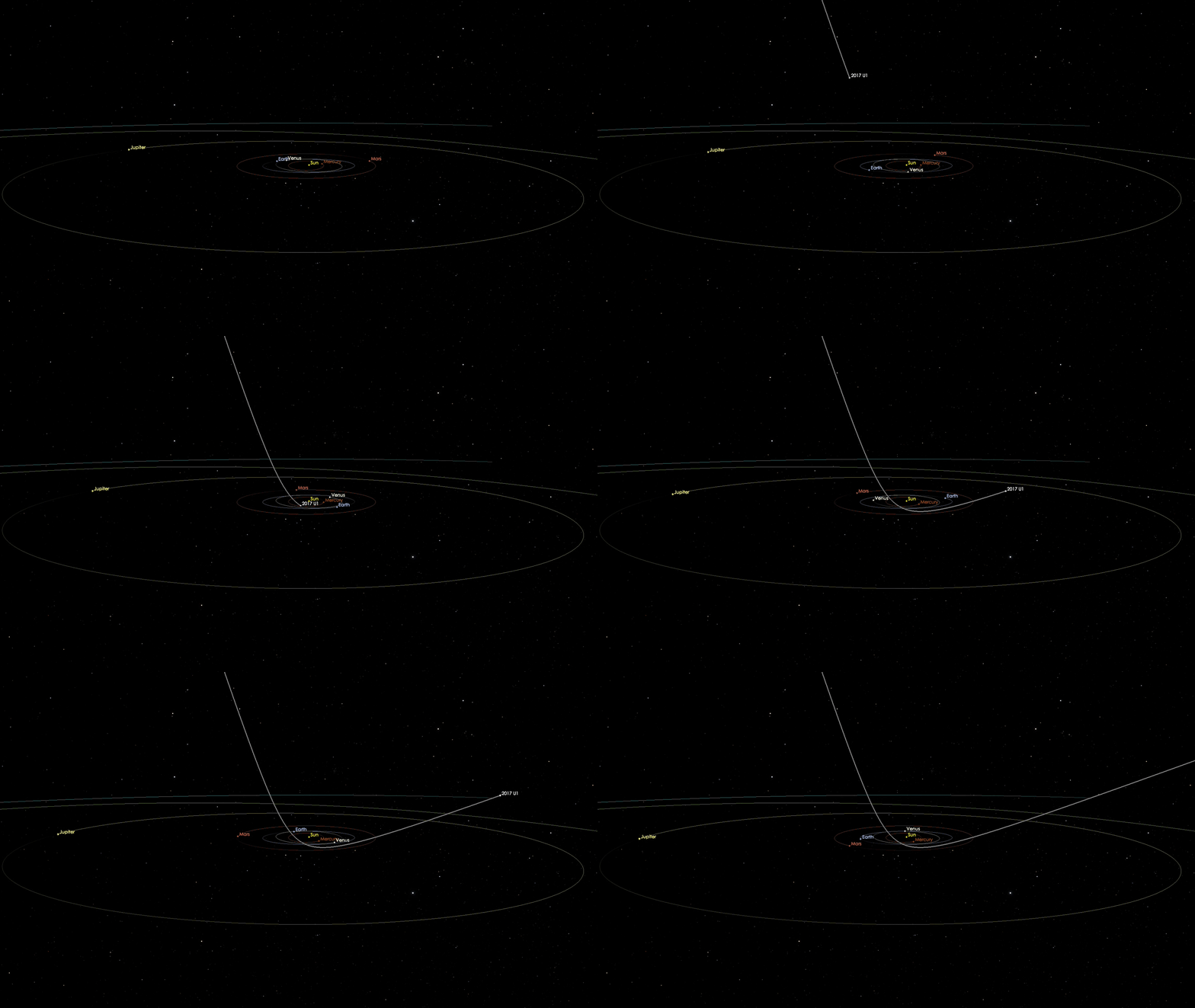
First Contact: Unravelling the nature of Interstellar Object 'Oumuamua
| | Speaker, Affiliation: Alan Fitzsimmons,
Astrophysics Research Centre, Queen's University Belfast, Northern Ireland.
| Abstract:
The first Interstellar Object to be discovered passing through our Solar system was
found in October 2017. By the time it was announced it was already 22nd magnitude
and fading. The resulting scramble for imaging and spectroscopy, using telescopes
including the WHT, revealed a body that matched some of our expectations, but that
differed significantly in other aspects. These studies have given considerable
insight into our alien visitor, now named 'Oumuamua. But many questions remain as
to its origin, evolution and physical nature. In this seminar I will explain why we
expected to see something like 'Oumuamua at some point, what we have know and don't
know, and what we might expect to see in the future.
|
Slides:
PDF and
'Oumuamua orbit animation
|
|
Date: Friday 30 Nov 2018
| Time: 14:00 hrs
| Place: Mayantigo building 6th floor meeting room
|
Title:
Star Formation History of the Bar and the Inner Disk of the Large Magellanic Cloud
| | Speaker, Affiliation:
Lara Monteagudo,
Instituto Astrofisico de Canarias (IAC) and Isaac Newton Group (ING)
| Abstract:
Our objective is to study the structure and evolution of the LMC through the
analysis of its stellar populations. For this study we have color-magnitude dia-
grams (CMDs) reaching the oldest main sequence turn-offs (oMSTO), even in the
most crowded fields. We have eleven fields covering a large range of galactocentric
distances. Two of the fields probe the bar, while the others are located in the
inner disk at various distances and azimuths.
Overall we find a surprising homogeneity in the SFH of the bar fields, among disk
fields, and also between bar and disk fields, which means that no event of star
formation can be identified with the formation of the LMC bar.
Upon closer examination of the SFR of the eleven fields, we found three different
groups of fields depending on their position in the inner region of the LMC. The
youngest fields are in the bar, while those that are located in the inner disk
are older. We also found that the fields located in the north and south arms are
slightly younger than the inner disk fields, but somewhat older than the bar fields.
We also searched for radial gradients in the SFH over a larger range of galacto-
centric distance, from the very centre of the LMC, out to the radius explored by
Meschin et al. (2014). Interestingly, we found that the global age indicators show
an approximately at behaviour between 1 and 5 degrees from the centre, but
turn to indicate an increasing mean age at larger galactocentric distances.
|
|
Date: Thursday 22 Nov 2018
| Time: 11:00 hrs
| Place: Mayantigo building 6th floor meeting room
|
Title:
On the formation, evolution, and destruction of minor planetary bodies
| | Speaker, Affiliation:
Thomas Wilson, University College London (UCL) and Isaac Newton Group (ING).
| Abstract:
Minor planetary bodies can provide a wealth of information on the history and
future of planetary systems, from the formation conditions in the solar nebula
to the destruction processes of planets. In this talk I will discuss the two
main projects of my PhD: the study of water in Solar System comets, and the
search for asteroid debris disks around white dwarfs.
Comets have long been heralded as pristine objects left over from the formation
of the Solar System. However, there is a fundamental question yet to be concretely
answered: is the observed composition indicative of formation or evolutionary
processes? Isotopic and isomeric ratios, such as Deuterium/Hydrogen and Water
Ortho-to-Para, can be good probes as evolutionary processes are not thought to
change these values greatly. Some results point towards abundances being typical
of primitive material, but their methods have recently been proven not to be as
reliable as once thought. In the first half of the seminar I will present
Herschel/SPIRE observations of four comets and discuss the how the observed
non-typical Water Ortho-to-Para ratios have helped change our understanding
of evolutionary processes in comets.
While exoplanet surveys over recent years have advanced the field considerably,
there is still a limitation in most methods, which cannot directly probe
planetesimal composition. Planetary systems around white dwarfs have been known
for a couple of decades and are inferred to exist by the presence of atmospheric
metals. These metals can only be explained by ongoing accretion, being a proxy
for the composition of the infalling planetesimal. Another possible indicator
of planetesimals are a circumstellar dust disks, often observed in the infrared.
By searching for destroyed planetesimals via these indicators, we can infer
planetary system architectures, dynamics, and frequency. In the second half of
my talk I will present the analysis of the largest, unbiased Spitzer and Hubble
survey of observations of polluted white dwarfs and its implications on our
knowledge of the fate of planetary systems.
|
Slides: PDF
|
|
Date: Monday 05 Nov 2018
| Time: 11:00 hrs
| Place: Mayantigo building 6th floor meeting room
|
Title:
Storms or systematics? Using ground-based telescopes to search for atmospheric variability in hot Jupiters
| | Speaker, Affiliation: Matthew Hooton, Astrophysics Research Centre at Queen's University Belfast.
| Abstract:
Detecting and measuring thermal emission from exoplanets during their secondary eclipses has established itself as an important tool for studying
exoplanet atmospheres, with over a hundred published results to date. Making this measurement over a range of wavelengths allows models of their
emission spectra to be constructed, which alludes to atmospheric features such as chemical composition, thermal structure and circulation efficiency.
Unfortunately, repeat observations of secondary eclipses routinely yield depths that significantly disagree. Without understanding the source of
these disagreements, which could arise due to systematic errors or genuine atmospheric variability in the exoplanets themselves, it is difficult
to reliably constrain the atmospheric properties of these exoplanets. I will present results from the QUB secondary eclipse campaign, which aims
to address this problem using large programmes on 2m-class telescopes such as the INT and LT. I will describe our past and future observations of
WASP-12b, a hot Jupiter with a 10-year history of confounding observers and theorists, as well as our initial atmospheric categorisation of the
newly-discovered KELT-16b. I will also present our ultraviolet secondary eclipse of the recently discovered KELT-9b -- the hottest known exoplanet.
|
|
Date: Wedenesday 05 Sep 2018
| Time: 11:00 hrs
| Place: Mayantigo building 6th floor meeting room
|
Title:
Exoplanets in Ondrejov, ground based support of space missions
| | Speaker, Affiliation: Dr. Petr Kabath, Astronomical Institute of the Czech Academy of Sciences, Czech Republic
| Abstract:
Exoplanet group in Ondrejov, CZ was founded in 2016. The astronomical Institute Ondrejov operates a 2-m telescope equipped with an Echelle spectrograph. In the seminar an overview about the potential of our ground based support program for exoplanetary missions will be presented along with first results from 2017/2018 campaign. Furthermore, our institute in cooperation with Tautenburg Observatory and Universidad Catolica de Chile plans to design a new spectrograph for 1.52m telescope at ESO La Silla observatory, Chile which should contribute to candidate vetting process for PLATO in the future and most certainly also for TESS.
|
Slides: PDF
|
|
Date: Monday 23 April 2018
| Time: 14:30 hrs
| Place: Mayantigo building 6th floor meeting room
|
Title:
It came from outer space: Interstellar visitor 1I/'Oumuamua
| | Speaker, Affiliation: Dr. Colin Snodgrass, The Open University, UK
| Abstract:
Late last year there was much excitement within the planetary science
community, and in the press, about the first macroscopic interstellar object to be
discovered passing through our Solar System. I'll tell the story of the discovery of
1I/'Oumuamua, the scramble to observe it before it left, and what we know about it
after a couple of months of rapid publication of surprising results.
|
Slides: PDF
|
|
Date: Friday 6 April 2018
| Time: 11:00 hrs
| Place: Mayantigo building 6th floor meeting room
|
Title:
Testing entanglement using cosmic random numbers
| | Speaker, Affiliation: Dominik Rauch,
Austrian Academy of Sciences and IQOQI - Institute for Quantum Optics and Quantum Information
| Abstract:
I will report on our Cosmic Bell test experiment we conducted in
February at the ORM, where, as a premiere, we used the William Herschel
Telescope and the Telescopio Nazionale Gallileo for simultaneous
observations. Since the 1930s, physicists wonder whether the
probabilistic quantum theory can be a complete description of nature or
if we just lack the necessary information (hidden variables) for a
deterministic theory. Einstein thought, quantum mechanics cannot be
complete, because it would predict the strange phenomenon of
entanglement. Only in the 1970s, John Stewart Bell found a way to prove
the absence of any additional unknowns by probing correlations of
allegedly entangled photon pairs. Since then, many Bell tests have been
performed, strongly supporting quantum mechanics. However, all of these
tests require certain assumptions, generally known as "loopholes". The
last loophole to close is the so called "freedom of choice". It says
that correlations in the choice of the measurement basis could be
misinterpreted and misleadingly appear similar to entanglement.
The usual approach to eliminate correlations in the setting choices, is
to space like separate these events from the actual measurements.
Earlier experiments used settings generated around 4us in the past. By
extracting random numbers from astronomical sources we can push these
limits far further. In an earlier experiment we used milky way stars,
that are 600 lyr away
( Handsteiner et. al, 2017).
In our recent experiment we had the WHT and the TNG observe different
high-redshift quasars at the same time. A entangled photon source next
to the NOT was creating photon pairs, sending one photon to a receiver
station to the ground floor of the WHT dome, and the other to a receiver
next to TNG, implementing the actual Bell test.
|
|
Date: Monday 19 March 2018
| Time: 12:00 hrs
| Place: Mayantigo building 6th floor meeting room
|
Title:
New evidence for the existence of Precise Lunar Alignments in the Early Bronze Age
| | Speaker, Affiliation: Dr. Thomas Gough,
Royal Observatory Edinburgh Site Tester 1971-1974
| Abstract:
Alexander Thom (1894-1985) was a Professor of Science and Engineering at Oxford University.
However he became interested in megalithic remains. In particular he made many theodolite
measurements of indicated foresights and orientations from standing stones. From the declinations
found, he deduced that the lunar perturbation of about 9' of arc had been observed in the Early
Bronze Age, c. 1700 BC. He published three books and numerous papers. His work did not meet with
favour from the majority of archaeologists. Clive Ruggles assessed Thom’s work in detail finding
problems with many of Thom’s claimed "lines", but acknowledged that a few of the "lines" appeared
to be sound. However since chance alignments will occur and the sites assessed were widely
scattered the apparently sound lines were considered probably chance. Ruggles also pointed out
the apparently insuperable difficulties that the work would have entailed. As a result Thom’s
work was sidelined. There has been no serious reinvestigation since Thom died. I became
interested some 10 years ago. It was early recognised that all sites in restricted regions had
to be assessed. In the region of Argyll together with the nearby islands of Mull and Islay
strong supporting evidence for precise lunar alignments has been found.
|
Slides: PDF
|
|
Date: Monday 19 March 2018
| Time: 11:00 hrs
| Place: Mayantigo building 6th floor meeting room
|
Title:
A presentation on the Site Testing project run by The Royal Observatory Edinburgh, 1971-75: La Palma and other sites investigated.
| | Speaker, Affiliation: Dr. Thomas Gough,
Royal Observatory Edinburgh Site Tester 1971-1974
| Abstract:
The aim of the project was find a good site in the northern hemisphere for optical
astronomy. The core personnel were those who at the time were operating the ROE satellite
tracking station run by Bennet MacInnes. He became the team leader of the site testing
project. Other members of the group were either junior employees of the observatory or
recruited by advertisement. The initial sites tested were a site in southern Italy and
Izana on Tenerife. The most important measurements made were of sky transparency and
seeing. For the latter a Polaris Trail Telescope was used; a semi fixed six inch refractor
mounted on a solid base and aligned as required on the pole star. A camera mounted in
place of the eyepiece was used to take ten minute exposures each clear hour; the density
of the trail giving a measure of the seeing. The site in Italy proved to be disappointing.
Izana was good, but it was suspected that the seeing was affected by turbulence resulting
from the prevailing wind blowing up the east/west oriented ridge. It seemed that La Palma
might benefit in this respect by its rounded shape. A preliminary testing of six weeks
length was carried out at Fuente Nueva in 1972. The results were very encouraging. It was
felt prudent to investigate other possible sites for comparison. Thus Fogo in the Cape
Verde Islands, Madeira and Hawaii were each investigated. A return was made to La Palma
in the autumn of 1974 now involving the Scandinavian countries. A hut was built and the
site tested for a year proving the site to be of outstanding quality.
|
Slides: PDF
|
|
Date: Wednesday 14 February 2018
| Time: 15:00 hrs
| Place: Mayantigo building 6th floor meeting room
|
Title: Understanding ultra-diffuse galaxies through neutral hydrogen studies
| Speaker, Affiliation: Betsey Adams
ASTRON, the Netherlands Institute for Radio Astronomy and Kapteyn Astronomical Institute, Netherlands
| Abstract:
Ultra-diffuse galaxies (UDGs) are notable for their extreme low surface
brightness nature and extended radii; they have the stellar mass and appearance of
dwarf spheroidal galaxies but the stellar radii of larger galaxies like the Milky
Way. While UDGs were originally identified in the cluster environment, several
theoretical models suggest that UDGs are a subset of the dwarf galaxy population and
should also be found in isolation. Neutral hydrogen (HI) observations are a powerful
way to identify these field UDGs as existing wide-field surveys, such as the ALFALFA
HI survey, have the sensitivity to detect these objects while their optical
counterparts are tenuous in existing wide-field optical surveys. The HI observations
also trace the kinematics of the gas, allowing a constrain on the underlying dark
matter halos. As different models make predictions about both the total gas content
and the underlying dark matter halo, these observations are a powerful way to
distinguish between different models.
|
|
Date: Tuesday 23 January 2018
| Time: 14:30 hrs
| Place: Mayantigo building 6th floor meeting room
|
Title: A new 1-m class telescope observatory project of Kerman University, Iran
| Speaker, Affiliation: Dr. Saeed Doostmohammadi,
Shahid Bahonar University of Kerman, Faculty of Physics, Department of Astronomy, Iran
| Abstract:
There are many observatories around the world including 1-m class telescopes which work on
many scientific projects such as exo-planets, asteroids, Solar System, gravitational lensing,
gravitational waves and many others. By using from new methods and high performance instruments,
new and useful information are obtained daily. We are planing a new observatory in the Kerman
province of Iran, to host a telescope in 1-m class (maybe 1.2 to 1.5m) with a modern larger
field CCD camera and a spectrograph. To decide the location, we measured astronomical seeing
of some suitable sites in the mountains at altitudes above 2500 m, far from light pollution of
the cities and we obtained good results, around 1" seeing. Coming now for the second time to
the ING, I am searching knowledge and know-how about the best telescopes, CCDs, spectrographs,
dome, enclosures, manufacturers, etc, to help our project. Also, we are gathering information
about the main scientific missions of our upcoming observatory and the best kind of operation
of our telescope, namely classic, remotely or/and robotic.
|
Slides: PDF
|
|
Date: Monday 22 January 2018
| Time: 11:30 hrs
| Place: Mayantigo building 6th floor meeting room
|
Title: The Pristine survey: An efficient search for extremely metal poor stars
| Speaker, Affiliation: Kris Youakim, Leibniz Institute for Astrophysics Potsdam, Germany
| Abstract:
The most metal-poor stars in the Galaxy are relics from the first generations of star
formation, and their properties can reveal key information about the formation and evolution of
the Milky Way. However, only a small number of these extremely rare stars are currently known,
due to the difficulty in finding them amongst the overwhelmingly more abundant stars of higher
metallicity. In this talk, I will present the Pristine survey, a narrow-band photometric survey
in the wavelength region around the Ca II H&K absorption lines designed to efficiently search
for extremely metal-poor (EMP) stars. In the first three years of the survey, we have covered
~2,500 square degrees of sky in the northern galactic halo using the CFHT on Mauna Kea in
Hawaii. The survey has also particularly benefited from ING telescopes, using the INT and WHT
to obtain a sizeable spectroscopic follow-up sample. With this data, we have demonstrated
success rates of 70% for finding stars with [Fe/H] < -2.5, and 22% for stars with [Fe/H] <
-3.0. This represents a significant improvement upon previous searches for EMP stars, which
have reported success rates of 3-4%. With this efficiency, the Pristine survey is poised to
make a significant contribution to constraining the metal-poor tail of the metallicity
distribution function, as well as increasing the number of known ultra metal-poor (UMP) stars
in the literature. In addition, I will discuss how the Pristine survey is being used to
characterise the faint dwarf galaxy population, and analyse substructure in the Galactic Halo.
|
Slides: PDF
|
|
Date: Wednesday 10 January 2018
| Time: 15:00 hrs
| Place: Mayantigo building 6th floor meeting room
|
Title: The BlackGEM Array - looking for optical counterparts of gravitational wave sources
| Speaker, Affiliation: Steven Bloemen,
Radboud University (Nijmegen, The Netherlands) and Netherlands Research School for Astronomy (NOVA, The Netherlands)
| Abstract:
While we understand single-star evolution fairly well, our comprehension of the evolution of
binary stars is still fragmentary, and theoretical models are still in development. This is
particularly true for close binaries, which interact at some point in their lives. Over 50% of
all stars with mass above one solar mass are in binaries, and about 25% of binary systems
interact, therefore the lack of good theoretical models is very concerning. To improve such
models, observational input is urgently required.
Extremely-low mass white dwarfs (ELMs) are one possible outcome of binary evolution and a good
example of the incompleteness of our observational sample. They were only recently discovered
with less than a hundred known. Importantly, the number of known ELMs in the cool, low-mass end
of the distribution is at least a hundred times lower than predicted by current theoretical
models. In this talk, I will describe our efforts to find this missing population, which will
empirically help to improve theoretical models and our understanding of binary systems.
|
Slides: PDF
|
Seminars in 2017
|
Date: Thursday 14 December 2017
| Time: 11:30 hrs
| Place: Mayantigo building 6th floor meeting room
|
Title: Where are the missing cool ELMs?
| Speaker, Affiliation: Ingrid Pelisoli, Universidade Federal do Rio Grande do Sul, Brasil
| Abstract:
While we understand single-star evolution fairly well, our comprehension of the evolution of
binary stars is still fragmentary, and theoretical models are still in development. This is
particularly true for close binaries, which interact at some point in their lives. Over 50% of
all stars with mass above one solar mass are in binaries, and about 25% of binary systems
interact, therefore the lack of good theoretical models is very concerning. To improve such
models, observational input is urgently required.
Extremely-low mass white dwarfs (ELMs) are one possible outcome of binary evolution and a good
example of the incompleteness of our observational sample. They were only recently discovered
with less than a hundred known. Importantly, the number of known ELMs in the cool, low-mass end
of the distribution is at least a hundred times lower than predicted by current theoretical
models. In this talk, I will describe our efforts to find this missing population, which will
empirically help to improve theoretical models and our understanding of binary systems.
|
Slides: PDF
|
|
Date: Tuesday 14 November 2017
| Time: 11:30 hrs
| Place: Mayantigo building 6th floor meeting room
|
Title: Long-period binary central stars of planetary nebulae
| Speaker, Affiliation: Dr. David Jones, Instituto de Astrofisica de Canarias, CALP La Palma
| Abstract:
It is now clear that a binary evolutionary pathway is responsible for a significant fraction of
all planetary nebulae, with some authors even going so far as to claim that binarity may be a near
requirement for the formation of an observable nebula. To date, much of the work, both
observational and theoretical, has focussed on the influence of close binary evolution on the
formation of a planetary nebula, however there are strong indications that wide binaries will also
have a strong impact. Here, I will report on the recent studies of such wide binaries, including
the discovery of three wide binary central stars using Mercator-HERMES (the only wide binary
central stars to have had their periods derived spectroscopically), as well as the interesting
results from barium star central stars and what they tell us about the accretion processes
experienced by all barium and carbon-enhanced-metal-poor stars.
|
Slides: PDF
|
|
Date: Wednesday 11 October 2017
| Time: 11:00 hrs
| Place: Mayantigo building 6th floor meeting room
|
Title: Multi-Object Spectroscopy, Techniques and Challenges
| Speaker, Affiliation: Dr. Alireza Molaeinezhad
Postdoctoral researcher, School of Astronomy, IPM, Iranian National Observatory (INO)
| Abstract:
Multiplexed spectrographs on medium-class telescopes, with their
large fields-of-view play a key role to the feature of observational
astronomy and Cosmology. However, the scientific productivity of such
complex instrumentation strongly depends on the availability of
robust and reliable data-reduction/analysis methods and techniques.
In this talk I will explain the main technical challenges in this
field and introduce the dedicated IDL-based data reduction/calibration
and analysis pipeline for the AF2/WYFFOS multi-fiber spectrograph.
Then, I will go through the accuracy of sky subtraction, which is
one of the most important aspect of the multi-fibre data reduction.
As part of our ongoing effort to improve the reliability and precision
of the sky subtraction in the dedicated IDL-based AF2+WYFFOS data
reduction pipeline, we have applied the PCA approach to the sky
estimation routines. The PCA algorithm can be used to find the
relations between different skylight spectra and reconstruct a
dedicated skylight spectra at position of each target fiber, based
on the principle components of all available sky spectra. Our primary
results show a significant improvement in the quality of the sky
estimation, especially in longer wavelengths, where sky background is
dominated by the emission lines originated from the OH radical.
|
Slides:
|
|
Date: Monday 21 August 2017
| Time: 14:00 hrs
| Place: Mayantigo building 6th floor meeting room
|
Title: A cosmic Bell test: Testing quantum mechanics with the help of cosmic
random numbers
| Speaker, Affiliation: Dominik Rauch,
The Institute of Quantum Optics and Quantum Information Vienna, The Austrian Academy of Sciences.
| Abstract:
In their seminal paper from 1935, Einstein, Podolsky and Rosen state that quantum
theory must be incomplete. They proof that without additional variables, the
predictions of quantum mechanics, namely entanglement, contradict either locality or
reality. Although this let to big discussions it was unclear of how to settle this
matter until in 1964 John Stewart Bell found a way to experimentally investigate the
question of local realism. Since 1972 many such Bell tests have been conducted, always
in favour of quantum mechanics but always relying on assumptions, leading to so called
"loopholes". We are planing a new Bell test on La Palma addressing the requirement
that the measurement basis at each of the two measurement sites has to be chosen
randomly. Our approach is to use the WHT and the TNG to produce random numbers from
quasar light. The idea behind that has been published first in 2014 by Gallicchio et
al.: if the received signal is old enough, causality can guarantee the impossibility
that anything else, notably a potential local hidden variable, could influence the
choice of the measurement basis. In a first experiment with milky way stars, we could
show, that any influence would have been at least 600 years old: Handsteiner et
al.:Cosmic Bell Test: Measurement Settings from Milky Way Stars,
PRL 118, 060401.
|
Slides:
|
|
Date: Friday 07 July 2017
| Time: 11:00 hrs
| Place: Mayantigo building 6th floor meeting room
|
Title: Update on HIPERCAM
| Speaker, Affiliation: Professor Vik Dhillon; University of Sheffield and Instituto de Astrofisica de Canarias
| Abstract:
HiPERCAM is a high-speed, quintuple-beam CCD camera designed to study rapid brightness variations in the Universe. We intend to commission HiPERCAM on the WHT in Autumn 2017, and on the GTC in early 2018. In this talk, I shall provide a progress update on HiPERCAM, concentrating more on instrumentation aspects rather than scientific aspects.
|
Slides: PDF
|
|
Date: Tuesday 09 May 2017
| Time: 11:00 hrs
| Place: Mayantigo building 6th floor meeting room
|
Title: The dawn of star formation: a local perspective
| Speaker, Affiliation: Dr. Piercarlo Bonifacio;
Laboratoire d'Etudes des Galaxies, Etoiles, Physique et Instrumentation GEPI, Observatoire de Paris, PSL Research University, CNRS, France
| Abstract:
At the end of the Dark Ages gravity began to make matter collapse around over-densities, resulting in the formation of the first stars, the Pop III. These stars are very important in the cosmological context, the most massive ones contributed ionizing photons that played a role in the reionization of the Universe and synthetised the first metals. We know that the formation mode of these first stars was different than the one operating today. The lack of metals implies it is difficult to cool a contracting cloud, which would argue for a preferential formation of massive or very massive stars. However from the theoretical point of view it is not yet possible to determine the initial mass function of the first stars. Simulations show that, even in the absence of metals, a collapsing cloud may fragment into smaller clouds giving rise to stars that span a range of masses, even sub-solar. Once the first metals begin to be shed in the clouds cooling becomes possible, either through atomic lines or through dust. It is likely that there is a transition from Pop III to "normal" Pop II star formation at some critical metallicity, however the precise value of this critical metallicity cannot be presently determined theoretically.
In this seminar I will describe the observational efforts that our group is conducting in the local Universe, in order to derive as many constraints as possible on the nature of the Pop III stars. These include searches of the most metal-poor stars, and their chemical characterization. Both the metallicity distribution function and the chemical pattern of the most metal-poor stars contain precious information of the first stars.
|
Slides: PDF
|
|
Date: Thursday 27 April 2017
| Time: 15:00 hrs
| Place: Mayantigo building 6th floor meeting room
|
Title: Ultradeep Imaging of Galaxy Clusters
| Speaker, Affiliation: Prof. Reyner Peletier,
Kapteyn Institute Groningen
| Abstract:
In this talk I will discuss two ultradeep imaging surveys which I am leading. The first one is the
WEAE Cluster survey, in which I, together with Alfonso Aguerri and Scott Trager, am determining
photometric properties of dwarf galaxies in nearby X-ray selected clusters, for which later spectra
will be obtained using WEAVE. The second one is the Fornax Deep Survey (FDS), a new, deep
imaging survey of the Fornax Cluster, including the group of NGC 1316 (the Radio Galaxy Fornax
A), observed with ESO’s VST by a European consortium with a strong contribution from INAFNaples
(Italy) and Groningen. With data similar in depth to the NGVS survey of Virgo, we are
studying many aspects of the formation of galaxies and the role of the environment, concentrating
on dwarf galaxies, outer halos of massive galaxies, and globular cluster systems around galaxies. In
this talk I will concentrate on studies of Ultra Diffuse Galaxies (UDGs) in Fornax, and on studies to
characterise the dwarf population in nearby clusters. I will also discuss some aspects of follow-up
surveys to study the objects found in the FDS in more detail.
|
Slides:
|
|
Date: Tuesday 24 Jan 2017
| Time: 15:00 hrs
| Place: Mayantigo building 6th floor meeting room
|
Title:The EURONEAR Moving Object Detection System
| Speaker, Affiliation: Denisa Copandean, PhD student, Technical University of Cluj-Napoca, Romania
| Abstract:
My PhD thesis in computing science applied to astronomy is based on a subject proposed by the European Near Earth Asteroids Research (EURONEAR) project. Part of this work, we are writing a prototype pipeline (in Python, Sextractor and IRAF) using two techniques aimed to detect near Earth asteroids (NEAs) but applicable to other moving objects. The first technique improves the classic "blink" algorithm to detect asteroids in series of a few (4-5) images, where the most difficult decisions will be assisted using computing visual methods and machine learning algorithms. The second technique will implement the newer "digital (or synthetic) tracking" method using series of many (dozens) of images, in the search of unknown objects moving in any direction and with proper motion. This is extremely computing intensive and can be applied to surveys using larger field small telescopes endowed with fast CMOS cameras. Thanks to a three month Erasmus+ stage which allowed me to work at the ING with Ovidiu Vaduvescu, the prototype implementing the blink technique has been written and is currently testing using INT-WFC archive images (including the first 9 NEA EURONEAR discoveries), while a mini-survey is planned soon to fully test this prototype.
|
Slides: PDF
|
Seminars in 2016
|
Date: Wednesday 02 Nov 2016
| Time: 15:00 hrs
| Place: Mayantigo building 6th floor meeting room
|
Title:Regaining the FORS
| Speaker - Affiliation: Henri Boffin - ESO Germany
| Abstract:
Transmission spectroscopy allows probing exoplanetary atmospheres, but such studies rely heavily on space-based or large ground-based facilities, as one needs to perform time-resolved, high signal-to-noise spectroscopy. Precision spectrophotometry with the ESO FORS2 instrument suffered from systematic errors that made quantitative observations of planetary transits impossible, the most likely cause being the Longitudinal Atmospheric Dispersion Compensator (LADC). We here present the project that was done to address this and show the level of improvement obtained, with several examples. It is our hope that FORS2 may become the instrument of choice for ground-based transmission spectroscopy of exoplanets.
|
Slides: PDF
|
|
Date: Thursday 20 Oct 2016
| Time: 15:00 hrs
| Place: Mayantigo building 6th floor meeting room
|
Title: Analysing complex kinematics of distant starbursts with IFUs
| Speaker - Affiliation: Dr. Guillermo Bosch, Instituto Astrofisico de La Plata (UNLP/Conicet), Argentina
| Abstract:
Strong starburst regions are located at distances that do not allow us to
perform a detailed study of their stellar and nebular components. Most of
our knowledge about these regions therefore relies on integrated properties
derived from analysis of strong emission lines. High spectroscopic resolution
echelle data provide detailed information that reveal complex behaviour of
the ionized gas within each region, albeit lacking spatial resolution. In
an attempt to disentangle the location of these components, we have obtained
IFU spectra in excellent seeing conditions in a variety of starburst regions.
I will describe some challenges that the analysis of IFU data present and
some of their interesting results.
|
|
Date: Wednesday 5 Oct 2016
| Time: 10:00 hrs
| Place: Mayantigo building 6th floor meeting room
|
Title: Weak lensing measurements of high redshift clusters of galaxies using the HST
| Speaker - Affiliation: Dr. Tim Schrabback, University of Bonn
| Abstract:
Weak gravitational lensing measurements directly constrain the projected
mass distribution of foreground objects. Therefore they constitute a unique
tool for investigations of the growth of structure in the Universe.
As one application, weak gravitational lensing has been identified as the
most direct technique for the redshift-dependent absolute calibration of
observable-mass scaling relations of galaxy clusters.
Improvements in this calibration are urgently needed in order to
adequately extract cosmological information from deep cluster surveys.
To measure weak lensing distortions the shapes of distant background
galaxies need to be estimated robustly. For deep studies this requires
high resolution imaging as currently best provided by the Hubble Space
Telescope (HST).
In this talk I will provide an overview of our HST study of distant massive
galaxy clusters from the South Pole Telescope Sunyaev-Zel'dovich Survey.
I will present results from our completed initial study of 13
clusters, highlight some of the key technical developments for systematic
error control, and introduce our latest HST observations, which expand the
sample and push to even higher redshifts.
This also acts as a pilot study for similar future investigations with
deep weak lensing data, as will be provided e.g. by ESA's Euclid mission.
|
|
Date: Wednesday 5 Oct 2016
| Time: 11:00 hrs
| Place: Mayantigo building 6th floor meeting room
|
Title: Clustering of Lyman-break galaxies at redshift z~3 in CFHTLenS
| Speaker - Affiliation: PhD Student Beatriz Hernandez Martin, University of Bonn
| Abstract:
Dark matter can't be studied through direct observations but we can use the
galaxies that trace its distribution in the sky.
I will present the results of my master thesis on the study of dark matter
halos at redshift z~3 by observing the clustering of Lyman-break galaxies
(LBGs) in the Canada-France-Hawaii Lensing Survey (CFHTLenS). CFHTLenS is a
deep survey with 5 bands which allows a color selection of the LBGs. A
3-parameter halo model is used to link the observed auto-correlation of LBGs
to the underlying dark matter halos and obtain information on their average
halo masses and mean occupation number.
Obtaining the halo properties for different magnitude cuts helps us
understand the evolution of the halos with luminosity and the relation with
the kind of galaxies that populate them. More luminous galaxies should live
in more massive halos and be more strongly clustered.
The challenges and problems we encountered in the analysis will also be
discussed.
|
|
Date: Thursday 29 Sep 2016
| Time: 15:00 hrs
| Place: Mayantigo building 6th floor meeting room
|
Title:Galaxy formation in the first 3 Gyrs with wide field Lyman-alpha surveys
| Speaker - Affiliation: Jorryt Matthee, PhD Student, Leiden University
| Abstract:
I will present our ongoing project to use the Lyman-alpha (Lya) emission
line to study galaxy formation in the first 3 Gyr of cosmic time (z>3). At
z>3, Lya is basically the only emission line used to spectroscopically
confirm the distance of galaxies and it is used on its own to detect
high-redshift galaxies with narrow-band surveys (such as our own at the INT)
efficiently. Because of its sensitivity to neutral hydrogen, Lya is also a
promising tool to study the epoch of reionization. I will focus on the need
and benefits from wide field surveys, and highlight our major results. For
example, we have found that the most luminous Lya emitters are more common
than previously thought and that wide field (ground based) surveys can be
extremely efficient in identifying bright galaxies at high redshift. Because
of their brightness, these sources can be studied in great detail with
instruments at the WHT, VLT, Keck, HST and ALMA. The brightest galaxy that
we found, “COSMOS REDSHIFT 7” (CR7), is most spectacular, as it has
spectroscopic evidence for a very hot source in an extremely low
metallicity gas. This galaxy is currently our best laboratory to study the
formation of stars and black holes in very metal poor, (almost) primordial
gas.
|
Slides: PDF
|
|
Date: Friday 16 Sep 2016
| Time: 15:00 hrs
| Place: Mayantigo building 6th floor meeting room
|
Title: A Large Aperture Spectroscopic Survey Telescope
| Speaker - Affiliation: Dr. Richard Ellis, European Southern Observatory (ESO) and University College London (UCL)
| Abstract:
I will report on the outcome of a ESO-sponsored Working Group to investigate
the future of multi-object spectroscopy in the context of panoramic imaging
surveys to be undertaken by LSST and Euclid. The report considers what
is required beyond the capabilities of upcoming spectroscopic instruments such
as 4MOST, WEAVE, PFS and DESI alongside powerful facilities such as the E-ELT and
JWST. The report recommends consideration of a 10-12 meter class wide field survey
telescope equipped with various multiplexed spectroscopic instruments. I will
describe the scientific motivation for such a facility as well as the
practicality of its eventual construction.
|
|
Date: Thursday 8 Sep 2016
| Time: 15:00 hrs
| Place: Mayantigo building 6th floor meeting room
|
Title: Comparison of baffle and vanes in optical open truss telescope: stray light conontrol and airflow analysis
| Speaker - Affiliation: Dr. Taoran Li, National Astronomical Observatories, Chinese Academy of Sciences (NAOC), ING student 2016
| Abstract:
Baffles and vanes are the most common methods in stray light control for optical
telescopes. Unfortunately, when the air passes through the primary baffle, it will
cause the disturbance (flow around circular cylinders) and influence the airflow
above the primary mirror, blurring and twinkling the stars. The analysis about
differences between baffle and vanes were performed. Raytrace simulations were
performed by TracePro and fluid mechanics analysis by Ansys Fluent (CFD software).
Stray light observations were made through a small open truss telescope. The
analysis results indicate that, the primary baffle will improve the ability of
stray light suppression of telescope, but have adverse effects on mirror cooling
and air circulation. Meanwhile, the data from CFD will be used to calculate the
mirror seeing. This method could be applied to any other telescopes. With the help
of airflow and stray light analysis, the stray light control could be more
reasonable.
|
Slides: PDF
|
|
Date: Tuesday 30 Aug 2016
| Time: 11:00 hrs
| Place: Mayantigo building 6th floor meeting room
|
Title: New channels of single and binary evolution and nucleosynthesis
| Speaker - Affiliation: Dr. Devika Kamath, Institute of Astronomy, University of Leuven, Belgium
| Abstract:
In this talk I will present the our work on an exotic group of evolved objects:
post-AGB and post-RGB stars and the excellent constraints they provide for single
and binary star evolution and nucleosynthesis. These objects have also revealed
new evolutionary channels and AGB nucleosynthesis which is vital for understanding
the complex chemical evolution of our Galaxy as well as external galaxies.
|
Slides: PDF
|
|
Date: Friday 4 Aug 2016
| Time: 11:00 hrs
| Place: Mayantigo building 6th floor meeting room
|
Title: Growth of massive galaxies through cosmic time
| Speaker - Affiliation: Dr. Luis Peralta, ING student and IAC/ULL PhD graduate
| Abstract:
The discovery that massive galaxies are on average more compact in the early
Universe has shown that size growth is a fundamental process in the cosmological
evolution of massive galaxies. In my thesis I studied dynamical properties of
these compact objects and inferred clues about the mechanism which drives size
growth of massive galaxies. In the talk, we will start showing our work on the
discrepancy between dynamical and stellar masses in massive compact early-type
galaxies. Afterwards, we will derive velocity dispersions at z=1 with GTC/OSIRIS
and discuss what size-evolution mechanisms are consistent with them. Finally we
will address the question of which is the best environment for looking for
relic galaxies, i.e. old galaxies which have not suffered the size evolution.
|
|
Date: Wednesday 16 Mar 2016
| Time: 14:00 hrs
| Place: Mayantigo building 6th floor meeting room
|
Title: 67P and Rosetta - The story so far
| Speaker - Affiliation: Dr. Alan Fitzsimmons - Astrophysics Research Centre, Queen's University Belfast, Northern Ireland
| Abstract:
Comet 67P has been the focus of intense study from before January 2014 when
the ESA Rosetta spacecraft woke up from hibernation and commenced its approach.
From arrival at the comet in August 2014, through perihelion in August 2015 to
now, Rosetta and a wide sweep of ground-based facilities have been observing
67P, including most telescopes on La Palma through the award of an
International Time Programme. This seminar will give an overview of the
mission findings to date and include a look at preliminary results from
La Palma and ING. |
|
Date: Monday 11 Jan 2016
| Time: 11:00 hrs
| Place: Mayantigo building 6th floor meeting room
|
Title: The HST GHOSTS Survey: the loneliest dwarf galaxy and stellar streams and Streams around NGC 891
| Speaker - Affiliation: Dr. Benne W. Holwerda - Leiden Observatory
| Abstract:
The HST GHOSTS Survey: the loneliest dwarf galaxy and stellar streams
I present a new faint dwarf galaxy, GHOSTS I, identified in HST/ACS data from the
GHOSTS (Galaxy Halos, Outer disks, Substructure, Thick disk, and Star clusters)
survey. It is detected in individual stars populate an approximately 1 mag range of
its luminosity function (LF). Using synthetic color-magnitude diagrams (CMDs)
to compare with the galaxy's CMD, we find that the colors and magnitudes of GHOSTS I's
individual stars are most consistent with either RGB stars at 7.9 Mpc or He-burning and AGB stars
at 12.2 Mpc.
HI observations of this galaxy reveal several possible 21cm line peaks that could be consistent with
either distance. The purpose of WHT/ISIS observations will be to break the degeneracy, critical to
ascertain the HI gas mass and which stellar population is indeed present in this small satellite.
Morphologically, GHOSTS I appears to be actively forming stars, so we tentatively classify it as a
dwarf irregular (dIrr) galaxy, although future Hubble Space Telescope (HST) observations deep enough to resolve a
larger magnitude range in its LF are required to make a more secure classification. GHOSTS I's absolute magnitude
is MV~ -9.85+0.40-0.33 (assuming D=12.2Mpc), making it one of the least luminous dIrr galaxies known, and its metallicity is lower than
[Fe/H] = -1.5 dex form the RGB slope. The half-light radius of GHOSTS I is 226 +/- 38 pc and its ellipticity is 0.47 +/- 0.07, similar to
Milky Way and M31 dwarf satellites at comparable luminosity. There are no luminous massive galaxies or galaxy
clusters within ~4Mpc from GHOSTS I that could be considered as its host, making it possibly the most isolated dwarf galaxy in the local Universe.
Streams around NGC 891
In HST GHOSTS data, I have identified two sections of the stellar streams surrounding this canonical edge-on spiral galaxy, at ~600'' and ~300''
from the nucleus on the major and minor axes respectively. The stellar stream does not contain young stars (less than 1Gyr), with a metallicity of
[Fe/H] ~ -0.7, similar to earlier estimates for the streams surrounding NGC 891. I argue that the spatial overlap between the stellar stream in the
HST observations and a known counter-rotating Hi complex is likely a coincidence (or a projection effect) but the morphology of all the extra-planar
HI and the streams in general does suggest a common origin. The color-magnitude diagram of the stellar population reveals no recent (massive)
star-formation in this counter-rotating HI gas complex.
The metallicity suggests a MV = -14 dwarf galaxy progenitor for this stream and –if all the counter-rotating HI gas is indeed
part of this accretion event– likely a late-type dwarf galaxy. If both HI and stellar streams originate from a single system,
the stellar mass (~ 108 Ms ) to gas (several 106 Ms ) ratio suggests that most of the accreted gas has already been assimilated by NGC 891 or its halo.
|
|
Date: Friday 8 Jan 2016
| Time: 11:00 hrs
| Place: Mayantigo building 6th floor meeting room
|
Title:
The new Hong-Kong/AAO/Strasbourg multi-wavelength and spectroscopic PNe database: HASH
| Speaker - Affiliation: Prof. Quentin A Parker,
Ivan Bojicic and David J. Frew, The Univ of Hong Kong
| Abstract:
We are in a golden age of PN discovery. This advent of high
sensitivity, wide-field, narrow-band surveys of the Galactic plane
undertaken on the UKST in Australia, the Isaac Newton telescope on La
Palma and now the VST in Chile have facilitated this process. These
telescopes and their H-alpha surveys have provided significant
Planetary Nebulae (PNe) discoveries that have more than doubled the
totals accumulated by all telescopes over the previous 250 years.
Importantly, these PNe are not the just the same as those found in
previous catalogues. Most new PNe are more obscured, evolved and of
lower surface brightness than previous compilations while others are
faint but compact and more distant. This has required an extensive and
time-consuming programme of spectroscopic confirmation on a variety of
2m and 4m telescopes that is now largely complete. The scope of any
future large-scale PNe studies, particularly those of a statistical
nature or undertaken to understand true PNe diversity and evolution
should now reflect this fresh PN population landscape of the combined
sample of ~3500 Galactic PNe now available. Such studies should take
into account these recent major discoveries and the massive, high
sensitivity, high resolution, multi-wavelength imaging surveys now
available across much of the electromagnetic spectrum.
Following this motivation we provide, for the first time, an
accessible, reliable, on-line "one-stop" SQL database for essential,
up-to date information for all known Galactic PN. We have attempted
to: i) Reliably remove the many PN mimics/false ID's that have biased
previous compilations and subsequent studies; ii) Provide accurate,
updated positions, sizes, morphologies, radial velocities, fluxes,
multi-wavelength imagery and spectroscopy; iii) Link to CDS/Vizier and
hence provide archival history for each object; iv) Provide an
interface to sift, select, browse, collate, investigate, download and
visualise the complete currently known Galactic PNe diaspora and v)
provide the community with the most complete and reliable data with
which to undertake new science.
|
Slides: PDF
|
|
Date: Thursday 7 Jan 2016
| Time: 15:00 hrs
| Place: Mayantigo building 6th floor meeting room
|
Title: AstroWise - Data federations for large imaging surveys
| Speaker - Affiliation: Prof. Dr. Edwin Valentijn, Kapteyn Astronomical Institute, Department of Astronomy, University of Groningen, The Netherlands
| Abstract:
Astronomical wide field optical imaging surveys play an important role as
front runners in modern IT networks and data bases. The AstroWise information
system is operational for the production of the results of a number astronomical
survey programmes with OmegaCAM@VST and MUSE@VLT. In different forms it also hosts,
the Lofar radiotelescope, ING, WFI 2.2m, life science projects and business applications.
I will discuss the common "data federation" aspects of these projects, and the data
federation aspects of the Euclid Archive System which will serve over 100 institutes
and over 1000 researchers in Europe.
|
Seminars in 2015
Past Seminars
|
Date: Friday 04 Dec 2015
| Time: 11:00 hrs
| Place: Mayantigo building 6th floor meeting room
|
Title: Constraints to the magnetospheric properties of T~Tauri stars
| Speaker - Affiliation: Dr. Fatima Lopez, ING.
| Abstract:
T~Tauri stars (TTS) are young and low-mass pre-main sequence stars. They have a surrounding
disk as well as strong and complex magnetic fields. The disk is truncated near the corrotation radius
due to its interaction with the stellar magnetic field. The material in the inner part of the disk
is ionized by the stellar radiation and channelled through the magnetic field lines. The gas from
the disk is accelerated to almost free-fall velocity before it reaches the stellar surface forming
an accretion shock. The ultraviolet luminosities of TTS exceed by 1-2 orders of magnitude those
observed in main sequence stars of the same spectral types. This excess is associated with the
accretion process that transports material onto the stellar surface enhancing the flux radiated
by magnetospheric/atmospheric tracers. The energy produced in the atmosphere and magnetosphere is
released mainly in the ultraviolet range. The study of TTS provides some important clues about young
stars, planetary system formation and their early evolution. The spectra of TTS show peculiar features,
mainly in the ultraviolet range. Most of the TTS emission is produced in a region of the magnetosphere
with temperatures of about 10000~K. In this talk I will speak about the work developed in my PhD thesis,
in which I analysed ultraviolet spectral lines formed in regions with those temperatures,
(C~II], Fe~II], Si~II] and Mg~II). The study of these lines allowed me to determine some constraints
to the magnetosphere properties in TTS.
|
|
Date: Monday 16 November
| Time: 15:00 hrs
| Place: Mayantigo building 6th floor meeting room
|
Title: Cosmic butterflies: the product of tempestuous stellar marriages
| Speaker - Affiliation: Dr. David Jones, IAC, Spain.
| Abstract:
Planetary nebulae are some of the most strikingly beautiful astrophysical
phenomena known, gracing many a glossy-paged, coffee-table book and earning
them the nickname "cosmic butterflies". Classical stellar evolutionary
theory states that all intermediate mass stars should produce a planetary
nebula, forming as the star leaves the Asymptotic Giant Branch and evolves
towards the white dwarf phase. While it remains the standard for astronomy
textbooks, this paradigm has gradually become less and less accepted by the
planetary nebula community. As such, it is now clear that a significant
fraction of planetary nebulae originate from a binary evolutionary pathway,
with some theories even going as far as to say that binarity may be a
prerequisite for all but the most massive stars to form a planetary
nebula. However, the full importance of binarity on the formation and
evolution of planetary nebulae is far from understood, with large
observational and theoretical challenges ahead. In this seminar, I will
begin by outlining some fundamentals of close binary evolution and how they
relate to the formation of planetary nebulae, before going on to describe
our current observational efforts to resolve the open questions of the
field. I will highlight a few key systems which bear great importance for
our current understanding, including the super-Chandrasekhar mass,
double-degenerate at the heart of the planetary nebula Hen 2-428 - the
strongest supernova type Ia candidate known to-dat, and a discovery (made
entirely with telescopes at the ORM, including the INT, Mercator and GTC)
which demonstrates the wide-reaching importance of this investigation.
| Slides: PDF
|
|
Date: Thursday 8 January
| Time: 11:00 hrs
| Place: Mayantigo building 6th floor meeting room
|
Title: A gentle introduction to astronomical polarimetry
| Speaker - Affiliation: Dr. Stefano Bagnulo, Armagh Observatory, UK.
| Abstract:
Most of astronomy is based on measurements of the intensity of the
radiation. Little attention is usually paid to HOW radiation propagates,
i.e., whether the light that we observe is "polarised" along a preferred
direction. Polarisation originates whenever any kind of anisotropy occurs
in the emitting source, or between the source and the observer, for
instance scattering by matter, presence of collimated beams of particles,
presence of a magnetic field. In this talk I will present some applications
of polarimetry in common life and in astronomy, and in particular I will
explain how polarimetry may may be used to detect stellar magnetic fields,
to characterise the surface of and the atmospheres of the bodies our and
other solar systems, and help us to find extra-terrestrial life.
| Slides:
|
Seminars in 2014
|
Date: 17 Dec 2014 (Wed)
| Time: 15:00 hrs
| Place: Mayantigo building 6th floor meeting room
|
Title: HiPERCAM: A high-speed camera for the study of rapid variability in the Universe.
| Speaker - Affiliation: Prof. Vik Dhillon, Sheffield University, UK.
| Abstract:
I shall describe the scientific motivation and design of HiPERCAM, a five-channel, high-speed optical CCD camera. The instrument, which has been funded by a 3.5 Meuro
European Research Council Advanced Grant, is currently under construction at Sheffield/Warwick/Durham/UKATC, and we hope to commission it on the WHT in early 2017.
| Slides:
|
|
Date: 24 Nov 2014 (Mon)
| Time: 15:00 hrs
| Place: Mayantigo building 6th floor meeting room
|
Title: Star Clusters at IA and NAO Rozhen
| Speaker - Affiliation: Grigor Nikolov - Institute of Astronomy with National Astronomical Observatory, Bulgarian Academy of Sciences.
| Abstract:
In this talk I will briefly present the research on star clusters done
at IA&NAO Rozhen. Our small group is observing galactic clusters and
also using archival space telescope images of our neighbour galaxy, the
LMC.
| Slides: PDF
|
|
Date: 24 Nov 2014 (Mon)
| Time: 14:30 hrs
| Place: Mayantigo building 6th floor meeting room
|
Title: The Bulgarian Institute of Astronomy and the National Astronomical Observatory at Rozhen.
| Speaker - Affiliation: Mirela Napetova - Institute of Astronomy with National Astronomical Observatory, Bulgarian Academy of Sciences.
| Abstract:
I will briefly introduce you to our home institution, the main work areas of our colleagues and the reasearch facilities available, including the National Astronomical Observatory at Rozhen.
| Slides: PDF
|
|
Date: 11 July 2014 (Fri)
| Time: 15:00 hrs
| Place: Mayantigo building 6th floor meeting room
|
Title: Stellar and planetary remnants in large area surveys
| Speaker - Affiliation: Nicola Pietro Gentile Fusillo - University of Warwick & ING
| Abstract:
With over 1000 exoplanets confirmed to date the research focus is shifting from discovery to characterization.
White dwarfs are the final evolutionary stage of stars with between 8 M☉ and 0.8 M☉. This mass range included almost all known planet hosts including our Sun and it is therefore very likely that white dwarfs could have one day hosted and may still host planetary systems.
Because of the very high surface gravity of white dwarfs, any heavy elements sinks to deeper layers of the atmospheres living an outer and visible layer purely composed of the lightest elements i.e. H or He. Therefore the existence of white dwarfs which show traces of heavy elements in their atmosphere can only be explained as ongoing accretion from surrounding sources. The widely accepted theory today is that such white dwarfs are accreting heavy rocky material from a circumstellar disk formed from the tidal disruption of remnants of planetary systems. IR observations of the white dwarfs can confirm the presence of such discs and accurate atmospheric analysis can be used to estimate the composition and mass of the accreted body.
Currently metal polluted white dwarfs are the only venue available to determine the composition of rocky planetary systems and we are just starting to exploit their potential in this field. However these objects are both rare and difficult to find. Therefore a systematic search for these systems will require a large reliable catalogue of white dwarfs.
In this presentation I will discuss the work we have done in developing a selection method for white dwarfs and the subsequent application of this method in our search for metal polluted white dwarfs.
| Slides:
|
|
Date: 19 June 2014 (Thu)
| Time: 11:00 hrs
| Place: Mayantigo building 6th floor meeting room
|
Title: Search for hidden turbulent gas through interstellar scintillation
| Speaker - Affiliation: Prof. Dr. Marc Moniez - Laboratoire de l'Accelerateur Lineaire, IN2P3-CNRS, France
| Abstract:
We propose a new way to search for (hidden) cool molecular hydrogen H2 in the
Galaxy through diffractive and refractive effects: Stars twinkle because their
light crosses the atmosphere. The same phenomenon is expected on a longer time
scale when the light of a remote star crosses an interstellar turbulent
molecular cloud, but it has never been observed at optical wavelengths. Our
simulations and test observations show that in favorable cases, the light of a
background star can be subject to stochastic fluctuations on the order of a
few percent at a characteristic time scale of a few minutes.
We searched for scintillation caused by molecular gas within visible dark
nebulae as well as by hypothetical halo clumpuscules of cool molecular
hydrogen (H2-He) with the ESO-NTT telescope. Within a few thousands of densely
sampled light-curves, we found one candidate that shows variabilities
compatible with a strong scintillation effect through a turbulent structure of
the B68 nebula. Furthermore, since no candidate has been found toward the SMC,
we were also able to establish upper limits on the contribution of gas
clumpuscules to the Galactic halo mass.
I will discuss the perspectives of synchronized observations with two large
distant telescopes, to observe the time decorrelation between the light
curves, an undisputable signature of the scintillation process. I will then
show that a few nights of observation using the so-called "movie-mode" of
LSST should allow one to significantly constrain the last unknown baryonic
contribution to the Galactic mass.
| Slides: PDF
|
|
Date: 10 June 2014 (Tue)
| Time: 11:00 hrs
| Place: Mayantigo building 6th floor meeting room
|
Title: Planck cosmological results overview, and how ground-based telescopes can help
| Speaker - Affiliation: Dr. Herve Dole, Deputy Director - Institut d'Astrophysique Spatiale, Orsay, France (Univ. Paris Sud, CNRS, IUF)
member of the Planck collaboration
| Abstract:
Planck, the European Space Agency's science cornerstone missions launched in
2009 dedicated to cosmology, has measured the relic radiation from the Big
Bang (the Cosmic Microwave Background, or CMB) with improved sensitivity and
resolution, in order to test theories on the birth and evolution of the
Universe and its large-scale content. In spring 2013, we released the first
cosmological results, which I will review. In particular, thanks to the best
ever measured map of the CMB, we can improve our knowledge about the age,
content and evolution of our Universe, as well as, for the first time, the
very first moments (inflation) or the growth of structures. I will also
mention the technological challenge (the HFI instrument is cooled at 0.1K in
space) that made this mission a success. In the 2nd half, I will focus on
some selected topics about the "foregrounds",
mainly galaxies (including infrared background, high-redshift sources
followed-up by Herschel), but also SZ clusters.
| Slides:
|
|
Date: 19 May 2014 (Mon)
| Time: 10:00 hrs
| Place: Mayantigo building 6th floor meeting room
|
Title: CARMENES: the Calar Alto exoplanet hunter
| Speaker - Affiliation: Dr. Jose A. Caballero - Centro de Astrobiologia, CSIC, Madrid
| Abstract:
CARMENES (Calar Alto high-Resolution search for M dwarfs with Exoearths with
Near-infrared and optical Echelle Spectrographs) is a next-generation
instrument being built for the 3.5m telescope at the Calar Alto Observatory
by a consortium of German and Spanish institutions. It consists of two
separated spectrographs covering the wavelength ranges from 0.5 to 1.0 microns
and from 1.0 to 1.7 microns with spectral resolutions R = 82,000, each of which
shall perform high-accuracy radial-velocity measurements (~1 m/s) with long-term
stability. The fundamental science objective of CARMENES is to carry out a survey
of ~300 late-type main-sequence stars with the goal of detecting low-mass planets
in their habitable zones. We aim at being able to detect 2 MEarth planets in the
habitable zone of M5V stars. The CARMENES first light is expected to occur in
Summer 2015. CARMENES website.
| Slides: PDF
|
|
Date: 09 May 2014 (Fri)
| Time: 11:30 hrs
| Place: Mayantigo building 6th floor meeting room
|
Title: The Terra Hunting Experiment @ Isaac Newton Telescope project
| Speaker - Affiliation: Prof. Didier Queloz - Cavendish Laboratory (Cambridge, UK)
| Abstract:
We are still far from having a comprehensive view of the full diversity of planetary systems predicted by models of planet formation and have not yet detected any "Earth Twin", making it difficult to set our Solar System in context. Part of the reason for this is an unforeseen contribution to the noise budget arising from magnetic and convective effects in the stellar atmosphere. Stellar activity has become the main limiting factor, making difficult the detection of planets like Earth by either transit or Doppler survey programs. This additional noise structure, intrinsic to the astrophysical nature of stars, slows down progress and requires new strategies to be developed to circumvent this limitation. The astrophysical noise structure is amplified by the window function of the observation and produces a forest of aliases, which prevent us from digging out unambiguous small signals. To address this, we are proposing a "Terra Hunting Experiment" to be performed using a close-copy of the HARPS spectrograph installed on the 2.5m Isaac Newton Telescope (INT) in La Palma and dedicated for this program. The survey, operating over a minimum of 5 years, will target the nearest, brightest, solar-like stars.
| Slides:
|
|
Date:05 March 2014 (Wed)
| Time: 10:00 hrs
| Place: Mayantigo building 6th floor meeting room
|
| Title: Protoclusters in formation: cluster formation, star formation and red sequence formation
| | Speaker - Affiliation: Elizabeth Cooke - University of Nottingham, UK
| Abstract:
Studying galaxy clusters throughout the process of formation is essential to our understanding of the physics underlying cluster galaxy evolution. Finding high redshift (proto)clusters, however, is difficult and they have proved elusive in large field surveys. One of the most successful methods in recent years has been to use high redshift radio loud AGN as beacons for overdensities and (proto)clusters of galaxies in the distant universe. Recently, targeting one such radio galaxy, I have confirmed the existence of a protocluster at z=2.5. Using multi-wavelength data from the optical through to MIPS and Herschel IR data, I will present my results on the star-forming properties of the protocluster galaxies compared to those of a field sample and examine the SFR-mass relation as a function of environment at z>2.
Finally, I will present a preview of my ongoing work studying of the formation of the cluster red sequence with the Clusters Around Radio-Loud AGN (CARLA) survey. The bright end of the red sequence is firmly in place by z~1 and, in the densest environments, individual red sequences have been found out to z~2. Using a large sample of galaxy clusters and protoclusters, I am using ACAM i' band imaging in conjunction with Spitzer data to examine the build-up of the cluster red sequence across 1.3.
| Slides: PDF
|
Seminars in 2013
|
Date:
05 Nov (Tue)
| Time: 11:30
| Place:
6th floor meeting room, Mayantigo building |
| Title:
Data reduction and archiving for massive spectroscopic surveys
| | Speaker (Affiliation):
Dr. Adam Bolton, University of Utah (USA)
| Slides: PDF
|
| Date:
25 Oct (Fri)
| Time: 10:30
| Place:
6th floor meeting room, Mayantigo building |
| Title:
The Second Data Release of the INT/WFC Photometric H-alpha Survey (IPHAS)
| | Speaker (Affiliation):
Dr. Geert Barentsen, University of Hertfordshire, UK
| Abstract:
IPHAS is a 180x10 square-degree survey of the northern Galactic Plane, collecting r, i
and H-alpha photometry for more than 100 million stars down to point source magnitudes
of ~21. The original motivation for undertaking this large-scale programme of
observation - spanning almost a decade, and using more than 300 nights at the Isaac
Newton Telescope (INT) - was to provide the digital update to the photographic northern
Ha surveys of the mid-twentieth century. By increasing the sensitivity with respect to
these previous surveys by ~1000 (~7 magnitudes), IPHAS has enabled the discovery of
larger, deeper, more statistically-robust samples of Galactic emission line objects
which inform our understanding of early and late stages of stellar evolution. Moreover,
the survey's unique (r-Ha) colour offers a rough extinction-free proxy for intrinsic
colour, which has opened the door to a wide range of Galactic science applications,
including the mapping of extinction across the Plane in three dimensions.
The first release of IPHAS data, covering roughly half the survey footprint, was made in
2008. During this talk I will present the next data release, which takes the coverage up
to over 90 percent of the survey area. I will describe the quality control and data
processing steps which have been applied to arrive at a new, homogeneously calibrated,
source catalogue containing more than 100 million unique stars. Finally, I will explain
the challenges which remain to bring this legacy survey to its final completion.
| Slides: PDF
|
| Date:
24 Sep (Tue)
| Time: 15:00
| Place:
6th floor meeting room, Mayantigo building |
| Title:
The Next Generation Transit Survey
| | Speaker (Affiliation):
James McCormac, ING
| Abstract:
The Next Generation Transit Survey (NGTS) is a new wide-feld transiting exoplanet survey aimed at discovering Neptune and super-Earth size exoplanets around bright (V < 13) stars in the solar neighbourhood. NGTS is currently under construction at ESO's Paranal observatory, Chile and consists of an array of 12 robotically operated telescopes observing in the 600-900 nm band; hence maximising the sensitivity to small but bright K and M dwarf stars. Observing K and early M type stars theoretically permits the detection of smaller transit-ing exoplanets as the radius of the host star is reduced compared to solar-type stars. Simulations have shown that NGTS will survey more than ve times the number of stars with V < 13 than Kepler and will therefore provide the bright-est targets for characterisation with existing and future instrumentation (VLT, E-ELT and JWST). Many recent discoveries of planetary systems harbouring Neptune-mass planets and super-Earths clearly indicate that low-mass planets around solar-type stars are very common. Paranal boasts exceptional photo-metric conditions and a low atmospheric water vapour content for a signicant fraction of the year, which is essential for NGTS to perform photometry at the required millimagnitude level or better. In 2009/10, a prototype for NGTS was tested on La Palma, proving that such a system can meet our goals of essentially white noise limited photometry of bright stars. Several improvements in the design of NGTS resulted from the prototyping phase (e.g. requirements for baing and autoguiding) and have now been integrated into the facility at the ground level. The NGTS project is made up of partners from the University of Warwick, University of Leicester, Observatoire de Geneve, DLR Berlin, Queen's University Belfast and the Universidad Catolica de Chile. NGTS builds on the experience of the SuperWASP project, which, for many years, has lead the ground-based detection of transiting exoplanets.
| | Slides: PDF
| | |
| Date:
30 Aug (Fri)
| Time: 15:00
| Place:
6th floor meeting room, Mayantigo building |
| Title:
What the occult can do for you
| | Speaker (Affiliation):
Benne Holwerda, European Space Agency (ESA)
| Abstract:
Occulting galaxy pairs i.e. the serendipitous overlap of two galaxies, can be used to
detect and map interstellar dust in galaxies, assuming both galaxies are symmetric.
The GalaxyZoo identified some 2000 occulting pairs. Differential photometry reveals
the amount of dust while long-slit or integral field unit observations directly
measure the extinction curve through the foreground galaxy. I will discuss our ongoing
follow-up efforts on the occulting pairs identified by the GalaxyZoo volunteers (GALEX,
HST, WHT, WYIN etc) and future uses for the resulting measures of dust extinction (e.g.
as a prior in SNIa measurements).
| | Slides: PDF
| | |
| Date:
13 Aug (Tue)
| Time: 10:00
| Place:
6th floor meeting room, Mayantigo building |
| Title:
Mind the gap: transitional disks and their host stars
| | Speaker (Affiliation):
Nienke van der Marel (Leiden Observatory, The Netherlands)
| Abstract:
Planet formation and clearing of protoplanetary disks is one of the long standing problems in disk evolution theory. The best test of clearing scenarios is observing systems that are most likely to be actively forming planets: the transitional disks with large inner dust cavities. However, other mechanisms during this phase of disk evolution may also carve out inner holes in disks. We have identified 170 new transition disk candidates, tripling the known sample. Using optical and near infrared spectroscopy obtained with the WHT, we can derive the stellar parameters for the targets in this sample. These parameters allow further analysis of the SED (Spectral Energy Distribution), assessing the hole size and disk dissipation mechanisms. Eventually, further analysis of the combined gas and dust distribution in these disks using the Atacama Large Millimeter Array will provide better clues to the start of planet formation.
| | Slides: PDF
| | |
| Date:
04 July (Thu)
| Time: 15:00
| Place:
6th floor meeting room, Mayantigo building |
| Title:
Star forming sites around HII regions and supernova remnants
| | Speaker (Affiliation):
Dr. Sergio A. Paron (Instituto de Astronomia y Fisica del Espacio (IAFE) - Buenos Aires, Argentina)
| Abstract:
Nowadays it is well known that massive stars in our Galaxy are born predominantly within the dense cores of giant molecular clouds. They usually form and evolve in clusters,hence it is expected to observe several HII regions in different evolutionary stages and probably also supernova remnants (SNRs) in a same Galactic neighbourhood. Moreover, it is usually observed large amounts of molecular gas in the surroundings of HII regions and SNRs. The shock and ionization fronts from these objects, which compress and sweep up the gas, can trigger the formation of a new generation of massive stars. In this talk I will show some results from our multiwavelenth studies towards several star forming sites around both SNRs and HII regions.
| | Slides:
| | |
| Date:
17 Jun (Mon)
| Time: 15:00
| Place:
6th floor meeting room, Mayantigo building |
| Title:
How to submit a successful observing proposal
| | Speaker (Affiliation):
Dr. Marc Balcells (ING Director and IAC, Spain)
| Abstract:
The talk will cover recommendations for writing observing proposals, including:
organising preparatory work; giving your proposal a good structure; clues on a good
title and a good abstract; recommendations on figures and figure captions; recommendations
on latex; and suggestions on how to learn from proposals that did not get time.
| | Slides: PDF
| | |
| Date:
10 Jun (Mon)
| Time: 15:00
| Place:
6th floor meeting room, Mayantigo building |
| Title:
Ultracompact AM CVn binaries and their progenitors
| | Speaker (Affiliation):
Drd. Thomas Kupfer (Department of Astrophysics, Radboud University Nijmegen, The Netherlands)
| Abstract:
AM CVn systems are a small group of mass transferring ultracompact binaries
with orbital periods between 5.4 and 65 min. They consist of a white dwarf (WD)
primary, and a WD, or semi-degenerated helium star secondary. AM CVn systems are
important as strong low-frequency Galactic gravitational wave sources and will act as
verification sources for upcoming space based gravitational wave detectors like
eLISA/NGO. They might also be the source population of the proposed Ia supernovae. An
open question is still at which number WD donors or helium star donors contribute to
the population of AM CVn systems. We have started a project to search for AM CVn
binaries and compact binaries which might evolve into AM CVn type binaries. I will
report on the discovery of an interesting progenitor system which is a good candidate
to explode as an underluminous supernova and present a project to find these
interesting compact binaries using the UVEX database. I will also present the results
of phase-resolved spectroscopy of four AM CVn systems obtained with the William Herschel
Telescope and the Gran Telescopio de Canaries (GTC). We measured orbital periods and
used flux ratios of different helium lines to estimate the temperature of the accretion
disc and the bright spot where the accretion stream hits the accretion disc.
| | Slides: PDF
| | |
| Date:
17 May (Fri)
| Time: 15:00
| Place:
6th floor meeting room, Mayantigo building |
| Title:
Evolution in galaxy cluster cores since half way back to the big bang
| | Speaker (Affiliation):
Dr. Claire Burke (Astrophysics Research Institute, Liverpool John Moores University, UK)
| Abstract:
Galaxy clusters are the densest regions of matter in the Universe and their cores were formed from the first density peaks to collapse after the big bang, as such they are ideal regions for studying the buildup of large scale structure in the Universe. The cores of galaxy clusters are usually dominated by a massive brightest cluster galaxy (BCG). Sitting at the centre of mass of galaxy clusters, BCGs are the most massive, most luminous galaxies observed. Studies of the mass assembly of BCGs provide a major challenge for current cosmological models as they are observed to have assembled the majority of their present day mass by z>~1, equivalent to half way back to the big bang. This indicates an assembly which is much more rapid than current models predict. BCGs are surrounded by diffuse, faint intracluster light (ICL) which pervades the whole cluster and extends beyond its visible limits. Whilst faint, the ICL contains a large fraction of the stellar mass of nearby clusters (as much as 80%), however its origins and assembly history are unknown.
I will present our recent observational studies of the assembly and evolution of BCGs and the ICL since half way back to the big bang. Our results show very little evolution the for half-light radii of BCGs, highlighting them as a population distinct from normal or field ellipticals; however we find that BCGs should undergo a large number of mergers, both major and minor over this time. We also find a rapid and large growth in the ICL over the same time. The large number of expected mergers onto BCGs their along with the observed lack of growth in mass and radius indicates that the majority of the stellar mass from mergers must end up in the ICL rather than centrally on the BCG. These results point to a rapid early assembly of massive galaxies in clusters followed by passive evolution, with interactions between galaxies in clusters mainly occurring by stripping to build up the ICL at later times.
| | |
| Date:
14 February (Thu)
| Time: 15:00
| Place:
6th floor meeting room, Mayantigo building |
| Title:
Gamma Ray Burst Polarimetry with the Liverpool Telescope
| | Speaker (Affiliation):
Drd. Doug Arnold (Liverpool John Moores University and ING student)
| Abstract:
Gamma Ray Bursts (GRBs) are the most high energy events in the
Universe since the big bang. First discovered in the 1960s it
was not until this century that GRBs could be reliably followed
up at other wavelengths by ground based facilities. In the SWIFT
era, ground based follow-up from robotic telescopes, such as
the Liverpool Telescope, enable early time (less than 5 minutes
post burst) observations which aid us in understanding the progenitors
of these events. Early time polarimetry has been an exceptionally
valuable tool in confirming models of emission within gamma ray
bursts. The talk will present an overview of GRB theory, detail
the Liverpool Telescope capabilities and present new results
of the polarimetry of six bursts.
| | Slides: PDF
| | |
| Date:
25 January (Fri)
| Time: 11:00
| Place:
6th floor meeting room, Mayantigo building |
| Title:
A 3D view of the nova remnant of GK Per
| | Speaker (Affiliation):
Dr. Tiina Liimets (Tartu Observatory, Estonia)
| Abstract:
Due to the high expansion speed, the apparent growth of the
nearby nova remnant GK Per can be easily resolved from ground-based
optical imagery on a timescale of months. For that reason, starting on
2004 we embarked in a program of frequent imaging monitoring of the
expansion of the GK Per remnant with the Isaac Newton Telescope
and Nordic Optical Telescope. The expansion in the plane of the sky
coupled with Doppler shift velocities allowed us to obtain a unique
3D view of the ejecta and carry out a detailed kinematical and
dynamical study. The main results of our work are discussed
in this presented.
| | |
| Date:
24 January (Thu)
| Time: 15:00
| Place:
6th floor meeting room, Mayantigo building |
| Title:
Does every large spiral galaxy contain a classical bulge?
| | Speaker (Affiliation):
Prof. Dr. Reynier Peletier (Chair of Kapteyn Instituut Groningen, Netherlands)
| Abstract:
It has become clear in recent years that bulges of galaxies come in two
flavours: classical bulges, that are very similar to small elliptical galaxies,
and so-called pseudobulges, that are very similar to disks. In this talk I try
to show that it is possible that spiral galaxies do not contain a classical
bulge or a pseudobulge, but that they always have a classical bulge, together
with possibly a pseudobulge. This has strong consequences about the build-up
of galaxies. In the end, I will also talk about scientific interests in the
Netherlands for the WHT and INT.
| | |
Seminars in 2012
| Date:
11 December (Tue)
| Time: 15:00
| Place:
6th floor meeting room, Mayantigo building |
| Title:
The EURONEAR project and its successful collaboration with students and amateurs
| | Speaker (Affiliation):
Dr. Ovidiu Vaduvescu, Isaac Newton Group, IAC and IMCCE associated
| Abstract:
I will present the European Near Asteroid Research (EURONEAR), a project
dedicated to Near Earth Asteroids (NEAs) and Potentially Hazardous Asteroids (PHAs).
Founded in 2006, EURONEAR currently joins 17 collaborating nodes and more than 50
astronomers from eight countries interested in the orbital properties (via astrometry)
and physical properties of NEAs and PHAs (using photometry, spectroscopy and polarimetry).
Following a brief overview about NEAs and their possible risk posed to Earth, I will
list 10 projects/papers completed mostly in collaboration with students and amateur
astronomers, including few other projects related to EURONEAR. These papers include
data from 14 telescopes (0.3-4m) accessed by the EURONEAR network in Chile, La Palma,
France, Germany and Romania, in addition with data mining of wide field archived
images from 2-8m telescopes. The future of EURONEAR will be finally resumed,
including the need of at least one 2m class telescope dedicated to NEA work.
| | Slides: PDF
| | |
| Date:
26 November (Mon)
| Time: 15:00
| Place:
6th floor meeting room, Mayantigo building |
| Title:
WEAVE: The next generation wide-field spectroscopy facility for the WHT
| | Speaker (Affiliation):
Prof. Dr. Gavin Dalton, STFC-RAL, WEAVE PI, United Kingdom
| Abstract:
I will describe the major scientific motivation and outline design concept
for a new 2 degree field, 1000 fibre multi-object spectroscopy facility for the WHT.
WEAVE is expected to be completed by early 2017 and will be capable of addressing a
wide range of Galactic and extra-Galactic goals, covering the redial velocity
follow-up to the full depth of the Gaia astrometric catalogue, stellar abundances
and chemical labelling in the Galactic halo, galaxy evolution from integral field
studies and from the identification of the LOFAR source population, and Cosmology.
The instrument is complex, but not necessarily challenging, and will provide a major
resource for the whole ING community for the next decade. I will try to include some
details of the operational implications for the telescope.
| | |
| Date:
19 November (Mon)
| Time: 15:00
| Place:
6th floor meeting room, Mayantigo building |
| Title:
Core-collapse supernovae: progenitors and dust production
| | Speaker (Affiliation):
Dr. Rubina Kotak, Queen's University, Belfast, Northern Ireland, United Kingdom
| Abstract:
Recent years have witnessed a flurry of studies that have emphasised
the important role that dust plays in our understanding of the near
and distant Universe. The short time-scales required for dust enrichment
make core-collapse supernovae rather natural candidates for dust producers
in the early Universe. Yet, direct evidence that grains condense in
such supernovae is rather sparse. Here, I will discuss recent results,
and attempt to put the role of core-collapse supernovae as dust producers
into perspective. I will also review what is currently known about the
progenitors of core-collapse supernovae, and how this ties into the
observed properties of core-collapse supernovae, including
their ability to produce dust at relatively early epochs in
their evolution. I will discuss how such studies might evolve
in the light of current and future surveys / facilities.
| | |
| Date:
21 September (Fri)
| Time: 15:00
| Place:
6th floor meeting room, Mayantigo building |
| Title:
Large-scale Galactic massive star surveys
| | Speaker (Affiliation):
Dr. Jesus Maiz Apellaniz, Instituto de Astrofisica de Andalucia - CSIC
| Abstract:
In the last decades, large-scale surveys have become a dominant mode of doing astronomical
research, as e.g. 2MASS, SDSS, or Hipparcos evidence. In this talk I will describe several
ongoing spectroscopic and imaging massive-star surveys in the Galaxy, including three that
are being carried out from La Palma. Such surveys are interesting because of the enormous
impact that massive stars have on galactic evolution in terms of radiative, kinetic energy,
and chemical evolution effects. A large effort is needed to do them because studying massive
stars is complicated by their scarcity, extinction, spatial distribution, and a nasty habit
of hating loneliness. Our final goal is to study at least 5% of the O stars in the Milky Way
in order to build for the first time a high-quality complete database of massive stars in
the solar neighborhood. I will discuss our ongoing studies on the multiplicity, spatial
distribution, and IMF of the massive stars in the solar neighborhood and of the imprint of
the ISM on their colors and spectra.
| | |
| Date:
14 September (Fri)
| Time: 10:00
| Place:
6th floor meeting room, Mayantigo building |
| Title:
Red supergiants in the Milky Way: Massive clusters and supernova progenitors
| | Speaker (Affiliation):
Prof. Ignacio Negueruela, Universidad de Alicante
| Abstract:
Red supergiants represent a decisive phase in the evolution of high-mass stars. The recent
identification of several supernova progenitors in nearby galaxies has shown that most
supernova explosions are type II plateau, occurring in red supergiants. Surprisingly, these
observations suggest that most explosions happen in stars with 7 to 10 Msun, unexpectedly
low values. In contrast, the population of well-characterised red supergiants in the Milky
Way is dominated by rather more massive objects, typically with >=15 Msun, in sharp contrast
with expectations based on the shape of the IMF. In this seminar, I will present the first
results of our search for red supergiants in regions of high reddening, which has led to
the discovery of several massive clusters near the base of the Scutum arm. I will also
present preliminary results of our ongoing observational campaign aimed at providing
accurate parameters for a sample of open clusters with ages in the 30-60 Myr range,
containing sizeable numbers of K-type supergiants.
| | |
| Date:
13 August (Mon)
| Time: 11:00
| Place:
6th floor meeting room, Mayantigo building |
| Title:
The early Universe just around the corner: Fornax dSph
| | Speaker (Affiliation):
Dr. Andrés del Pino Molina, Instituto de Astrofísica de Canarias, Spain
| Abstract:
We present the full Star Formation History as a function of radius of the Fornax dSph galaxy.
We also present the preliminary results of the spatial distribution of the stellar populations.
We found significant differences in the populations as a function of the galactocentric radius,
which may be the result from interactions between Fornax and other systems. The implications of
the obtained results on the dwarf spheroidal galaxies evolution are also discussed. This study
is based on FORS1@VLT photometry as deep as I ~24.5 and the IAC-star, IAC-pop and MinnIAC codes.
| | Slides: PDF
| | |
| Date:
31 July (Tue)
| Time: 15:00
| Place:
6th floor meeting room, Mayantigo building |
| Title:
Nuclear stellar disks as tracers of galaxy merging history
| | Speaker (Affiliation):
Hugo Ledo, Isaac Newton Group of Telescopes and University of Hertfordshire
| Abstract:
The current hierarchical paradigm for galaxy formation predicts early-type galaxies to have
been formed through the merging of galaxies of similar mass. During this process, old nuclear
stellar disks (NSD), if present, will be destroyed and new ones can be formed.
We can therefore use the age of the stars in the nuclear disks to constrain the look-back time
since the last major merging event. We present the first NSD census together with a study of
some of the disks' properties and a new technique to deal with the degeneracy between age and
mass to better constrain the age of disk stellar populations which we have applied to the case
of NGC4458.
| | |
| Date:
27 July (Fri)
| Time: 11:00
| Place:
6th floor meeting room, Mayantigo building |
| Title:
Characterizing exoplanet atmospheres with ground-based telescopes
| | Speaker (Affiliation):
Dr. Ernst De Mooij - Department of Astonomy and Astrophysics, University of Toronto, Canada
| Abstract:
In the 16 years since the discovery of the first planet outside our
solar-system, the field of exoplanet research has made a lot of progress.
Not only has the number of known exoplanets increased to almost 800, it
has also become possible to detect the atmospheres for several dozen of
these exoplanets. For transiting planets we can study their atmosphere
both in transmission (during the transit), as well as in
emission/reflection during the secondary eclipse (when the planet passes
behind the star).
Until a few years ago, the characterization of exoplanet atmospheres was
only possible using space-based telescopes. However, I will show that
ground-based telescopes can be used to reach the high precision required
to detect the atmospheric signatures and can provide complementary
information to space-based observations. In addition, I will also discuss
some of the challenges we encounter when doing these observations.
| | |
| Date:
23 July (Mon)
| Time: 16:00
| Place:
6th floor meeting room, Mayantigo building |
| Title:
High-redshift proto-cluster radio galaxies and the search for molecules in the early Universe
| | Speaker (Affiliation):
Dr. Bjorn Emonts - CSIRO Astronomy and Space Science / ATNF, Australia
| Abstract:
Millimeter astronomy with the Atacama Large Millimeter Array (ALMA)
will take a prominent role in astrophysical research this decade. A key
topic will be the search for molecular gas -- the raw ingredient for star formation --
in the early Universe. I will give an extensive introduction on some of the
successes and limitations thus far in the search for molecular gas in the
distant Universe, focussed on the commonly used tracer carbon-monoxide or
CO. I will address how the Australia Telescope Compact Array (ATCA) has
overcome some of these limitations and is now a world-class open-access
southern millimeter-facility and excellent compliment to ALMA in the search
for distant molecules. We used the ATCA for a survey for molecular CO(1-0)
gas in a sample of 14 high-redshift proto-cluster radio galaxies. These high-z
radio galaxies are among the most massive and active galaxies in the early
Universe and believed to be the progenitors of current day giant ellipticals in
the cores of rich clusters. I will highlight results of two fascinating sample sources
(the Spiderweb Galaxy and MRC 0152-209), which show evidence for widely
spread reservoirs of cold gas that have not (yet) been depleted by star formation
or radio source feedback. Results of our survey provide insights into the co-evolution
of active black-holes and their massive host galaxies in the early Universe.
| | Slides: PDF
| | |
| Date:
06 July (Fri)
| Time: 16:00
| Place:
6th floor meeting room, Mayantigo building |
| Title:
Ultracool KIS
| | Speaker (Affiliation):
Dr. Eduardo Martín Guerrero de Escalante - INTA-CSIC Centro de Astrobiología, Spain
| Abstract:
The Kepler INT survey (KIS) is an ongoing imaging survey of NASA's Kepler mission field of view.
A search for ultracool dwarfs, very low-mass stars and brown dwarfs, in the KIS using the Spanish
Virtual Observatory will be presented. The scientific prospects of Kepler observations of
ultracool dwarfs using GO time will be presented.
| | Slides: PPT
| | |
| Date:
04 July (Wed)
| Time: 15:00
| Place:
6th floor meeting room, Mayantigo building |
| Title:
Ground-Based Follow-Up Observations of the Kepler Asteroseismic Targets
| | Speaker (Affiliation):
Dr. Joanna Molenda-Zakowicz, Astronomical Institute - University of Wroclaw, Poland
| Abstract:
The NASA space mission Kepler has been providing high-precision time-series photometry in
a single, broad-band filter for thousands of stars since March 2009. As in April 2012 NASA
approved the extension of the Kepler mission, those observations will be continued for another
four years.
The Kepler data allowed to discover more than 60 exoplanets, and to study new or
already known but poorly investigated astrophysical phenomena in stars of different kinds.
However, the full use of the Kepler observations is possible only if they are completed
with ground-based spectroscopic and photometric data. Keeping that in mind, an enormous
observational effort has been undertaken by the astronomical community which aims at deriving
the atmospheric parameters of the Kepler targets, computing the cluster membership of the stars
falling into the open clusters in the Kepler field of view, and classifying the variable stars
to the types of variability.
In this talk, I give an account of the present state of the photometric and spectroscopic
monitoring of the Kepler field, the results which have been already obtained, and the progress
of the on-going work.
| | Slides: PDF
| | |
| Date:
20 June (Wed)
| Time: 12:00
| Place:
6th floor meeting room, Mayantigo building |
| Title:
The Planck Mission: Early Results
| | Speaker (Affiliation):
Dr. Jose Alberto Rubiño-Martín, Instituto de Astrofísica de Canarias, Spain
| Abstract:
The European Space Agency's Planck satellite was launched on 14 May 2009, and has been surveying the sky stably and continuously since 13 August 2009. Its performance is well in line with expectations, and it will continue to gather scientific data until the end of its cryogenic lifetime. I will present the first scientific results of the mission, which appeared as a series of 26 papers at the beginning of 2011, covering a variety of astrophysical topics. In particular, I will focus on the results on galactic diffuse emissions, as well as the first results on galaxy clusters detected by means of the Sunyaev-Zeldovich effect.
| | |
| Date:
31 May (Thu)
| Time: 12:00
| Place:
6th floor meeting room, Mayantigo building |
| Title:
Dwarf Galaxies
| | Speaker (Affiliation):
Dr. Ovidiu Vaduvescu, Isaac Newton Group of Telescopes and IAC Associated
| Abstract:
I will present my research interests in dwarf galaxies, specifically dwarf
irregulars (dIs), blue compact dwarfs (BCDs) and dwarf ellipticals (dEs).
First, I will explain my preference to observe galaxies in the near
infrared (NIR), sharing some experience in the difficult task of imaging,
reducing and measuring extremely faint surface dwarfs observed with many
facilities (2MASS, IRSF, OAN-SPM, INT, NTT, TNG, CFHT, Blanco, Gemini and
VLT). Second, I will list some main science results, such as the new "sech
law" to fit surface profiles of dIs and BCDs and the "dwarf
fundamental plane" (FP) that recently lead to some insights in some
fundamental physics linking star forming dwarfs. Third, I will present
some spectroscopical and chemical results about star forming dwarfs
located in the Local Volume (LV) and nearby clusters (Virgo, Fornax,
Hydra, Antlia, Perseus). Finally I will present some recent and future
projects including dwarfs and giants in different environments, where
I gladly welcome students or new collaborators.
| | Slides: PPT
| | |
| Date:
09 May (Wed)
| Time: 16:00
| Place:
6th floor meeting room, Mayantigo building |
| Title:
Young, massive, and poweful ...
| | Speaker (Affiliation):
Dr. Cecilia Farina, Isaac Newton Group of Telescopes
| Abstract:
Massive stars (M > 10 Ms) constitute a small fraction of the whole stellar
population of a galaxy and the time scales involved in their evolution are
short (in the order of a few million years). Nevertheless, these objects
play a fundamental role in the dynamical and chemical evolution of
galaxies. During all their evolutionary stages, massive stars interact
violently with the interstellar medium: injecting kinetic energy through
their strong stellar winds, providing most of the ionizing photons in the
galaxies as well as the heavy chemical elements that will be recycled in
the new stellar generations. Whereas in the last few decades, knowledge of
the physical processes involved in massive star formation has greatly
increased, both from theoretical and observational points of view, there
are still basic issues in the field which are not clearly understood.
These uncertainties originate from the complexity of the environments
where massive star formation proceeds, which makes observational studies
of massive star formation regions a challenging task. In this talk I will
give a brief summary of massive stars and massive formation regions at
different scales, from an observational perspective. I will also review
the fundamentals of studying these regions at infrared wavelengths. This
will provide the context to present a near infrared study of the youngest
and more massive stellar population of NGC 604, the second major giant HII
region in the Local Group after 30 Doradus.
| | Slides: PDF
| | |
| Date:
04 Apr (Wed)
| Time: 16:00
| Place:
6th floor meeting room, Mayantigo building |
| Title:
Kepler's treasure chest of eclipsing binary stars
| | Speaker (Affiliation):
Dr. Steven Bloemen, Institute of Astronomy, Leuven University, Belgium
| Abstract:
While the Kepler satellite was designed to hunt for planets, its precise
photometric observations of about 150 000 stars have also proven to be of
immense value to the binary star community. More than 2000 previously
unknown eclipsing binary stars have been found, which can all be studied in
detail thanks to the nearly continuous Kepler datasets that will span at
least 3.5 yrs. During this talk we will dig into Kepler's treasure chest of
eclipsing binaries. We will discuss scientific highlights such as the first
discoveries of circumbinary planets, binaries with components that show
tidally excited oscillations, and compact binaries in which the detections
of Doppler beaming and Rømer delay allowed us to measure the components'
radial velocity amplitudes directly from the photometric data.
| Date:
19 March (Mon)
| Time: 16:00
| Place:
6th floor meeting room, Mayantigo building |
| Title:
Status of the NAOMI upgrade
| | Speaker (Affiliation):
Dr. Jure Skvarc, Issac Newton Group of Telescopes
| Abstract:
NAOMI, the adaptive optics system at the WHT, is undergoing several upgrades
in last three years in order to improve reliability and stability. I will
present an overview of the work done on environmental control, optical
components, detectors, software at the user level and the real time system,
as well as the hardware upgrades of real time system. First results of the
on-sky tests of the new real time system will be presented, both for
infrared imaging with INGRID and optical imaging with the Andor EMCCD
camera. In addition, some results obtained with lucky imaging technique will
be shown. Although some more on-sky tuning is necessary to get the optimal
performance, the initial results show that the upgrade is progressing well
and that the work to replace the entire NAOMI real time system can continue
with the goal to further improve reliability and performance, as well as to
simplify the system.
| Date:
14 March (Wed)
| Time: 15:00
| Place:
6th floor meeting room, Mayantigo building |
| Title:
The formation of S0 galaxies
| | Speaker (Affiliation):
Prof. Dr. Alfonso Aragon-Salamanca, School of Physics & Astronomy, University of Nottingham, UK
| Abstract:
Evidence is mounting indicating that S0s were once spiral galaxies that
ceased forming stars and subsequently changed their morphology. Studying
the timing, location and physical mechanism(s) involved in this
transformation is not only interesting in itself, but it can also provide
very useful clues on how galaxies evolve and the possible role of the
environment. During the last few years we have been following several
lines of research to test whether this transformation is indeed taking
place, find out where it happens, and look for the physics driving it. At
low redshift we have studied in detail the final products of the
transformation - the S0s themselves - while at intermediate redshifts
(z~0.5) we have concentrated on the putative progenitors - spiral galaxies
- and the galaxies caught in the act of transforming. In this talk I
present some of our more interesting results. Although there are still
some loose ends, a coherent picture may be emerging.
| | Slides: PDF
| | |
| Date:
14 March (Wed)
| Time: 12:00
| Place:
6th floor meeting room, Mayantigo building |
| Title:
INO340 project; status and future plans
| | Speaker (Affiliation):
Dr. Habib Gharar Khosroshahi, Institute for Research in Fundamental Science, Iran
| Abstract:
Iranian National Observatory (INO) project aims at construction of a
3.4m optical telescope currently being designed. The observatory site is
located at an altitude of 3600m in the central Iran mountains benefiting
from very good observing conditions. This general purpose optical telescope
demanded to offer high resolution imaging over a relatively large field of
view. Imaging and spectroscopic follow-up observations of ground and space
based surveys are among the key science objectives of this telescope. Given
its longitude, it can also be efficiently used for the time domain
observations. Just a few days after the CoDR, I
will report on the progress in different areas, optical design, mechanics,
infrastructure and many more. The INO340 is more than a telescope!
| | Slides: PDF
| | |
Seminars in 2011
| Date:
14 Dec (Wed)
| Time: 16:00
| Place:
6th floor meeting room, Mayantigo building |
| Title:
New Insights into the Galaxy Morphology-Density Relation
| | Speaker (Affiliation):
Dr. Peter Erwin, Max-Planck-Insitute for Extraterrestrial Physics, Garching
| Abstract:
Galaxy morphology is known to be directly related to galaxy environment, but how
this varies outside of dense clusters is poorly understood, and whether hierarchical
formation models can correctly predict this is also unclear. I present the recent
work on relating the detailed morphology of local galaxies to group environment
on a variety of scales, from single-galaxy halos to the most massive groups, and
compare these empirical findings with modern semi-analytic models which account
for the full merger history of galaxies. We find contrasting trends for elliptical
and S0 galaxies, which suggests two different formation channels for the latter.
| Date:
28 Nov (Mon)
| Time: 16:00
| Place:
6th floor meeting room, Mayantigo building |
| Title:
Double white dwarfs and the connections between hot subdwarfs, R,CrB stars and extreme helium stars
| | Speaker (Affiliation):
Prof Simon Jeffery, Armagh Observatory and Trinity College Dublin
| Abstract:
The proposal that the merger of two white dwarfs would form a major channel for the
formation of hot subdwarfs has been current for over two decades. Naturally, such a
merger would result in a single star, rather than a binary. The consequences for
frequency, mass distribution, rotation velocity, surface composition, and so on are
less obvious.
This talk will review the general picture of double white dwarf mergers, including
links between white dwarf mergers and various classes of evolved star.
It will present recent work on: a) links between main-sequence binaries and double
white dwarf merger progenitors, b) stellar evolution calculations following the
merger of two white dwarfs, and c) the correlation between predicted and observed
surface abundances of post white-dwarf mergers.
| Date:
28 Sep (Wed)
| Time: 16:00
| Place:
6th floor meeting room, Mayantigo building |
| Title:
The Telescopes, Instrumentation and Operations of the AAO
| | Speaker (Affiliation):
Dr. Chris McCowage, Former staff member of AAO Australia and ING La Palma
| Abstract:
The Australian Astronomical Observatory (AAO), formerly the Anglo-Australian Observatory, operates the 3.9 metre Anglo-Australian Telescope (AAT) and the 1.2 metre United Kingdom Schmidt Telescope (UKST) at Siding Spring Observatory which is operated by the Research School of Astronomy & Astrophysics, Australian National University. The telescopes and instrumentation will be described together with the operations model. There will be a particular emphasis on the development of the use of optical fibres in AAO astronomical instrumentation including 2dF, 6dF and AAOmega. Other topics to be touched on include future instrumentation and technology developments including the use of photonics, changes to AAO governance with the withdrawal of the United Kingdom and external instrumentation projects for other observatories.
| | Slides: PDF
| | |
| Date:
10 June (Fri)
| Time:
12:00am
| Place:
6th floor meeting room, Mayantigo building |
| Title:
The Myth of Haumea
| | Speaker (Affiliation):
Mike Brown, CALTECH, USA
| Abstract:
Haumea is perhaps the strangest object in the Kuiper belt. It has a faster rotation, greater
elongation, and higher density than almost anything in the Kuiper belt. It is surrounded by
a pair of moons and has a family of much smaller objects in nearly identical solar orbit
which appear to have the composition. I will discuss the causes of these strange properties
and show the latest observations on trying to unravel the history, physics, and chemistry of
this odd dwarf planet.
| | Slides: PPT
| | |
| Date:
17 February (Thu)
| Time:
11:00am
| Place:
6th floor meeting room, Mayantigo building |
| Title:
Time-Resolved Properties of the White Light Continuum During Stellar Flares
| | Speaker (Affiliation):
Adam Kowalski, Astronomy Department, University of Washington
| Abstract:
The primary mode of radiative energy release in stellar flares is in the
optical and near-ultraviolet (NUV) continuum. This white light radiation
carries a large fraction of the total radiated flare energy. However,
radiative hydrodynamic models of stellar flares using a solar flare
paradigm and the sparse observations of solar and stellar flare continua
are all seemingly in disagreement over the type(s) of emission that
contribute to the optical/NUV continuum during flares. We have begun a
long-term spectroscopic flare monitoring campaign to fully characterize the
optical/NUV white light continuum emission on short timescales for large
and small flares. To date, our most significant results come from
spectroscopic (3350A - 9260A) and photometric (U band) observations during
1.3 hours of the decay phase of a megaflare on the dM4.5e star YZ CMi,
where we have detected multiple continuum components that contribute to the
white light. I will present the continuum and emission line properties of
this flare and initial phenomenological modeling of the flaring atmosphere.
I will also compare the continuum properties to ultra-high speed
observations of smaller flares.
| | Slides: PDF
| | |
| Date:
9 February (Wed)
| Time:
11:00am
| Place:
6th floor meeting room, Mayantigo building |
| Title:
Gravitational wave sources and the (future) use of the La Palma telescopes
| | Speaker (Affiliation):
Prof. Paul Groot, University of Nijmegen, The Netherlands
| Abstract:
The gravitational wave domain remains the last completely unopened
window on the Universe. Ground-based high frequency detectors are already
operational, but lack known sources. The low-frequency domain will be
opened by the LISA space interferometer. The only known LISA sources are
ultracompact white dwarf binaries. In a campaign involving many of the
La Palma telescopes we are uncovering and characterizing the Galactic
population of these ultracompact binaries, with orbital periods as short
as 5.6 minutes. In the talk I will give an overview of the current state
of affairs, our use of the La Palma telescopes, and the (possible)
future (combined) use of the telescopes.
| | Slides: PDF
| | |
| Date:
21 January (Fri)
| Time:
11:00am
| Place:
6th floor meeting room, Mayantigo building |
| Title:
Accelerating Universe, Dark Energy or Modified Gravity
| | Speaker (Affiliation):
Shant Baghramian (Department of Physics, Sharif University of Technology Tehran, Iran)
| Abstract:
First, I will give a very brief description of the accelerating
universe state and its cosmological evidence like SNIa, CMB and the
LSS. Then I propose the Cosmological constants (LCDM-model) and its
alternative Dark energy (DE) and Modified gravity (MG) models as
plausible candidates for describing the accelerating Universe. Some
cosmological observations, especially large scale structure probes
such as matter power spectrum, the ISW effect and growth index are
discussed later, as useful tools to distinguish between viable DE
and MG models which are equivalent in predicting the background
dynamics of Universe. Finally, the reconstruction of the dynamics
method as a probable way for investigating the problem is introduced,
and the future prospects on the issue is discussed.
| | Slides: PDF
| | |
Seminars in 2010
| Date: 10 December (Fri) |
Time: 11:00am |
Place: 6th floor meeting room, Mayantigo building |
| Title:
Filter Measurements for ACAM
|
| Speaker (Affiliation):
Annemieke Janssen (Rijks Universiteit Groningen & ING student)
|
Abstract:
During the last three months the Transmitted Wavefront Distortions (TWD)
of almost all 50-mm filters have been measured. These distortions are
important to know since they affect the image quality of ACAM
observations. For other instruments the TWD is less critical since filters
are usually placed in the focal plane, where they only affect the image
quality locally. ACAM is a bit of an exception having the filters placed
near the pupil plane, where wavefront distortions over the whole filter
area affect the image quality.
We started analysing the results, partly with Zemax and partly with
pinhole experiments. In the last case, calibration lamps and a pinhole in
ACAM create a very tiny spot on the CCD. The effect of a filter placed in
the beam can now be compared with the measured TWD. The first results will
be discussed in an half-hour presentation.
|
| Slides: PDF |
| |
| Date: 9 December (Thu) |
Time: 11:00am |
Place: 6th floor meeting room, Mayantigo building |
| Title:
Dark matter in galaxies
|
| Speaker (Affiliation):
Marc Balcells (ING)
|
Abstract:
This seminar is part of an initiative coordinated from SISSA to present the phenomenology of dark matter in galaxies at seminars in as many
institutes as possible, in a single 'Dark Matter Awareness Week' (http://www.sissa.it/ap/dmg/index.html ). Over 150 institutes have listed up to hold such seminar.
La Palma is of course represented. The ING makes a special invitation to astronomers from all ORM institutions to attend this event at Mayantigo, where the evidence for DM in galaxies
will be reviewed. Below is the official abstract proposed by the DMAW organisers.
We discuss the details of the mass discrepancy phenomenon in galaxies usually accounted by postulating the presence of a non luminous component.
In the theoretical framework of Newtonian gravity and Dark matter halos we start by recalling the properties of the latter as emerging from the state-of-the-art
of numerical simulations performed in the current LCDM scenario of cosmological structure formation. We then report the complex and much-telling phenomenology of the
distribution of dark matter in spirals, ellipticals, and dwarf spheroidals. Care will be given to show that such a coherent observational framework is obtained from different
and large samples of galaxies and by means of very different methods of investigation and by exploiting different tracers of the gravitational field. These include rotation curve
and dispersion velocities mass fitting, X-ray gas property analysis, weak and strong lens signal mass decomposition, analysis of halo and baryonic mass functions! We will
then highlight the evidence that the distribution of dark and luminous matter are closely correlated. Hints on how the empirical scenario of the mass distribution in galaxies,
including the Milky Way and the nearby ones affects the cosmological investigations are given throughout the talk. Among them, the theoretical constraints on the elusive nature of
the dark matter particles and its direct and indirect searches.
|
| |
| Date: 16 November (Tue) |
Time: 11:00am |
Place: 6th floor meeting room, Mayantigo building |
| Title:
Using AF2/WYFFOS (and Spitzer) to investigate terrestrial planet formation around young stars
|
| Speaker (Affiliation):
Rob Jeffries (Astrophysics Group, Keele University)
|
Abstract:
Our own terrestrial planetary system is thought to have formed during
the first 5-50 Myr of the solar system, but direct evidence for
terrestrial planets around other stars is hard to obtain. I will
describe a joint program of WHT spectroscopy and Spitzer photometry
that seeks indirect evidence for the formation of terrestrial planets
in the form of 24 micron excesses from young (~25 Myr) solar-type
(F-K) stars in the IC 4665 open cluster. Membership of the cluster and
stellar parameters have been obtained using optical photometry and a
WYFFOS spectroscopic survey. I report on oddly effective lithium
depletion in the cluster, casting doubt on the use of this diagnostic
as a reliable age indicator in very young stars. The membership list
is combined with a Spitzer survey to identify stars with mid-IR
excesses. We determine that 42(+18-13)% of the solar-type (F5-K5)
cluster members have excess emission at 24 microns indicative of
debris discs, the highest frequency of the clusters studied with
Spitzer to date. The majority of these discs have intermediate levels
of excess and no source is found to have extreme levels of excess
indicative of a recent transient event (like the collision that formed
the Earth-Moon system) as opposed to steady-state collisional
evolution.
|
| |
| Date: 22 October (Fri) |
Time: 11:00am |
Place: 6th floor meeting room, Mayantigo building |
| Title:
Dynamical Studies of the Globular Cluster Systems
around the Giant Elliptical Galaxies
NGC4636 and NGC1399
|
| Speaker (Affiliation):
Ylva Schuberth (Argelander-Institut fur Astronomie, Bonn, Germany)
|
Abstract:
Dark matter (DM) studies in elliptical galaxies were long hampered by the
lack of suitable dynamical tracers. The advent of 8m-class telescopes
equipped with multi-object spectrographs has made it possible to use
globular clusters (GCs) as dynamical probes constraining their host
galaxy's gravitational potential. I will present results for the two
largest samples of globular cluster velocities obtained for giant
elliptical galaxies to date: The galaxies studied are NGC4636 located in
the very outskirts of the Virgo cluster of galaxies and NGC1399, the
central galaxy of the Fornax cluster. Owing to its unusually bright X-ray
halo, NGC 4636 has a reputation of being extremely dark matter dominated.
The Jeans Models for its GC system, however, require significantly less DM
than suggested by the X-ray studies. The extremely populous GC system of
NGC1399 has an extent of at least 250 kpc, which is comparable to the core
radius of the Fornax cluster itself. Here, the mass estimates obtained
from the combined analysis of the GCs and the stellar velocity dispersion
profile agree with the values from X-ray studies in the inner 100 kpc. At
larger radii, however, we do not find any evidence for a transition from a
galaxy to a cluster halo, as suggested by X-ray work.
|
| |
| Date: 16 September (Thu) |
Time: 03:30pm |
Place: 6th floor meeting room, Mayantigo building |
| Title:
Early time GRB follow-up with BOOTES
|
| Speaker (Affiliation):
Martin Jelinek (IAA-CSIC Granada)
|
Abstract:
BOOTES is a robotic telescope/observatory network primarily
designed for follow-up of Gamma-Ray Bursts (GRB). Telescopes
are relatively small but fast and their "specialization" is
the first hour after the GRB explosion. The operation of the
telescopes is automated up to the high degree so that the
observatory can work unattended for weeks.
I will discuss observational properties of GRBs. What and how
we observe, what is needed and what is not.
|
| |
| Date: 2 July (Fri) |
Time: 11:00am |
Place: R. Pallavicini Tesi meeting room, FGG-INAF (Rambla J.A. Fernandez Perez 7, San Antonio) |
| Title:
CoRoT and its rich exoplanet harvest
|
| Speaker (Affiliation):
Davide Gandolfi (Research and Scientific Support Department, ESA/ESTEC)
|
Abstract:
Studies of transiting extrasolar planets are cornerstones for
understanding the nature of planets beyond the Solar System since a
wealth of precious information can be gained. The space telescope CoRoT
is the first space mission devoted to the discovery of extrasolar
planets via the transit method using photometric measurements of high
accuracy. The transiting extra solar planets recently detected by CoRoT
show the capability of the instrument to enlarge the parameter space of
extra-solar planets and explore the transition regimes between gaseous
giant and terrestrial planets, and gaseous giant planets and brown
dwarfs. In this talk I will review the recent results from CoRoT
observations and complementary ground-based photometric and
spectroscopic follow-ups. The physical parameters of the new transiting
planets and their host star discovered so far by CoRoT, will be
presented and discussed.
|
| |
| Date: 22 June (Tue) |
Time: 15:00 |
Place: 6th floor meeting room, Mayantigo building |
| Title:
A Lucky Imager System for the WHT
|
| Speaker (Affiliation):
Craig Mackay (Cambridge Institute of Astronomy, UK)
|
Abstract:
A new method of imaging in the visible has given the highest
resolution images ever taken anywhere. It needs a natural guide
star of only 18.5 mag (I band) and delivers a corrected field
over almost 1 arcmin. This talk will show how it can be
done on the WHT, the VLT and even on the GTC.
|
| |
| Date: 24 May (Mon) |
Time: 11:00am |
Place: 6th floor meeting room, Mayantigo building |
| Title:
Space weathering mechanisms insight Near-Earth Objects
|
| Speaker (Affiliation):
Mirel Birlan (Institut de Mecanique Celeste et de Calculs des Ephemerides (IMCCE), Observatoire de Paris)
|
Abstract:
Space weathering is influencing in a very important manner the
atmosphereless bodies. The consequence of this effect to the surfaces in
the visible and near-infrared domains is the reddish slope of the spectrum
corroborated with a decreasing of the albedo, and (if exists) the decrease
of absorption bands. However, the spectral response of the surfaces of a
class of Near-Earth Objects (Q-type taxonomic class) shows physical
properties of surface minerals less affected by space weathering. This
result is intriguing while these objects are closer to the Sun, thus
exposed to an important interaction with the solar wind. The close
encounters of these bodies with telluric planets seem to be the most
probable mechanism of such phenomenon. I will present some recent results
concerning NEOs and I will place these researches in the global context of
small solar system bodies.
|
| Slides: PDF |
| |
| Date: 13 May (Thu) |
Time: 11:00am |
Place: 6th floor meeting room, Mayantigo building |
| Title:
Chemical abundances in the polar disk of NGC4650A: implications
for cold accretion scenario
|
| Speaker (Affiliation):
Marilena Spavone (Università di Napoli Federico II)
|
Abstract:
The aim of the present study is to test whether the cold accretion of
gas through a "cosmic filament" (Maccio' et al. 2006) is a possible
formation scenario for the polar disk galaxy NGC 4650A. If polar disks
form from cold accretion of gas, the abundances of the HII regions may
be similar to those of very late-type spiral galaxies. The deep spectra
available allowed us to measure the Oxygen abundances (12 + log (O/H))
using the "Empirical method" based on intensities of the strongest
emission lines, and the "Direct method", based on the determination of
the electron temperature from the detection of weak auroral lines. The
low metallicity value in the polar disk NGC 4650A and the flat
metallicity gradient are both consistent with a later infall of
metal-poor gas, as expected in the cold accretion processes.
|
| |
| Date: 6 April (Tue) |
Time: 15:00 |
Place: 6th floor meeting room, Mayantigo building |
| Title:
Photometric and structural properties of dwarf galaxies in the Coma cluster
|
| Speaker (Affiliation):
Mark den Brok (Kapteyn Astronomical Institute, University of Groningen)
|
Abstract:
The formation of dwarf galaxies in clusters is still an unsolved
problem. Models of galaxy formation underpredict the number of
observed dwarfs. Additionally, it is not clear which of the mechanisms
that have been proposed to remove gas from dwarf galaxies dominates.
In this talk, we present results from the Coma Cluster ACS Treasury
Survey on photometric properties of dwarf galaxies, for which we have
studied colours, colour gradients and structural parameters. Owing to
the high sensitivity and resolution of our data, we are able to
separate out the nuclear and the remaining components of dwarf
galaxies and study the stellar populations of each component separately.
Our results on colour gradients show that metallicity gradients in
dwarf galaxies form a continuous sequence with elliptical galaxies,
becoming shallower for fainter galaxies. I will discuss the relation
between colour gradients and other photometric and structural
properties, such as the presence of and stellar populations of
nuclear star clusters.
|
| |
| Date: 10 March (Wed) |
Time: 15:00 |
Place: 6th floor meeting room, Mayantigo building |
| Title:
Heavy element abundances in the second parameter globular
cluster pair NGC288 / 362
|
| Speaker (Affiliation):
Paul Anthony Wilson (NOT Student, University of Oslo)
|
Abstract:
I will present the results from my master thesis where I measured and
assessed the relative abundance ratios of heavy elements (Si to Eu)
in the second parameter pair NGC 288 and NGC 362. This is needed in
the context of the 2nd parameter problem which, as of yet, does not
have a satisfactory solution.
Studies such as this one are important for providing constraints upon
the uniformity of mixing in the protocluster environment and for
constraining the role of heavy element abundance as a 2nd parameter
candidate.
|
| |
| Date: 26 February (Fri) |
Time: 15:00 |
Place: 6th floor meeting room, Mayantigo building |
| Title:
Variability and stability in optical blazar jets:
photopolarimetric monitoring of OJ287 in 2005-2009
|
| Speaker (Affiliation):
Carolin Villforth (Space Telescope Science Institute, USA)
|
Abstract:
Blazars are a subclass of AGN with jets pointing almost directly towards
the observer, making them perfect object for studying the properties of
AGN jets. We present photopolarimetric monitoring of the blazar OJ287 and
discuss implications for jet physics. Additionally, this particular object
is of special interest as it has shown regularly appearing double-peaked
bursts and is therefore suspected to host a supermassive binary black
hole. Our data can also be used to assess different binary black hole
models.
|
| |
| Date: 12 February (Fri) |
Time: 15:00 |
Place: 6th floor meeting room, Mayantigo building |
| Title:
SHARDS: Understanding the mass assembly of galaxies at 0 |
| Speaker (Affiliation):
Pablo G. Pérez-González (Universidad Complutense de Madrid)
|
Abstract:
We will present the main results of our research about the assembly of
galaxies at z<4 based on observations obtained by the deepest surveys,
noticeably including mid- and far-IR data taken with Spitzer. Analyzing
SFR and stellar mass functions in several redshift bins at 0 |
| |
| Date: 9 February (Tue) |
Time: 11:00 |
Place: 6th floor meeting room, Mayantigo building |
| Title:
The faint extragalactic radio source population
|
| Speaker (Affiliation):
Chris Simpson (Liverpool John Moores University)
|
Abstract:
With LOFAR and e-MERLIN about to start taking data, and SKA on the
horizon, I will describe what we know about the composition of the
extragalactic radio source population and, in particular, the advances
that have been made in understanding the microJansky sources. I will then
look to the future to discuss what progress is likely to be made in
addressing the existing uncertainties in our current picture.
|
| |
| Date: 5 February (Fri) |
Time: 11:00 |
Place: 6th floor meeting room, Mayantigo building |
| Title:
The making of planetary embryos
|
| Speaker (Affiliation):
Cornelis Dullemond (Max Planck Institute for Astronomy, Heidelberg)
|
Abstract:
Making planets out of dust is one of Nature's tricks that we still haven't
understood well. This is remarkable, because modern science has struggled
with this question for many decades. Recent developments in observations
of protoplanetary disks and exoplanetary systems, new developments in
numerical models of the planet formation process, as well as over a decade
of laboratory experiments of colliding dusty bodies, have shed new light
on this issue. But this new information is cryptical: it is not obvious
how to derive an answer to the above question from it. I will talk about
various theoretical modeling efforts that try to synthesize these various
crytic pieces of the puzzle to obtain a full picture, though I will focus
my talk on the growth process from dust to "planetary embryos", i.e.
thousand-kilometer size planetary building blocks. I will show that while
some answers are found, new questions are raised. Most importantly, I will
show how current and future observations of various kinds (can) put
constraints on these models.
|
| |
| Date: 15 January (Fri) |
Time: 11:00 |
Place: 6th floor meeting room, Mayantigo building |
| Title:
Developing global observatory network - the software environment of the Bootes observatories and other
|
| Speaker (Affiliation):
Petr Kubanek (Image Processing Laboratory, Universitat de Valencia, and IAA, Spain)
|
Abstract:
I will present an open source system we are developing for control of
various, usually fully autonomous, observatories. The system is capable
taking care of the weather, selecting targets for observations, and
doing basic image image processing. The system is called RTS2 and is
being developed for almost a decade, and controlling more then 10
observatories. It primary task was a quick follow ups observations of
Gamma Ray Bursts fields, but it is now making progress towards a generic
observatory control environment. It design philosophy, lessons learned
during development, as well as some of the results obtained will be
presented.
|
| Slides: PDF |
| |
| Title:
Abell 41: Nebular Shaping by a Binary Central Star?
|
| Speaker (Affiliation):
David Jones (Jodrell Bank Centre for Astrophysics, Univ. of Manchester, UK)
|
Abstract:
Although the theoretical link between bipolar planetary nebulae and binary
central stars is long established, there is little observational support
for this hypothesis. Here, I will discuss some of the observational tests
being employed to evaluate the validity of the hypothesis, before
focussing on one particular 'test-case' object.
Abell 41, one of a small percentage of planetary nebulae known to contain
a central binary system, in this case the well-studied, close-binary MT
Serpentis. As such, Abell 41 represents an ideal object to test the
so-called 'Binary Hypothesis'. I present detailed spatio-kinematic
modelling, based on deep narrow-band WHT-ACAM imagery along with high
resolution MES-SPM longslit spectroscopy, in order to determine the
relationship between the plane of the central binary and any nebular
symmetry axis. Thus, testing one of the fundamental predictions of all
theories of binary-induced nebular shaping, that the nebular symmetry axis
will be perpendicular to the plane of the central binary.
|
| |
Seminars in 2009
| Date: 17 December (Thu) |
Time: 12:00 |
Place: 6th floor meeting room, Mayantigo building |
| Title:
Integral Field Spectroscopy of Star-Forming Regions in M33
|
| Speaker (Affiliation): Jose M. Vílchez (IAA-CSIC, Granada, Spain)
|
Abstract:
We present an ongoing project of Integral Field Spectroscopy (IFS)
of the giant star-forming regions of M33. These observations are
intended to study the variations in 2D of the main physical and
chemical properties across the HII region complexes, selected to
sample the metallicity gradient of M33.
IFS is a powerful technique: at each position of the observed field,
the full optical spectrum from 3650 to 6990 A was obtained. We have
created maps of the most relevant emission lines and line ratios for
all the giant HII regions of the sample.
Among these regions, a detailed study of NGC595, the 2nd brightest HII
region in M33, is presented. The extinction map and the fraction of the
absorbed Halpha luminosity were derived and compared to the Mid Infrared
emission measured by Spitzer. In addition, the total census of Wolf-Rayet
stars, the ionisation structure and star clusters of the region as well
as its shell morphology and the density distribution have been analysed.
Finally, our IFS has provided a simple way to examine the reliability of
some popular metallicity calibrators currently used to characterize the
most distant emission line galaxies.
|
| Slides: PDF
|
| |
| Date: 14 December (Mon) |
Time: 17:00 |
Place: 6th floor meeting room, Mayantigo building |
| Title:
RaTS and the search for Ultra-Compact binaries
|
| Speaker (Affiliation): Gavin Ramsay (Armagh Observatory, UK)
|
Abstract:
Ultra Compact Binaries are predicted to be the strongest known sources of
gravitational waves in the LISA pass-band. Since they are at the short
period end of the orbital period distribution (<70 mins), their number is
a sensitive test of binary evolutionary models. The best method to detect
these short period systems, whose optical light is dominated by an
accretion disk and show optical intensity variations on timescales close
to their orbital period, is through deep, wide-field, fast-cadence
photometric surveys. The RaTS (Rapid Temporal Survey) project is unique
in that it is sensitive to variability on timescales as short as 2 mins
and systems with V~22. Our strategy and initial results will be presented.
|
| Slides: PDF
|
| |
| Date: 30 November (Mon) |
Time: 15:00 |
Place: 6th floor meeting room, Mayantigo building |
| Title:
Observational studies of gas in protoplanetary disks
|
| Speaker (Affiliation): Andres Carmona Gonzalez
(Astronomical Observatory, University of Geneva) |
Abstract:
Circumstellar disks are essential in the process of star and planet
formation. Early in the star's life they permit the inflow of material
from the primordial cloud to the star and the outward transport of angular
momentum. During the pre-main sequence, also known as the T Tauri phase,
these reservoirs of dust and gas are the sites of planet formation.
Although protoplanetary disks are composed of 99% gas and only 1% dust,
our physical understanding of these disks has been based mostly on the
study of dust emission. The dust dominates the opacity, therefore, it is
much easier to observe. However, as the gas is the dominant mass
component, to derive observational constraints of gas properties in the
disk is fundamental for our understanding of disk physics, therefore,
planet formation. Several fundamental questions about planet formation
remain unanswered: How much material is available for forming planets? How
long is the disk life-time? How does the disk dissipate? What are the
dynamics of disks? The answers to these questions will require direct
observational constraints of the gas, especially from the region where
planets are expected to form (R<10AU). The advent of high-resolution
spectrographs in the IR opened the way to the observational study of the
gas in the inner disk. In this talk I will review I discuss several
observational diagnostics in the UV, optical, near-IR, mid-IR, and
(sub)-mm wavelengths that have been employed to study the gas in the disks
of young stellar objects. I will concentrate in diagnostics that probe the
inner 20 AU of the disk, the region where planets are expected to form. I
will discuss the potential and limitations of each gas tracer, what we
have learned and present prospects for future research. In addition, I
will discuss briefly our current project with NOTCAM: NIR spectroscopy of
candidates to young stellar objects in Taurus. Reference: Carmona, A. 2009 http://arxiv.org/abs/0911.2271
|
| |
| Date: 24 November (Tue) |
Time: 15:00 |
Place: 6th floor meeting room, Mayantigo building |
| Title:
Optical and NIR studies of short period low mass X-ray binaries
(LMXB)
|
| Speaker (Affiliation): Pasi Hakala (Tuorla Observatory, University of Turku, Finland) |
Abstract:
I present some recent results from our Optical and NIR studies of five
short period LMXB's (X1822-371, X1957+115, UW CrB, X1916-05 and
X0614+091). Optical photometry and spectroscopy reveal some surprising
results on the geometry and evolution of accretions discs in LMXB's.
Based on our data, it is increasing clear that accretion discs in
these systems are far from being stable and must undergo substantial
precession and/or warping behaviour on timescales less than a day in
case of the shortest period systems.
|
| Slides:
|
| Presentation: |
| |
| Date: 20 November (Tue) |
Time: 15:00 |
Place: 6th floor meeting room, Mayantigo building |
| Title:
Star-forming Galaxies in the Hercules Cluster: Spectroscopic Properties
|
| Speaker (Affiliation): Vasiliki Petropoulou (IAA) |
Abstract:
I will present preliminary results of the spectroscopic follow-up of a sample of star forming galaxies in the Hercules cluster,
performed with INT/IDS and WHT/ISIS. The sample was defined by the Halpha imaging survey in the central region of the A2151 cluster, performed by our group (Cedres et al. 2009).
The central goal of this project is to study the impact of the cluster environment on the evolution of these galaxies and search for observable imprints on their photo-chemical evolution.
|
| Slides: PDF
|
| |
| Date: 23 October (Wed) |
Time: 15:00 |
Place: 6th floor meeting room, Mayantigo building |
| Title:
A new review of accurate stellar masses and radii
|
| Speaker (Affiliation): Johannes Andersen (NOT) |
Abstract:
A new review of accurate stellar masses and radii has been performed. We
find 95 detached binary systems in which the components have basically
evolved as single stars and have mass and radius determinations to 3%
accuracy or better. 21 systems have spectroscopic metallicities as well.
Effective temperatures, reddening, rotational velocities and approximate
ages are also provided when possible. We discuss the use of the data to
test models of stellar structure and evolution, the properties of mildly
active stars, and the tidal evolution of the stars and their orbits,
including the implications for general relativity.
|
| Slides: PPT | PDF
|
| |
| Date: 21 October (Wed) |
Time: 11:00am |
Place: Fundación Galileo Galilei; Rambla José Ana Fernández Pérez, 7; Breña Baja |
| Title:
Analysis of asteroid Steins resolved surface from Rosetta spacecraft
|
| Speaker (Affiliation): Sara Magrin (Dipartimento di Astronomia, Padua University) |
Abstract:
On September 5th 2008 the Rosetta spacecraft had a fly-by with the
main belt asteroid Steins, at a distance of about 800 Km from the
body. OSIRIS WAC and NAC (Wide Angle and Narrow Angle Cameras)
observed the 5 Km sized object at different phase angles with
different filters.
To analyze the possible color variegation of the surface of Steins we
developed an IDL tool to produce pixel per pixel (rough) spectra, by
using values of albedo in three different filters at a time.
The results of this analysis performed on the data obtained by the NAC
camera will be shown.
|
| Slides:
|
| |
| Date: 13 October (Tue) |
Time: 16:30 |
Place: 6th floor meeting room, Mayantigo building |
| Title:
Overview of the European Extremely Large Telescope
|
| Speaker (Affiliation): Isobel Hook (Dept. of Astrophysics, Univ. of Oxford) |
Abstract:
The European ELT is now in the detailed design phase, leading to a proposal for construction that will be presented to ESO Council in late 2010. If approved, the ELT will see first light in around 2018. In this talk I will present a summary of the science case, which ranges from studies of exo-planets to the most distant galaxies and cosmology. I will show some recent results from science simulations developed as part of the Design Reference Mission. I will also give an overview of the telescope and the ELT instrument studies that are currently underway.
|
| Presentation: On DVD, please contact Javier Méndez. |
| |
| Date: 9 October (Fri) |
Time: 15:00 |
Place: 6th floor meeting room, Mayantigo building |
| Title: The 6.5 m MMT's f/5 instruments - with a focus on high-resolution multi- and single-object spectroscopy
|
| Speaker (Affiliation): Gabor Furesz (Smithsonian Astrophysical Observatory Cambridge, MA, USA) |
Abstract:
In this talk I briefly review the f/5 wide field optics and instruments
built by SAO for the 6.5m MMT telescope: the 1.7m diameter f/5 secondary,
the f/5 corrector lens and ADC prism, wavefront sensor, the 1/2 deg imager
Megacam, the multi-slit NIR imaging spectrograph MMIRS, the NIR camera
SWIRC, the low and high res multi-object spectrographs Hectospec and
Hectochelle, and Binospec, the dual-beam high throughput VIS multi-slit
imaging spectrograph. I'll discuss some of the technical details in
optical mounting and design, which were the results of SAO's internal R&D
work, and potentially can be very benefitial for future instrument
developments by other groups.
During the second part of the talk the focus will be on high resolution
spectroscopy. I'll discuss the Hectochelle instrument in more detail, the
pros and cons of this multi-object echelle in comparison of other similar
instruments, and in the light of measuring precision radial velocities
(PRV).
After showing some of the scientific results of Hectochelle on cluster
dinamics we will shift to PRV measurements on single stars, as the key
tool for exoplanet research. In this 3d part I'll summarize SAO's
instrumental and scientific experience on some of the important
instrumental and scientific aspects of PRV work, based on our involvment
in the HAT-Net, Kepler, HARPS-Nef and GMT projects.
|
| Presentation: On DVD, please contact Javier Méndez. |
| |
| Date: 23 September (Wed) |
Time: 11:00am |
Place: Fundación Galileo Galilei; Rambla José Ana Fernández Pérez, 7; Breña Baja |
| Title: Deep LBT photometry of VV124: an isolated dwarf galaxy falling into the Local Group |
| Speaker (Affiliation): Michele Bellazzini (INAF - Osservatorio Astronomico di Bologna) |
Abstract:
VV124 == UGC4879 has been recently recognized as a dwarf galaxy lying in
the outskirts of the Local Group (Kopylov et al. 2008). I present the
preliminary results from our very deep LBT observations of this galaxy.
We derived a
Color-Magnitude diagram reaching r=26.5, down to ~4 mag below the RGB
Tip and more than two magnitude deeper than previously available
photometries. We obtain a very clean detection of the RGB tip, deriving
a distance of 1.3 Mpc.
Our CMD reveals that the galaxy is dominated by an old and metal-poor
population, and it displays a metallicity gradient; a tentative
detection of and extended HB and RR Ly population is also obtained.
Coupling surface photometry and star-counts we are able to trace the
Surface Brightness profile of the galaxy out to ~5' (=2 kpc), that is 5
times more extended than previous studies. We provide some interesting
evidences suggesting that VV124 is a good representative of the pristine
status of dwarf Spheroidal galaxies, before that close interactions with
the main galaxy they are orbiting around transformed them into the very
Low SB system we observe today.
|
| |
| Date: 21 August (Fri) |
Time: 12:00am |
Place: Fundación Galileo Galilei; Rambla José Ana Fernández Pérez, 7; Breña Baja |
| Title: CTA: toward the next generation of Cherenkov Telescopes |
| Speaker (Affiliation): Angelo Antonelli (INAF - Osservatorio Astronomico di Roma) |
Abstract:
Very-high-energy gamma-ray astronomy has witnessed a major breakthrough
with the physics results obtained by ground-based instruments during the
last few years. These results have demonstrated impressively the huge
potential of this field, not only in the area of astrophysics, but also
in particle physics and cosmology. However, it also became apparent that
the performance of current instruments is not sufficient to
tap the full physics potential. The answer of the European VHE energy
community to that challenge is the Cherenkov Telescope Array (CTA). In
this talk I will shortly review the CTA project.
|
| |
| Date: 8 July (Wed) |
Time: 12:00 |
Place: Fundación Galileo Galilei; Rambla José Ana Fernández Pérez, 7; Breña Baja |
| Title: An overview to the interacting binary class of Symbiotic Stars
and the ongoing 2008-09 outburst of the system CI Cyg |
| Speaker (Affiliation): Bryce Croll, PhD Student (University of Toronto, Canada) |
Abstract:
We present an overview to the interacting binary systems knows
as the name of Symbiotic Stars, in which a hot compact object (very
often a White Dwarf) accretes material from a late type giant via
stallar wing or Roche overflow. In particular we discuss about the early
phases of the ongoing outburst that CI Cyg, a prototype of this class,
is currently undergoing after thirty years of flat quiescence. The
outburst started while the accreting WD was being eclipsed by the
Roche-lobe filling M giant companion, and it was discovered during the
egress phase on the second half of August 2008. The outburst reached
peak V-band brightness in early October 2008 and has been characterized
by amplitudes up to 1.9, in B band. At maximum V-band brightness, the
outbursting WD had expanded to closely resemble an F3 II/Ib star, with
M_V=-3.5, T_{eff} ~ 6900 K and R=28 R_{sun}. The high ionization
emission lines ([NeV], [FeVII], HeII), so prominent in quiescence,
disappeared, and only lower ionization lines (Balmer, HeI, SiII, FeII,
[OI]) were visible. During the outburst, Balmer and HeI emission lines
declined in equivalent width but increased in absolute flux. The output
radiated by the hot component during the outburst corresponds to
nuclear burning proceeding at a 2.10e{-8} M_{sun}/yr rate.
|
| Date: 11 June (Thu) |
Time: 15:00 |
Place: 6th floor meeting room, Mayantigo building |
| Title: Exploring the Diversity of Planets in other Solar Systems |
| Speaker (Affiliation): Bryce Croll, PhD Student (University of Toronto, Canada) |
Abstract:
I will discuss preliminary results from three ongoing observational
projects that will form my thesis on extrasolar planets. I will present
preliminary results from very recent CFHT WIRCam observations of the
secondary eclipses of two of the hottest of the hot Jupiters in the
near-infrared. We hope to detect the secondary eclipses of a number of hot
Jupiters in the J, H and K near-infrared bands. I will touch upon progress
from my ongoing project using GMOS on Gemini-South & North to search for
atmospheric absorption from various chemicals in the transmission spectra
of hot Jupiters. Lastly, I will discuss the preliminary results from our
Spitzer IRAC 8.0 micron observations of the thermal phase curve of the
eccentric (e~0.67) hot Jupiter HD 17156. Our observations are the first to
probe more than one pseudo-spin period of an eccentric exoplanet. The goal
of these observations is to detect the variation in thermal emission of
the planet as a single face of the planet is flash-heated as it makes its
"Big Swing" into periastron and then this flash heated face rotates in and
out of view as the planet cools as it swings out towards apastron.
|
| Slides: PDF
|
| |
| Date: 11 June (Thu) |
Time: 15:00 |
Place: 6th floor meeting room, Mayantigo building |
| Title: Exploring the Diversity of Planets in other Solar Systems |
| Speaker (Affiliation): Bryce Croll, PhD Student (University of Toronto, Canada) |
Abstract:
I will discuss preliminary results from three ongoing observational
projects that will form my thesis on extrasolar planets. I will present
preliminary results from very recent CFHT WIRCam observations of the
secondary eclipses of two of the hottest of the hot Jupiters in the
near-infrared. We hope to detect the secondary eclipses of a number of hot
Jupiters in the J, H and K near-infrared bands. I will touch upon progress
from my ongoing project using GMOS on Gemini-South & North to search for
atmospheric absorption from various chemicals in the transmission spectra
of hot Jupiters. Lastly, I will discuss the preliminary results from our
Spitzer IRAC 8.0 micron observations of the thermal phase curve of the
eccentric (e~0.67) hot Jupiter HD 17156. Our observations are the first to
probe more than one pseudo-spin period of an eccentric exoplanet. The goal
of these observations is to detect the variation in thermal emission of
the planet as a single face of the planet is flash-heated as it makes its
"Big Swing" into periastron and then this flash heated face rotates in and
out of view as the planet cools as it swings out towards apastron.
|
| Slides:
|
| |
| Date: 26 May (Tue) |
Time: 12:00 |
Place: Fundación Galileo Galilei; Rambla José Ana Fernández Pérez, 7; Breña Baja |
| Title: Nine years of Solar System research using TNG |
| Speaker (Affiliation): Javier Licandro (IAC)
|
Abstract:
In this talk I will present the major results of my research on surface
properties of trans-neptunian objects and related minor bodies using TNG
started in 2000. Results include the characterization of large TNOs like
Eris, Makemake and, in particular, Haumea and the family of objects
related with it; the determination of the surface characteristics of
asteroids in cometary orbits; the mineralogy of Near Earth Asteroids and
the relation with meteorites and main belt asteroids.
|
| |
| Date: 19 May (Tue) |
Time: 12:00 |
Place: Fundación Galileo Galilei; Rambla José Ana Fernández Pérez, 7; Breña Baja |
| Title: |
| Speaker (Affiliation):
|
Abstract:
Several astrophysical and cosmological tests demand a more accurate
knowledge of the morphological distribution of clusters of galaxies. I
will show how multi-wavelength observations allow to obtain information
on the intrinsic three-dimensional shape of galaxy structures, and
present results of our ongoing work on the subject and future applications.
|
| |
| Title: Post Common Envelope Binaries from the Sloan Digital Sky Survey
|
| Speaker (Affiliation): Stelios Pyrzas, (ING & University of Warwick)
|
Abstract:
While the majority of (wide) binaries evolve as if they were single
stars, a fraction of them is expected to undergo a common envelope phase
(CEp), giving birth to close binaries. The classes of objects affected
by the CEp include supernova Ia progenitors, low mass X-ray binaries,
ultracompact binaries and progenitors of short gamma ray bursts. Thus,
Post Common Envelope Binaries (PCEBs), i.e. binaries that have undergone
a CE phase during their evolution, play a key role in our understanding
of close binary systems. Despite the clear importance, the current
theoretical understanding of the CE phase is rather poor and underconstrained
by observations. In this talk, I will present an ongoing project, aiming
to build a large, well-defined sample of PCEBs, identified in the Sloan
Digital Sky Survey (SDSS), with observationally determined stellar
parameters. I will refer to the current status of the project, focus on
the methods and techniques used and present important first results.
|
| |
| Date: 13 April (Mon) |
Time: 15:00 |
Place: 6th floor meeting room, Mayantigo building |
| Title: CSI: PN (CircumStellar Investigation:
Planetary Nebula) - SuWt 2 and its mysterious central stars
|
| Speaker (Affiliation): David Jones (ING & Jodrell Bank Centre for Astrophysics)
|
Abstract:
It is generally believed that binary systems play a major role in the
shaping of planetary nebulae (PNe), although to date there is little
observational evidence linking PN morphologies to the parameters of their
central star systems. In the case of SuWt 2, the star observed at its
centre is a double A-type eclipsing binary with a period of 4.9 days, and
as such contains no star considered old enough to have been the nebular
progenitor. This represents a major challenge not only to current
theories linking PN and binary star evolution, but also to standard
theories of intermediate-mass stellar evolution.
In April 2005, as part of a continuing programme to study the morphology
and kinematics of PNe with known close-binary central stars, spatially-
resolved high-resolution longslit profiles of SuWt 2 were acquired using
EMMI on the ESO-NTT. Here, I present the analysis of these position-velocity
(PV) arrays, and the subsequent spatio-kinematic modelling performed in an
attempt to replicate these results in synthetic spectra, hence determining
the nebular morphology of SuWt 2. I will also discuss my findings in
relation to the A-type binary and, most importantly, the various
evolutionary scenarios that have been put forward for SuWt 2.
|
| Slides: PDF
|
| |
| Date: 1 April (Wed) |
Time: 11:00am |
Place: 6th floor meeting room, Mayantigo building |
| Title: LUCIFER - the LBT NIR spectroscopic Utility with Camera and Integral-Field Unit for Extragalactic Research
|
| Speaker (Affiliation): Jochen Heidt (ZAH, Landessternwarte Heidelberg, Germany) |
Abstract:
LUCIFER is a NIR spectrograph and imager (wavelength range 0.9 to 2.5
micron) for the Large Binocular Telescope (LBT) on Mt. Graham,
Arizona, working at cryogenic temperatures of less than 70K. Two
instruments are built by a consortium of five German institutes and
will be mounted at the bent Gregorian foci of the two individual
telescope mirrors. Three exchangable cameras are available for imaging
and spectroscopy: two of them are optimized for seeing-limited
conditions, a third camera for the diffraction limited case will be
used with the LBT adaptive secondary mirror working. Up to 33
exchangeable masks are available for longslit or multi-object
spectroscopy (MOS) over the full field of view. At present, the
commissioning of the first LUCIFER instrument at the LBT is almost
complete. In this talk, I will give an overview about the LBT
organisation and the operation of the LBT followed by an description
of the instrument and the first results obtained during commissioning.
|
| |
| Date: 20 March (Friday) |
Time: 10:00am |
Place: 6th floor meeting room, Mayantigo building |
| Title: Young stars in Lupus: not as expected, not where expected |
| Speaker (Affiliation): Fernando Comeron (ESO) |
Abstract:
Most studies of the stellar and substellar populations of star forming
regions rely on the identification of the signatures of accretion,
outflows, circumstellar dust or activity characteristic of the early
stages of stellar evolution. However, the decay of these observational
signatures with time limits our ability to understand the complete star
forming history of young aggregates, and to obtain unbiased samples of
young stellar objects at different stages of disk evolution.
I will present the results of a wide-area study of the stellar population
of selected clouds in the nearby Lupus star forming region, initially
defined to complement the data obtained by the Spitzer Space Observatory
Legacy Program "From molecular cores to planet-forming disks". When
combined with 2MASS photometry, our data allow us to fit the spectral
energy distributions of well over 150,000 sources seen in that direction,
and to identify possible new members based on their photospheric fluxes
alone, with independence of the display of signposts of youth. In this way
we identify a very clear signature of the existence of a surprisingly
numerous and thus far unrecognized population of cool members of Lupus 1
and 3, which is absent from Lupus 4.
The approximately 130 new members that we identify show that Lupus 1 and 3
have been forming low mass stars in numbers comparable to, or even
exceeding in Lupus 1, those revealed by recent sensitive surveys based on
the signposts of youth. We hypothesize on several possibilities for the
origin of this population that may account for its puzzling properties of
general lack of disks, coevality with the disk-bearing population, and
preferential off-cloud location, which hint at a picture more complex and
interesting than the quiescent formation inside dense molecular clouds.
|
| Presentation: PPT | PDF |
| |
| Date: 9 March (Monday) |
Time: 16:00 |
Place: 6th floor meeting room, Mayantigo building |
| Title: A rate study of Type Ia supernovae with Subaru/XMM-Newton Deep Survey |
| Speaker (Affiliation): Yutaka Ihara (Institute of Astronomy, University of Tokyo, Japan) |
Abstract:
I will talk about my study, a measurement of the rate of high-z Type Ia supernovae (SNe Ia) using multi-epoch observations of Subaru/XMM-Newton Deep Field (SXDF) with Suprime-Cam on the Subaru Telescope.
Although SNe Ia are regarded as a standard candle, progenitor systems of SNe Ia have not been resolved yet. One of the key parameters to show the progenitor systems by observations is the delay time distribution between the binary system formation and subsequent SN explosion. Recently, a wide range of delay time is studied by SN Ia rates compared with an assumed cosmic star formation history. If SNe Ia with short delay time are dominant, the cosmic SN Ia rate evolution should closely trace that of the cosmic star formation.
In order to detect a lot of high-z SNe Ia, we repeatedly carried out wide and deep imaging observations in the i-band with Suprime-Cam in 2002 (FoV~1 deg^2, m_i<25.5 mag).
We obtained detailed light curves of the variable objects, and 50 objects are classified as SNe Ia using the light curve fitting method at the redshift range of 0.2 |
| Presentation: PPT |
| |
| Date: 17 Feb (Tuesday) |
Time: 12:00 |
Place: Fundación Galileo Galilei; Rambla José Ana Fernández Pérez, 7; Breña Baja |
| Title: Globular Clusters - Some simple, some complicated, all interesting! |
| Speaker (Affiliation): Alistair Walker, (Cerro Tololo Inter-American Observatory, National Optical Astronomy Observatory) |
Abstract:
Galactic globular clusters have for several decades been highly
useful as examples of single stellar populations of stars almost as old as
the Universe, and as such have been critical to calibrating models of
stellar evolution for low mass stars, and for understanding galaxy
formation and evolution. However, explanations for puzzles such as
differing distributions of stars on the Horizontal Branch, and
element-element abundance anomalies in individual clusters, have been
elusive. Recent, mostly HST-ACS, observations of some globular clusters
have complicated the picture but also give strong clues for resolving the
remaining issues. After a short overview, I will describe a wide-field
imaging program for a selected sample of clusters designed to provide
complementary information to the HST and spectroscopic studies, and show
some of the first results.
|
| Date: 13 Feb (Friday) |
Time: 15:00 |
Place: 6th floor meeting room, Mayantigo building |
| Title: Status and Plans for the ASTRONET Initiative |
| Speaker (Affiliation): Johannes Andersen (NOT & ASTRONET Board) |
Abstract:
The ASTRONET consortium aims to establish a comprehensive, long-term planning for all of European astronomy. Three years old, it has matured substantially: Nearly all significant European communities are involved;
the Science Vision and Infrastructure Roadmap have been completed and published; and we are moving into the phase of implementing their recommendations.
The talk will summarise the current status of ASTRONET and outline some of the options for the future.
|
Seminars in 2008
| Date: 8 Jul (Tuesday) |
Time: 15:00 |
Place: 6th floor meeting room, Mayantigo building |
| Title: Astronomy in real time |
| Speaker (Affiliation): Tiina Liimets (Tartu Observatory and ING) |
Abstract:
The objects of our project: the light echo of V838 Monocerotis, nova
remnant GK Persei,
nebulosities of R Aquarii, are exceptional stellar outflows which give
as a very rare opportunity
in astronomy to investigate the structure and kinematics of
circumstellar matter in real time.
For that we analyze the multi epoch images which are able to resolve the
apparent expansion of
the outflows, and thus provide the information of the velocity component
in the plane of sky.
This allows a detailed dynamical and morphological study to understand
the geometry and
physics of the ejection, outflows or light echoes.
|
| Date: 8 Jul (Tuesday) |
Time: 15:00 |
Place: 6th floor meeting room, Mayantigo building |
| Title: Who is this girl and what is she doing here?
|
| Speaker (Affiliation): Sarah Barker (University of Sheffield and ING) |
Abstract:
As part of my masters degree in Physics and Astrophysics with the
University of Sheffield, I was lucky enough to be given the opportunity to
apply to spend my final year here at the ING. For the past 10 months I
have been working as a Support Astronomer at the Isaac Newton Telescope,
whilst simultaneously studying for my degree. This talk gives an overview
of the work I have done, and projects I have been involved with during
this time.
Particular attention is paid to Broad Absorption Line Quasars, my main
research interest this year. By using the level of ionisation of these
BAL QSOs, I have estimated the distance to which high-velocity outflows
extend from the centre of these quasars, and the results will be discussed
in this talk.
|
| Presentation: PPT |
| |
| Date: 8 Jul (Tuesday) |
Time: 15:00 |
Place: 6th floor meeting room, Mayantigo building |
| Title:
ARCS: the Asiago Red Clump Spectroscopic Survey and its applications
|
| Speaker (Affiliation): Marica Valentini (Astronomical Observatory of Padova and ING) |
Abstract:
My PhD project is about a further investigation and characterization of local Red Clump Stars, in order to use them as distance indicators and tracers of Milky Way structure and kinematics.
The project started in 2006 with ARCSs (Asiago Red Clump Spectroscopic survey), and then it will be fulfilled with data from Rave survey.
Now ARCS survey is ended, and I personally observed about 500 local Red Clump stars with the Echelle spectrograph, mounted in the Asiago 1.82m telescope. The data reduction and analisys ended in these days, at last. The result of this work will be the publication of one of the biggest Red Clump stars catalogue, containing radial velocities and atmospherical parameters of the selected sample.
The analysis of this data also led to a calibration of a reliable function of Mv dependent on [M/H], log(g) and Teff, useful for using RC stars as distance indicators.
In the next future my project will continue with the application of the ARCSs and Rave data on classical problems of Milky Way structure and cinematics, as streams detection, local velocity escape calculation and detection of dark matter.
|
| |
| Date: 16 Apr (Wednesday) |
Time: 16:00 |
Place: 6th floor meeting room, Mayantigo building |
| Title: AGN feedback in compact radio sources |
| Speaker (Affiliation): Joanna Holt (Sterrewacht Leiden) |
Abstract:
Over the last decade or so, it has become clear that
AGN feedback plays a key role in galaxy evolution. However, due to the
lack of observational results, feedback is often inserted into the models
as a black box. Theroetical analyses by e.g. Silk & Rees and Fabian give
good descriptions of the feedback process, although these scenarios
assume the feedback process is dominated by quasar-induced winds. Whilst
this may be true for radio-quiet AGN, in radio-loud AGN the expanding
radio jets may also provide a significant contribution to the overall
feedback of the AGN.
In this talk I will discuss our recent study of the emission line
outflows in compact radio sources. Compact radio sources are ideal objects
in which to study AGN feedback as i) the compact radio source highlights
the presence of a young, recently triggered AGN which still retains
it's natal cocoon and ii) these sources contain all of the possible
outflow driving mechanisms (AGN winds/starburst winds/radio jet activity)
and are therefore the only objects in which the relative importance of all
of the different feedback effects can be studied.
|
| Slides: PPT Additional material: movie and
movie player
|
| |
| Date: 27 Mar (Thursday) |
Time: 16:00 |
Place: 6th floor meeting room, Mayantigo building |
| Title: Galaxy formation - the fossil record of nearby stars |
| Speaker (Affiliation): Klaus Fuhrmann (ING) |
Abstract:
High-resolution spectroscopy of nearby solar-type stars implies that
the Galaxy became reality 13 Gyr ago with the implementation of a
massive, rotationally-supported population of thick-disk stars. The
very high star formation rate in that phase gave rise to a rapid metal
enrichment and an expulsion of gas in supernovae-driven Galactic winds,
but was followed by a star formation gap for no less than three billion
years. In a second phase, the thin disk -- our "familiar Milky Way" --
came on stage. Nowadays it traces the bright side of the Galaxy, but it
is also embedded in a huge coffin of dead thick-disk stars that account
for a large amount of baryonic dark matter and that particularly
challenge the hierarchical cold-dark-matter-dominated formation picture
for our parent spiral.
|
| Slides: Tar file
|
| |
| Date: 19 Mar (Wed) |
Time: 12:00 |
Place: 6th floor meeting room, Mayantigo building |
| Title: Galaxies with star-forming satellites: How typical is the Milky Way
system? |
| Speaker (Affiliation): Phil James (Astrophysics Research Institute at Liverpool John Moores University) |
Abstract:
|
| Slides: PPT | PDF
|
| |
| Date: 13 Mar (Thursday) |
Time: 12:00 |
Place: 6th floor meeting room, Mayantigo building |
| Title: Sigma Orionis: A New Hope |
| Speaker (Affiliation): José A. Caballero (Universidad Complutense de Madrid) |
Abstract:
The sigma Orionis cluster is very young (about 3 My) and relatively nearby (a
bit less than 400 pc). It takes the name from the Trapezium-like star system
sigma Ori, which illuminates the mane of the Horsehead Nebula and is the fourth
brightest star in the Orion Belt. The cluster is a well-equiped laboratory to
investigate the stellar and substellar formation. It contains OB-type stars,
Herbig-Haro objects, strong X-ray sources, peculiar multiple systems, Class I
object candidates, highly photometric variable brown dwarfs, and the largest
known population of isolated planetary-mass objects. I will give a general
review on the sigma Orionis cluster, describing from the O9.5V star in its
centre (M ~ 18 M_sun), to S Ori 70, that is to date the less-massive isolated
body directly imaged out of the Solar System (M ~ 3 M_Jup).
|
| Slides: PPT
|
| |
| Date: 18 Feb (Monday) |
Time: 12:00 |
Place: Meeting room, Fundación Galileo Galilei (Rambla José Ana Fernández Pérez, 7; San Antonio - Breña Baja)
|
| Title: CTIO and the US System of Telescopes |
| Speaker (Affiliation): Alistair Walker (CTIO, NAO) |
Abstract:
I will describe the present status of the telescopes and
instrumentation at CTIO, and then explain how the US National Optical
Observatories (CTIO, KPNO) plan to evolve over the next decade, in the
face of the competing demands of the new 'super projects' for both funding
and support observations. This has led to the concept of the 'US System
of Telescopes', designed to optimize the range of facilities available for
US astronomers.
|
| Slides: PDF | PPT
|
| |
Previous seminars
Seminars in 2007, 2006, 2005, 2004, 2003, 2002, 2001, 2000.
|
|
 |
Contact:
(Seminar organiser)
Last modified: 08 April 2025
|
|
Legal notice |
Privacy notice |
Cookies policy
|
|
|