| Coordinates of the INT | |
|---|---|
| Latitude: | 28° 45' 43.4" N (+28.762°) |
| Longitude: | 17° 52' 39.5" W (-17.878°) |
| Ground floor height: | 2336 m |
| Prime Focus | Cassegrain Focus | |
| Focal length (mm) | 8357 | 38130 |
| Focal ratio | f/3.29 | f/15 |
| Field diameter (arcmin) - no vignetting - 50% vignetting |
40 52 |
20 22 |
| Scale (arcsec/mm) | 24.7 | 5.41 |
| Diameter of central obstruction (mm) | 914 | 914 |
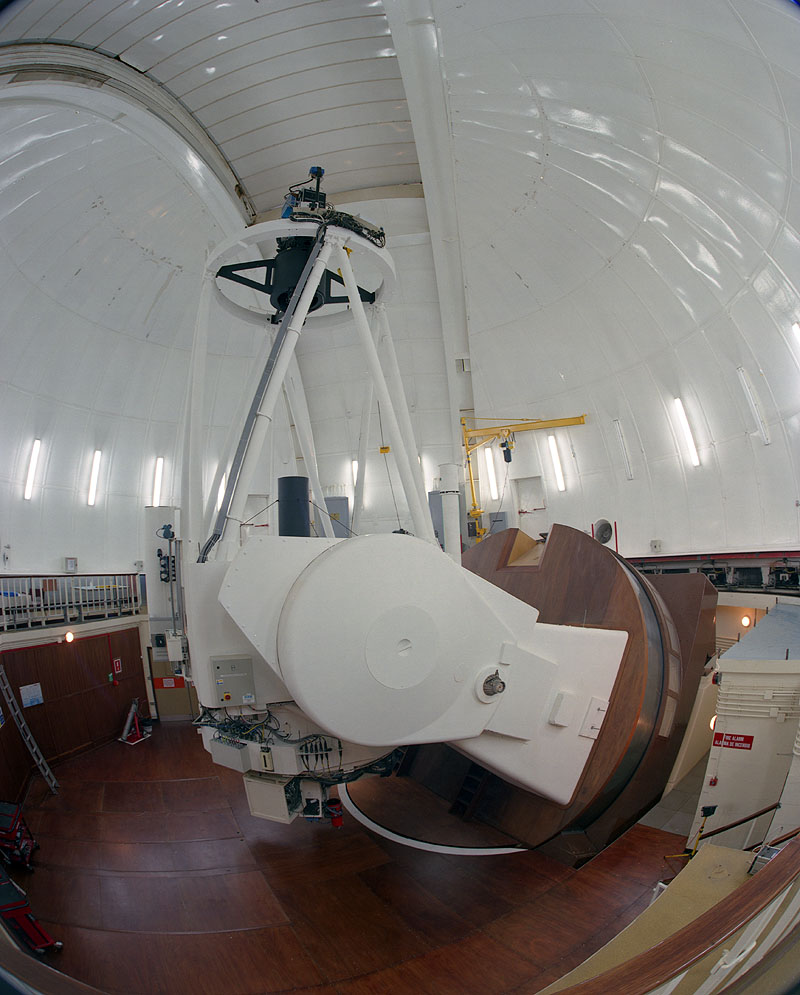
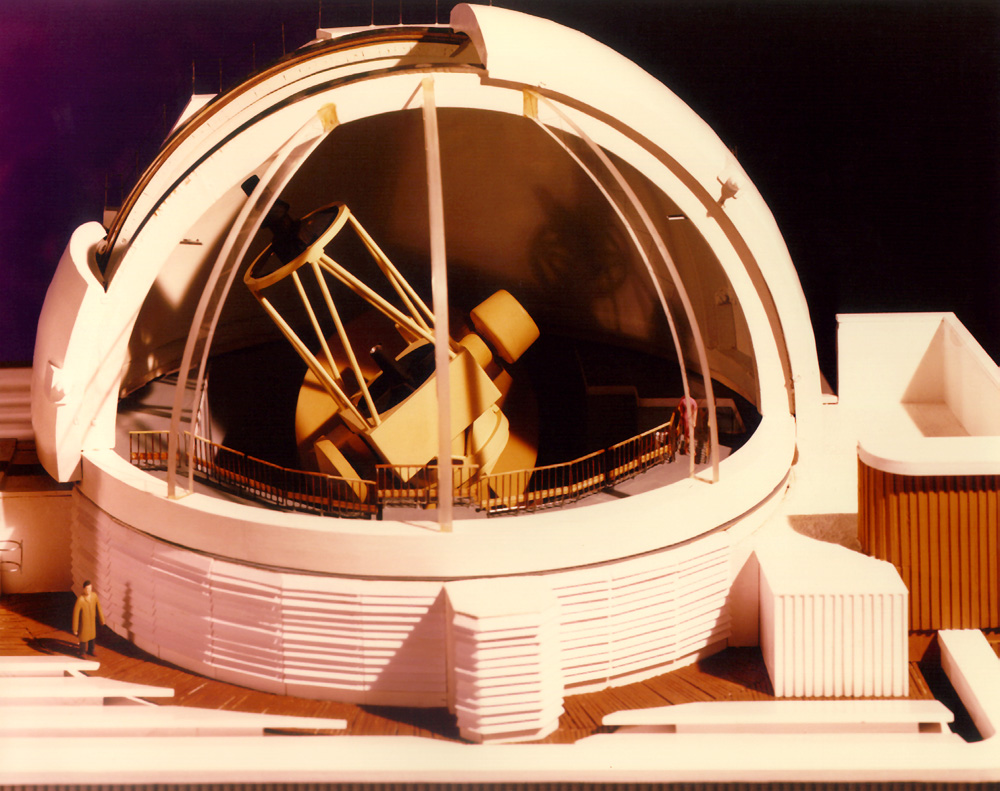
The telescope has a polar disc/fork type equatorial mounting. Current
telescope operational range is as follows:
A more detailed description of the optics and the mounting of the INT is available in the Observers' Guide. The INT's Telescope Control System runs on a DEC Alpha machine. For more information please see the INT TCS manual.
For other facts on the INT see the public
information web pages.
For applying for observing time and preparing observations, please visit the ING Astronomy web pages.
Note that the WFC and the IDS will be scheduled in minimum blocks of
4 weeks, as the ING can only support a small number of instrument changes
every semester. For this reason, we invite the community to present large
programmes to make the best use of the INT (smaller proposals asking no less
than 4 nights are still accepted however).
A detailed description of how to operate the telescope and the instrument is contained in the Wide Field Camera Home Page and in the IDS Home Page respectively.
When the laser is working at the WHT, INT observers should monitor
the TELESCOPE SUMMARY in the Laser Traffic Control System
web page, in order to check if there is any limitation in the INT pointing
because of collisions with the laser.