| |||
|

| Home > Astronomy > William Herschel Telescope > Quality Control > WHT time lost to bad weather |
|
| |||
|
| Home > Astronomy > William Herschel Telescope > Quality Control > WHT time lost to bad weather |
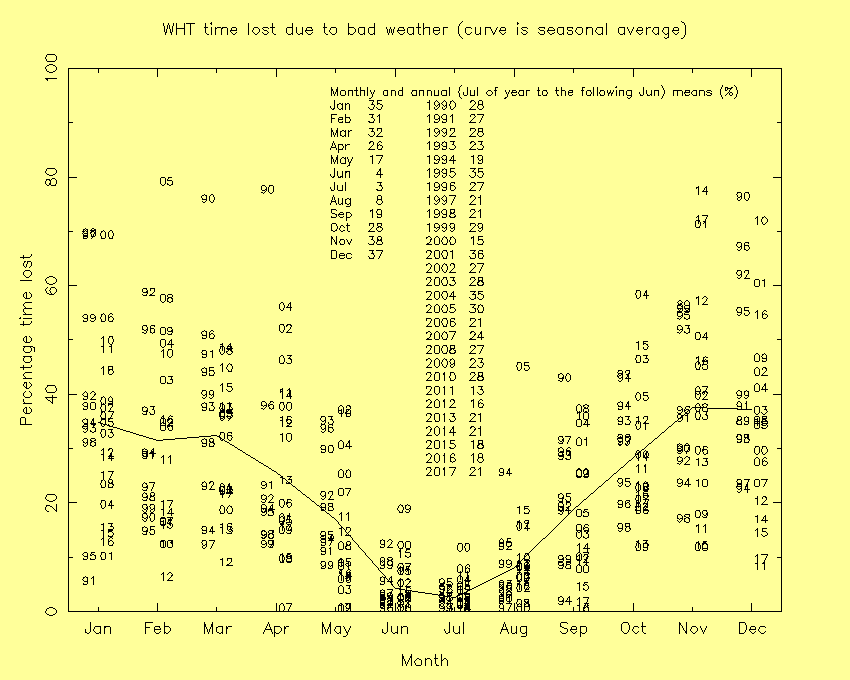
WHT time lost to bad weatherThe plot below shows for each month the fraction of night between dusk and dawn astronomical twilights when the planned observations could not be carried out due to bad weather. The plot symbols are the last two digits of the year. Engineering/commissioning nights, service/discretionary nights and nights when observers were using their own instrument, are excluded from the data. The raw data (more up-to-date) from which the plot was constructed are here.
Clear nights are almost guaranteed in June and July, while in December,
the chance of clear sky is only 60%.
Saharan dust ('calima') can significantly raises the extinction
(by up to 1 mag) on some nights, particularly in July to September.
At the WHT, the dome is closed (i.e. time is lost to 'bad weather') if any of the following apply:
A comparison of bad-weather statistics for the WHT, INT and JKT can be found on the ING site-quality pages. At other good observing sites, typically 20 - 35% of observing time is lost to bad weather.
Average usable hours per night
For planning surveys requiring a large amount of telescope time (e.g. WEAVE), other considerations must be taken into account:
How long does a spell of bad-weather last?
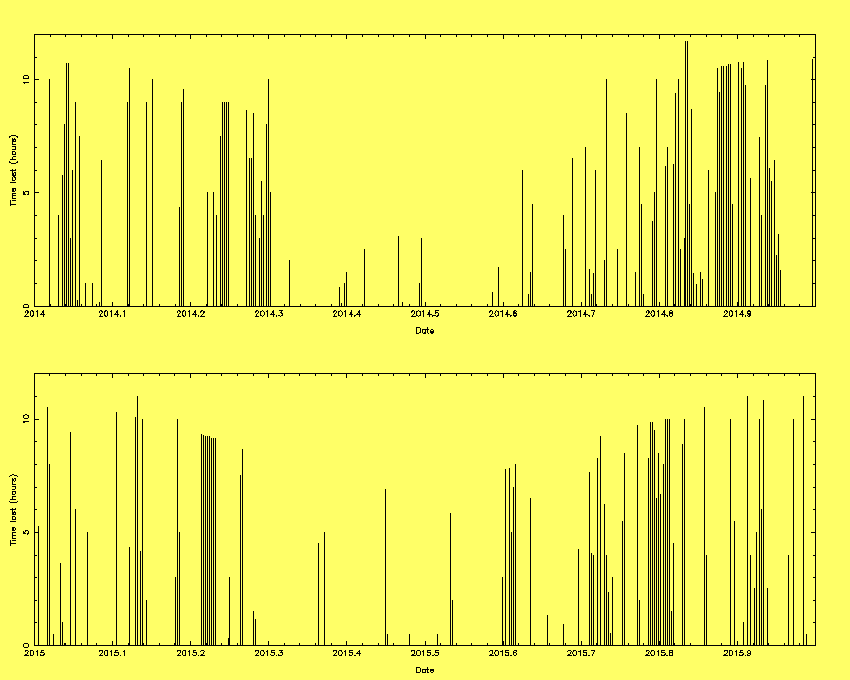
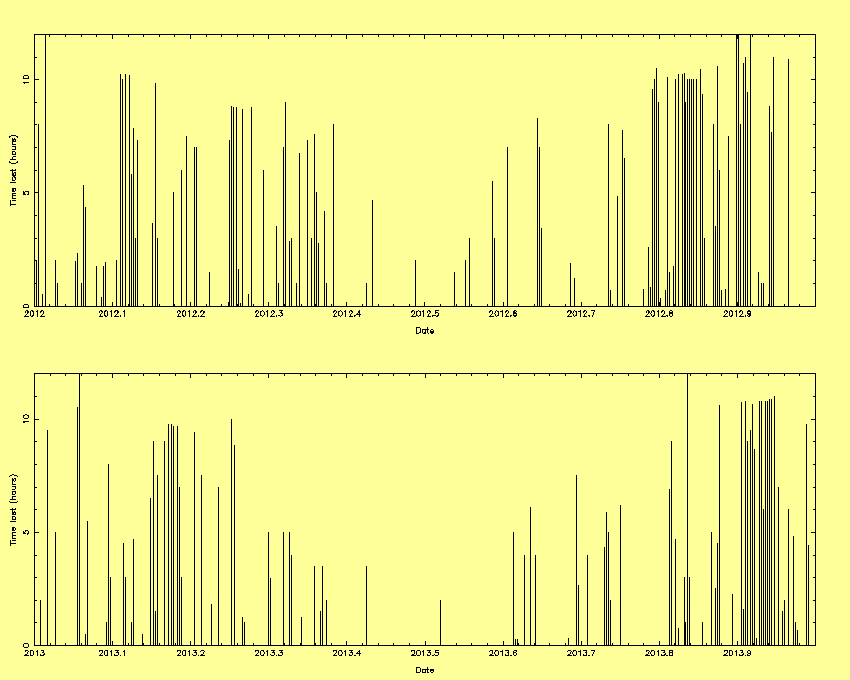
The plots show the seasonal variation in bad weather (and in length of night); the strongly bimodal distribution of number of hours lost (usually zero, or nearly all); and bad-weather spells typically lasting several nights. Similar plots for 2012 and 2013 can be found here. The table below shows, for each month m, the fraction F(m) of bad-weather nights (defined as nights on which more than 2 hours are lost), averaged over 2006-15:
     Jan   Feb   Mar   Apr   May   Jun   Jul   Aug   Sep   Oct   Nov   Dec

     0.33  0.38  0.36  0.30  0.14  0.06  0.02  0.10  0.25  0.37  0.43  0.39
The probability that a bad-weather night is followed N nights later by another is: N Jan Feb Mar Apr May Jun Jul Aug Sep Oct Nov Dec 1 0.54 0.66 0.55 0.54 0.33 0.21 0.17 0.29 0.46 0.59 0.62 0.61 2 0.50 0.50 0.46 0.45 0.31 0.11 0.00 0.19 0.39 0.50 0.53 0.54 3 0.50 0.50 0.45 0.43 0.33 0.11 0.00 0.19 0.35 0.46 0.47 0.46 4 0.49 0.49 0.42 0.42 0.29 0.05 0.00 0.10 0.32 0.47 0.42 0.45 5 0.43 0.45 0.32 0.34 0.21 0.05 0.00 0.19 0.31 0.46 0.41 0.40 6 0.42 0.45 0.34 0.36 0.17 0.05 0.00 0.13 0.28 0.47 0.46 0.39 7 0.35 0.47 0.32 0.31 0.14 0.05 0.00 0.13 0.34 0.46 0.43 0.41 8 0.32 0.44 0.26 0.25 0.14 0.00 0.00 0.16 0.31 0.41 0.39 0.43 9 0.34 0.43 0.28 0.24 0.12 0.00 0.00 0.06 0.32 0.42 0.41 0.47 10 0.36 0.43 0.28 0.33 0.05 0.05 0.00 0.10 0.27 0.40 0.48 0.37 In other words, the a priori probability of a random night in month m being a bad-weather night is F(m), but the probability is higher than F(m) for a few nights after any given bad-weather night. For the night immediately following a bad-weather night (i.e. N = 1), the probability is ~ 1.8 x F(m). The probability drops to ~ 1.3 x F(m) after typically N ~ 3 - 4 nights. |
| Top | Back |
|