| |||
|

| Home > Public Information > Astronomical Images > ING Picture Gallery > The Solar System |
The Solar System
|
IMPORTANT: Please note that this page is no longer valid. The astronomical image archive is now linked at https://astro.ing.iac.es/outreach/astro.php. Please update your records! |
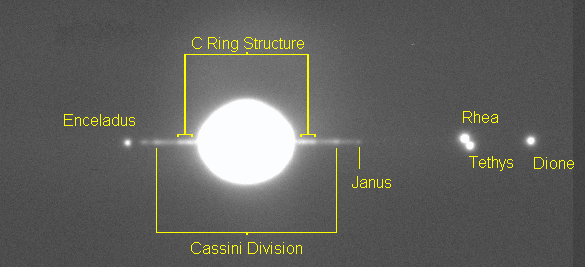
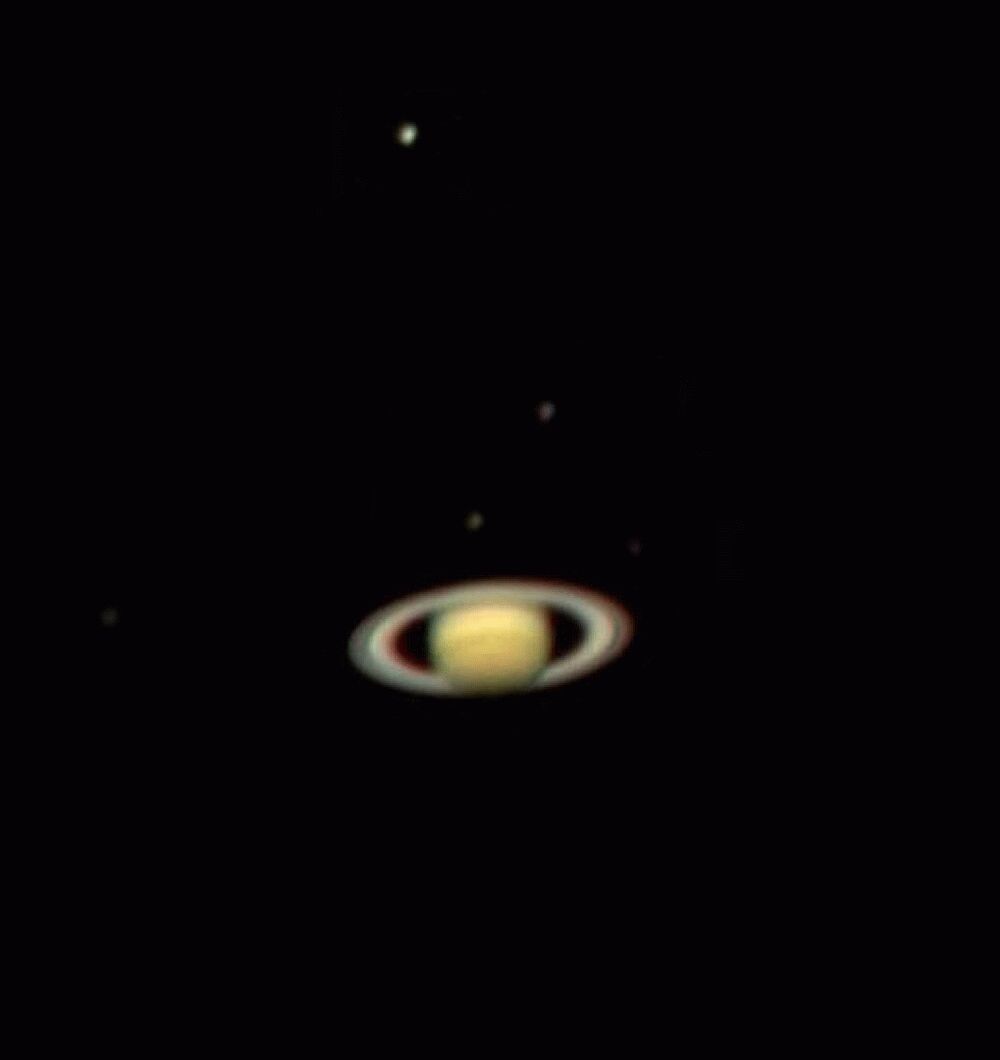
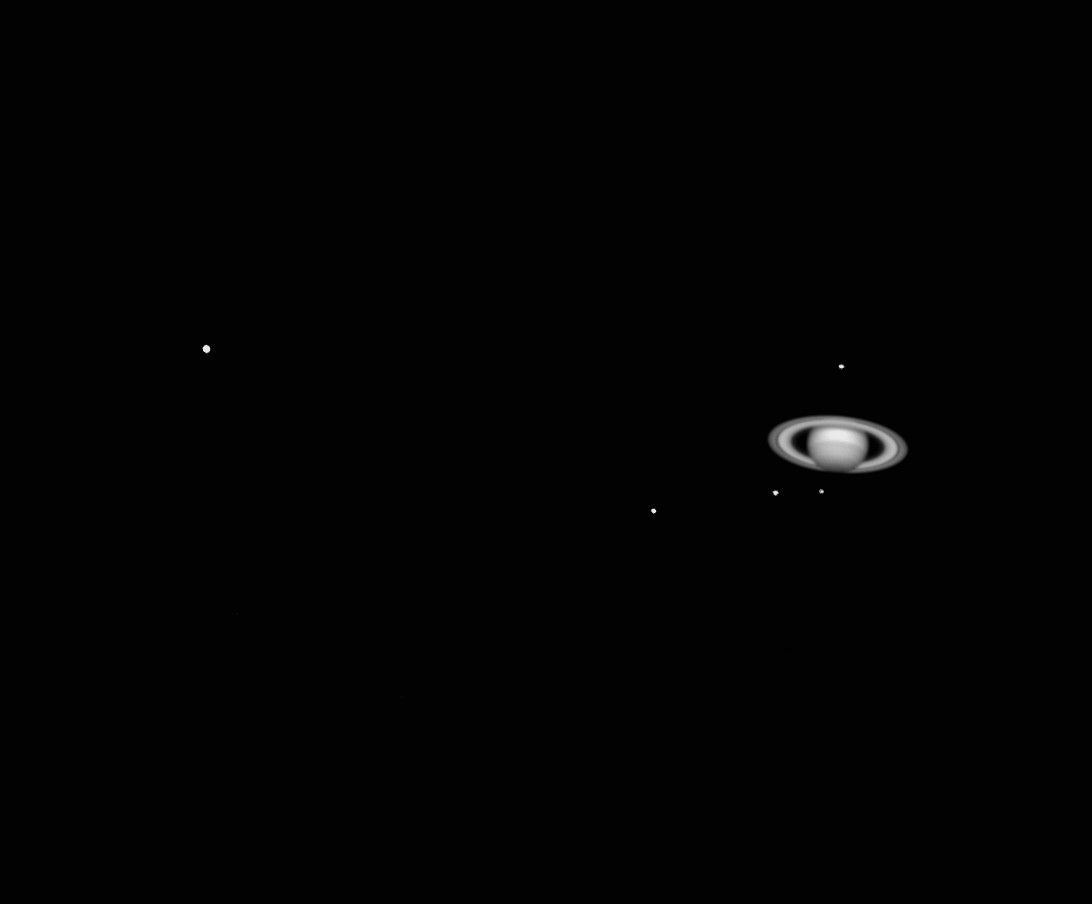
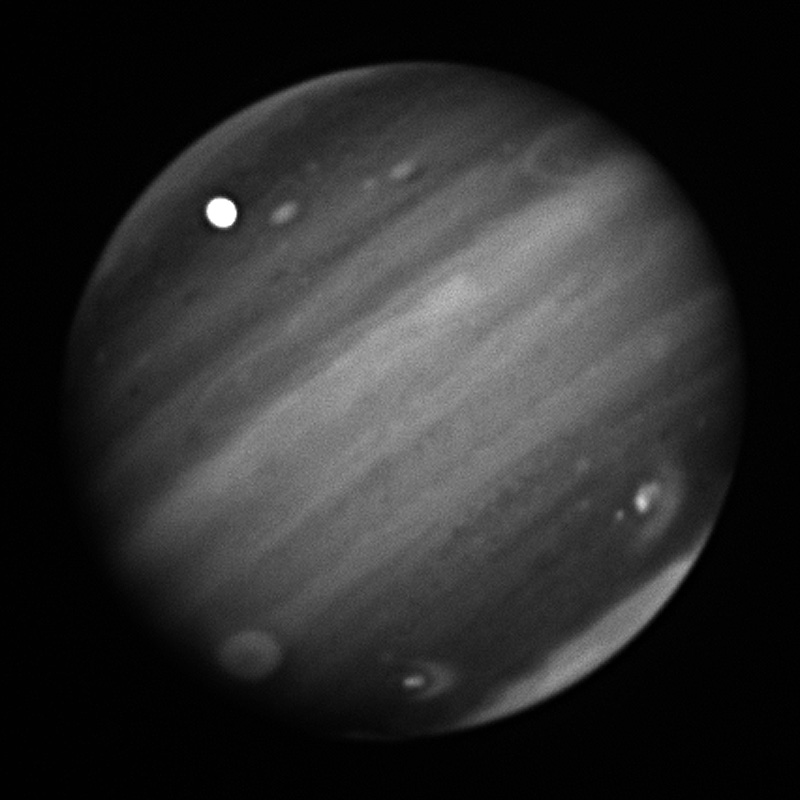
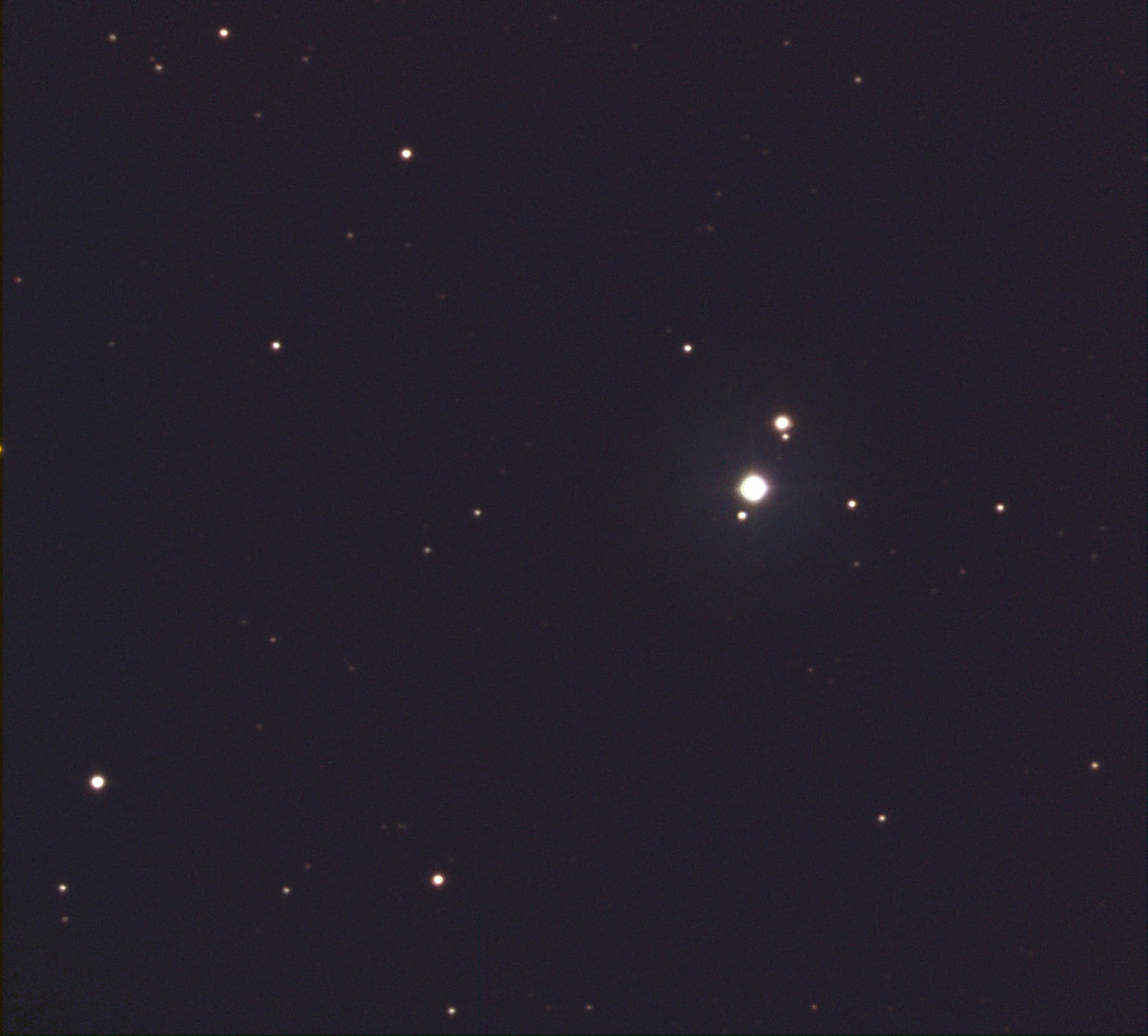
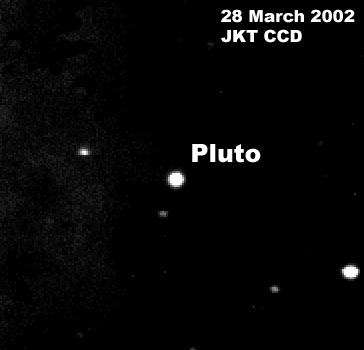
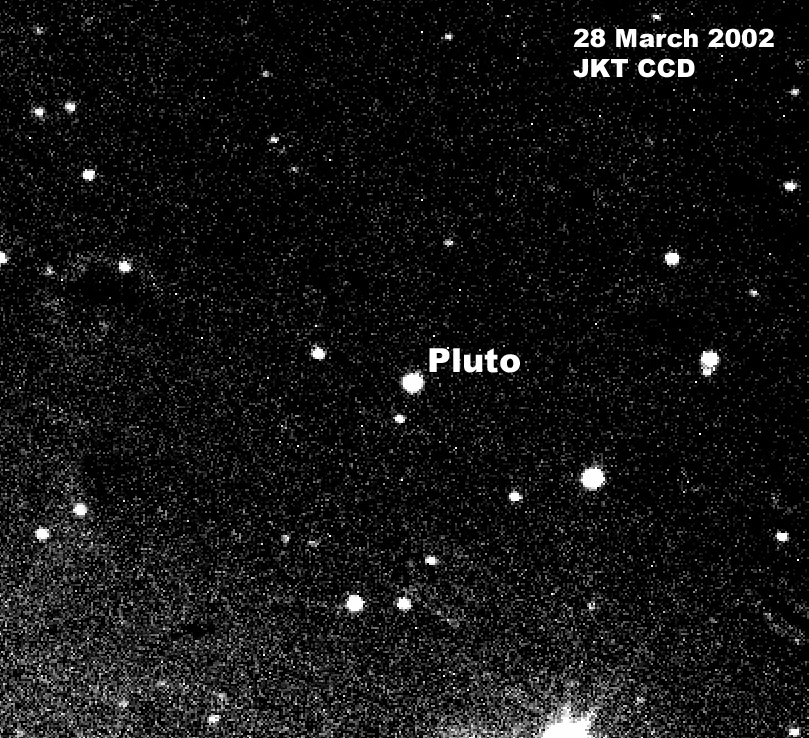
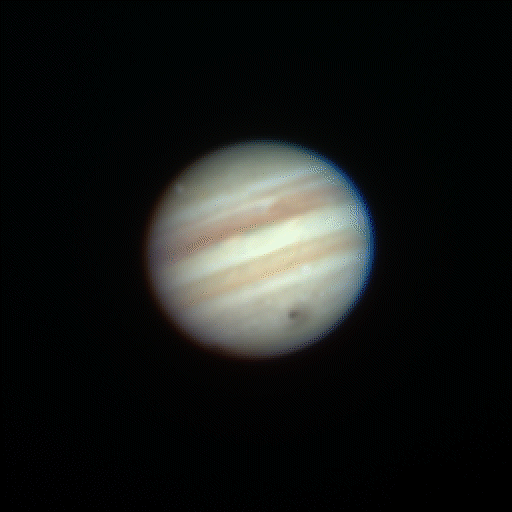
Planets and SatellitesA planet is an astronomical body in orbit around the Sun, or another star, which has a mass too small for it to become a star itself (less than about one-twentieth the mass of the Sun) and shines only by reflected light. Planets may be basically rocky objects, such as the inner planets - Mercury, Venus, Earth and Mars - or primarily gaseous, with a small solid core like the outer planets - Jupiter, Saturn, Uranus and Neptune. Together with Pluto, these are the major planets of the Solar System.
1. |




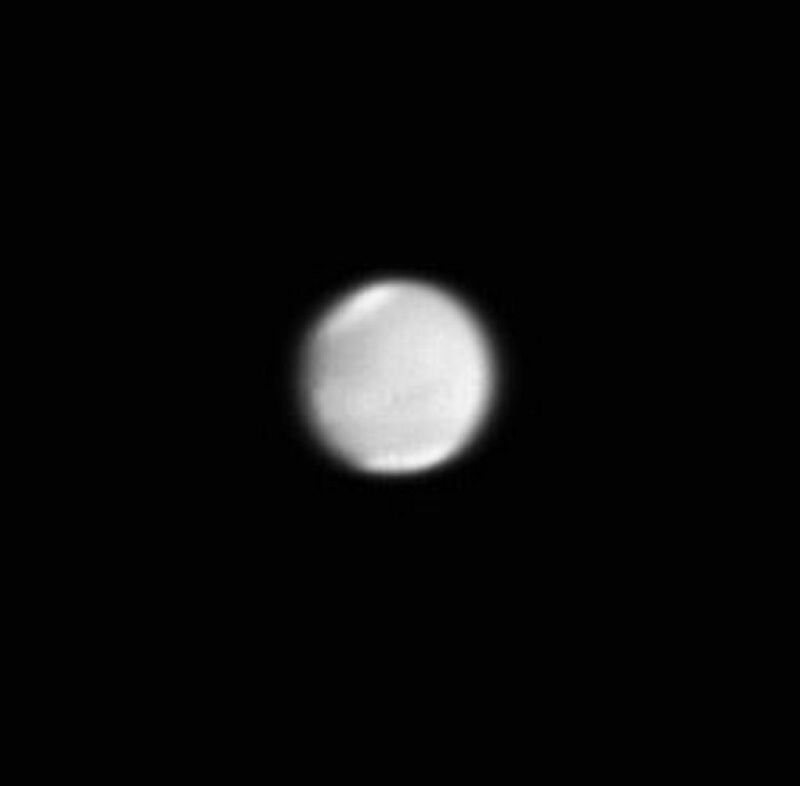
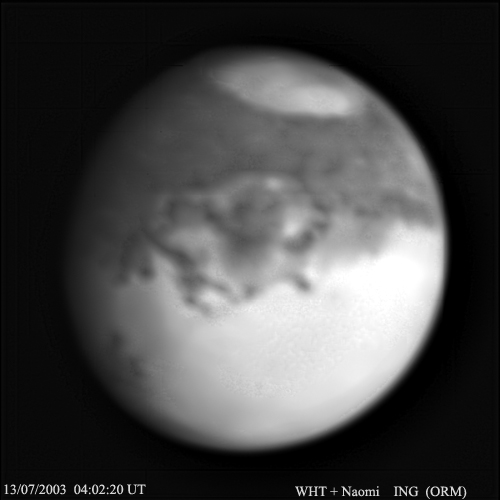
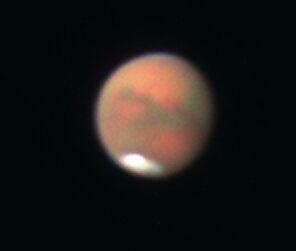

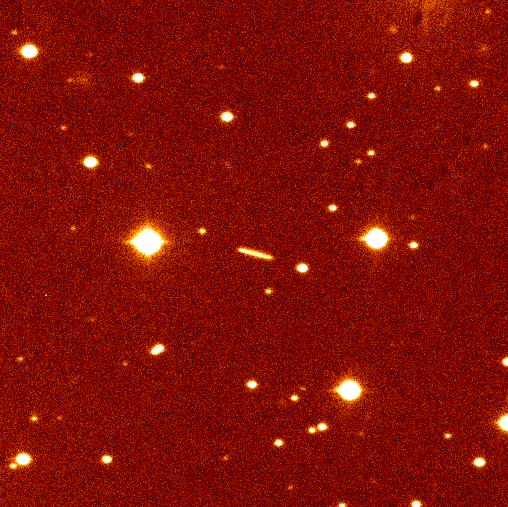
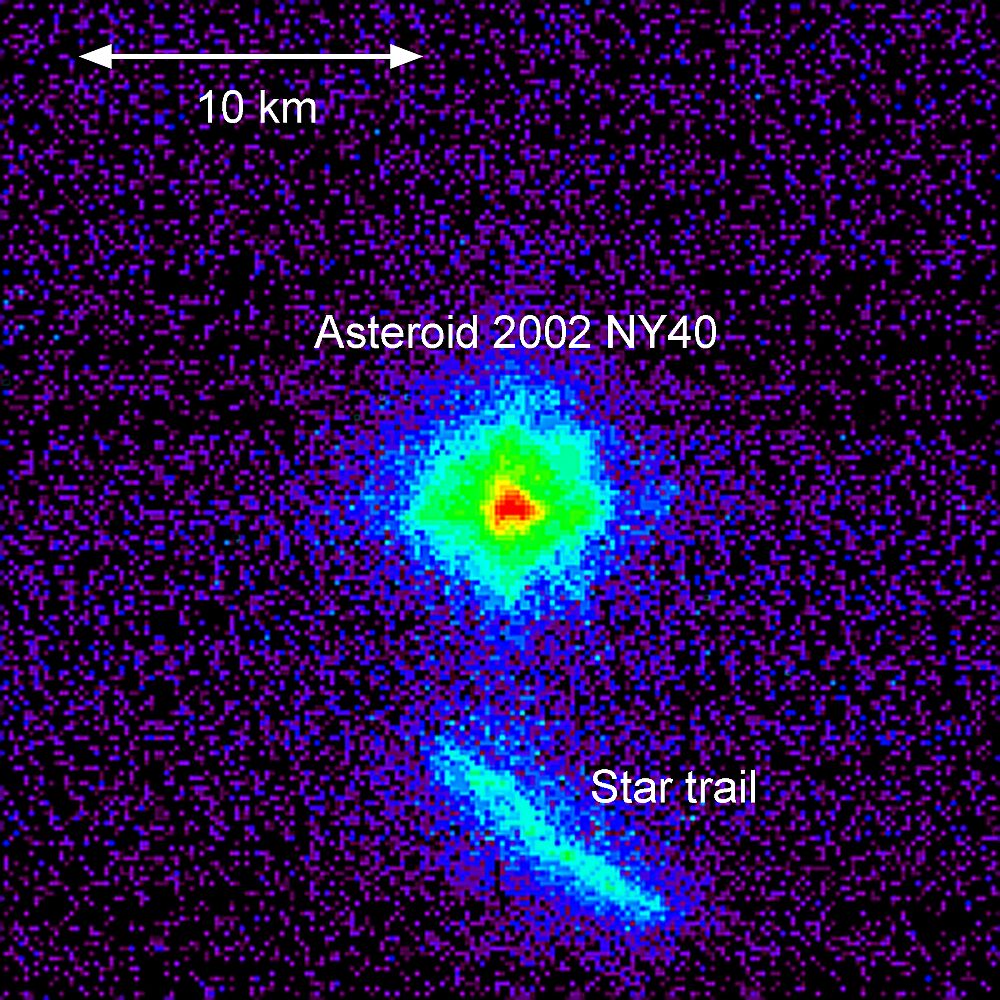
AsteroidsOn the first day of January 1801, Giuseppe Piazzi discovered an object which he first thought was a new comet. But after its orbit was better determined it was clear that it was not a comet but more like a small planet. Piazzi named it Ceres, after the Sicilian goddess of grain. Three other small bodies were discovered in the next few years (Pallas, Vesta, and Juno). By the end of the 19th century there were several hundreds. Several hundred thousand asteroids have been discovered and given provisional designations so far. Thousands more are discovered each year. There are undoubtedly hundreds of thousands more that are too small to be seen from the Earth. There are 26 known asteroids larger than 200 km in diameter. Our census of the largest ones is now fairly complete: we probably know 99% of the asteroids larger than 100 km in diameter. Of those in the 10 to 100 km range astronomers have cataloged about half. But we know very few of the smaller ones; perhaps as many as a million 1 km sized asteroids may exist.
|
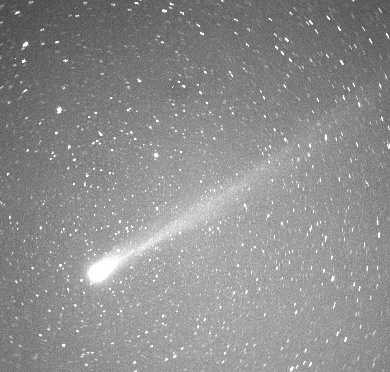
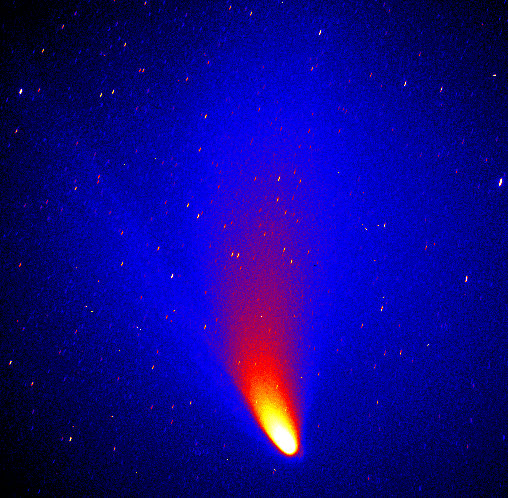
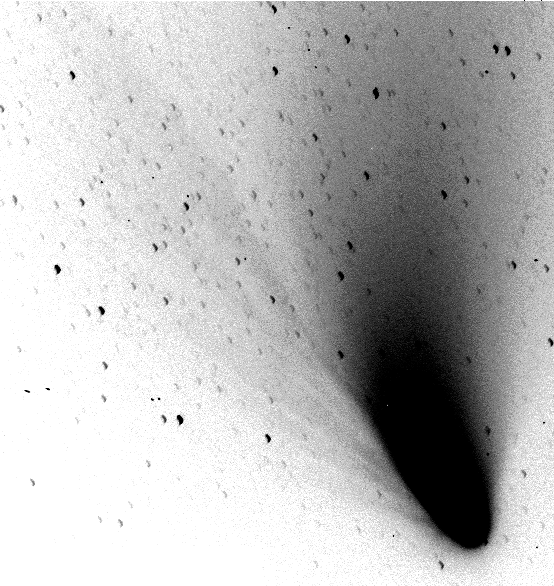
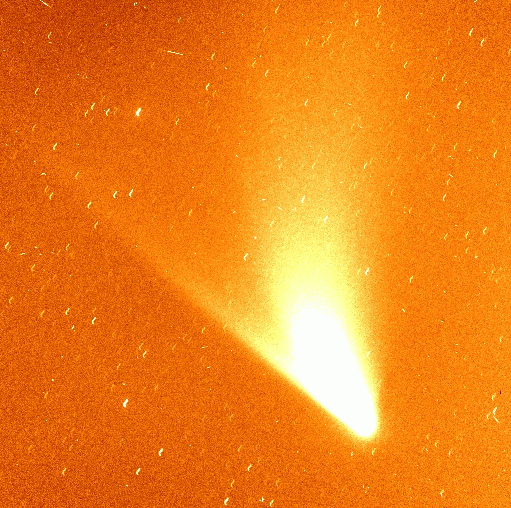
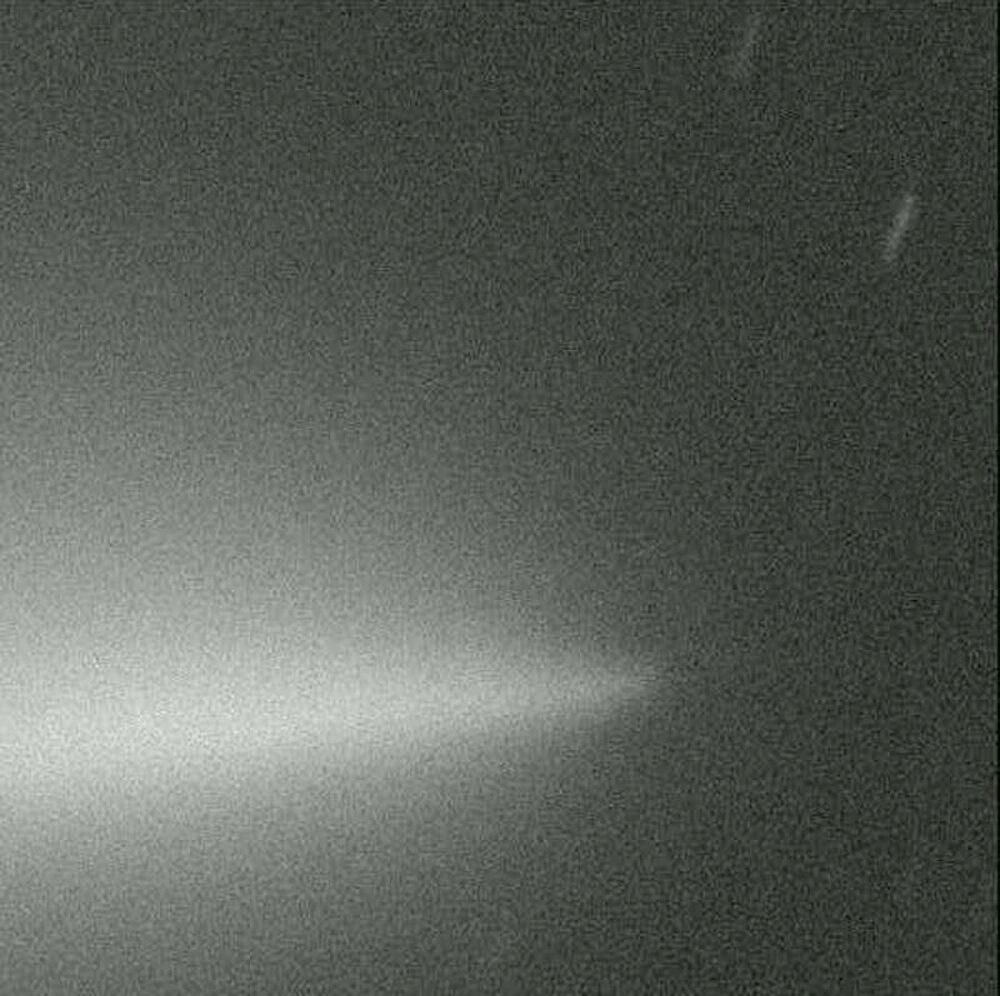
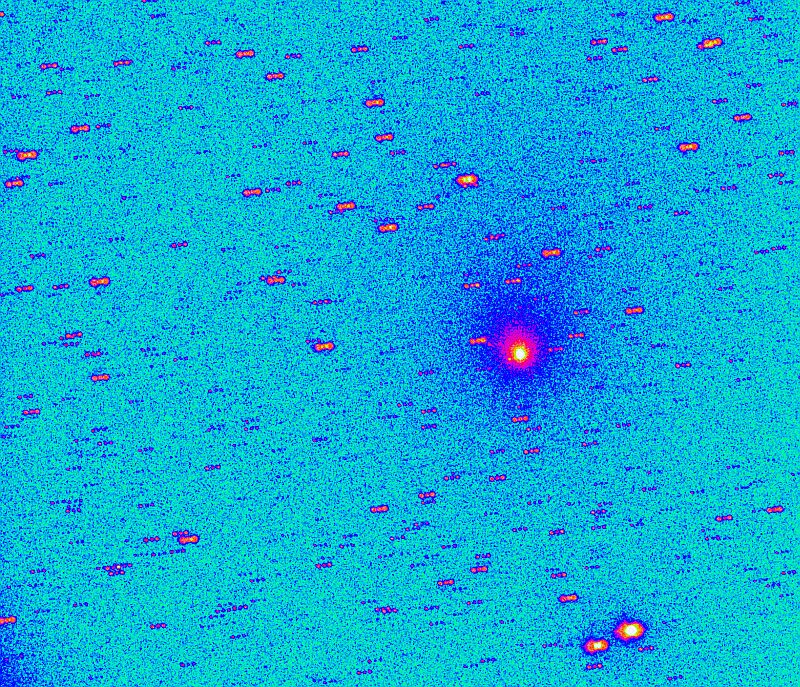
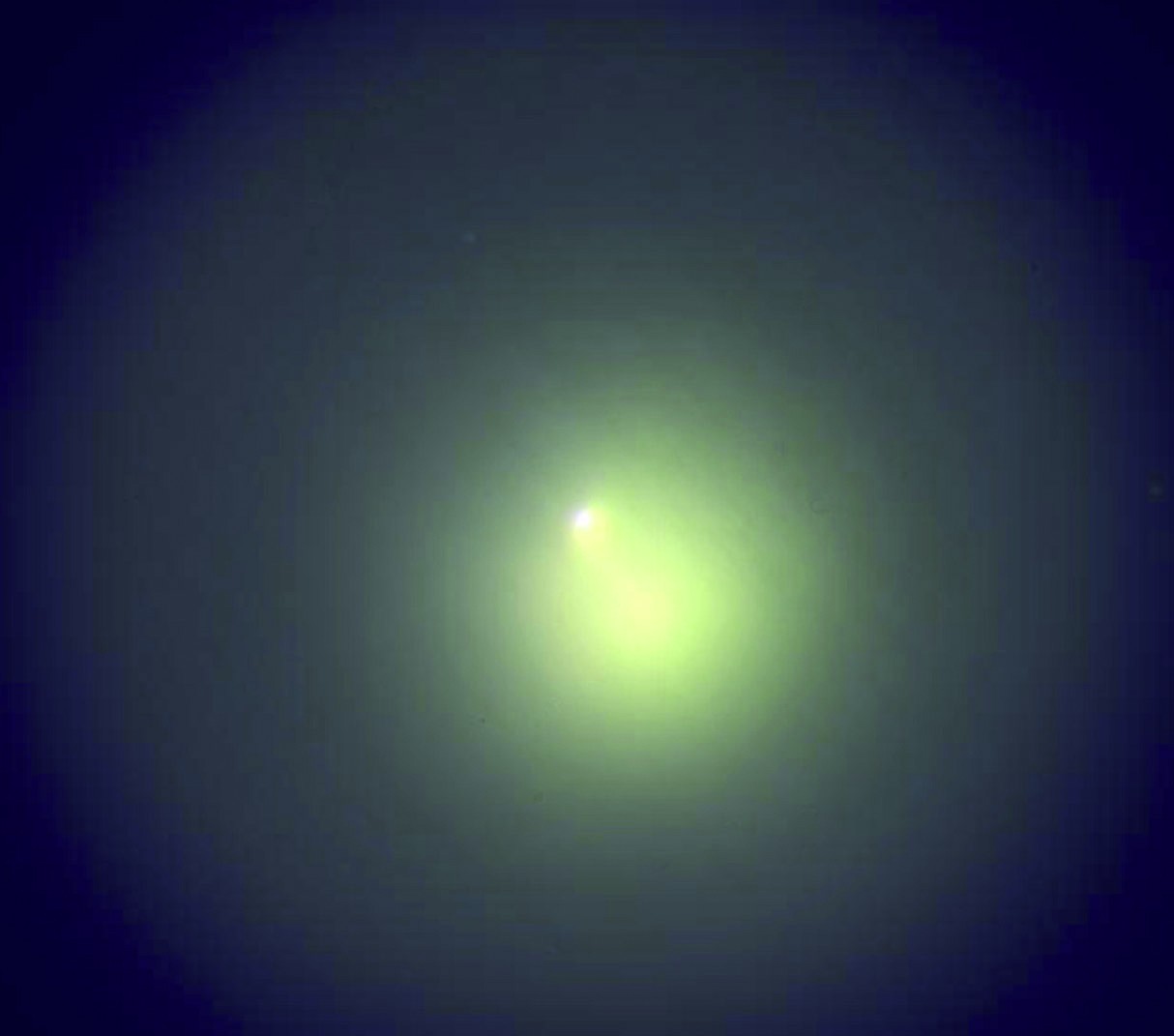
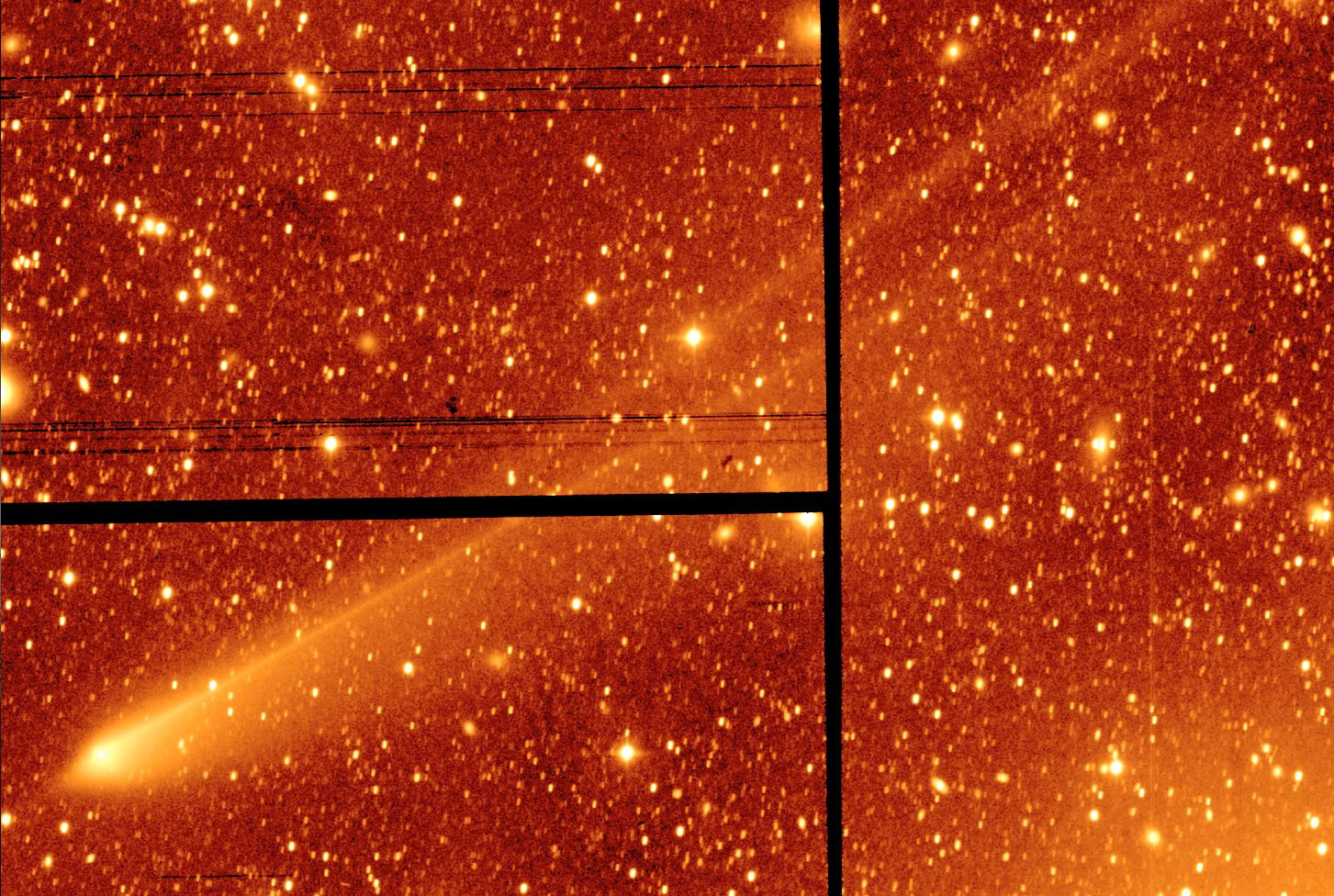
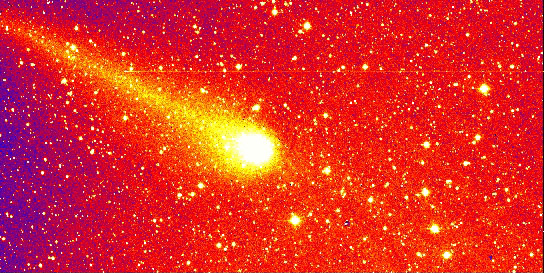
CometsComets are icy bodies orbiting in the Solar System, which partially vaporize when it nears the Sun, developing a diffuse envelope of dust and gas and, normally, one or more tails. Ground-based observations of the behaviour of many comets, together with results from the investigation in 1986 of Halley's Comet from space probes, support the view first proposed by F. Whipple in about 1949 that the nuclei of comets are essentially 'dirty snowballs' a few kilometres across. They appear to be composed of frozen water, carbon dioxide, methane and ammonia, in which dust and rocky material is embedded. As a comet approaches the Sun, solar heating starts to vaporize the ices, releasing gas that forms a diffuse luminous sphere, called the coma, around the nucleus. The coma may be up to a million kilometres across. The nucleus itself is too small to be observed directly. Dust and gas leave the comet's nucleus in the form of jets on the side facing the Sun, then stream away under the Sun's influence. Electrically charged ionized atoms are swept away directly by the magnetic field of the solar wind, forming straight ion tails (alternatively called Type I, plasma or gas tails). Variations in the solar wind cause the ion tail to take on structure, or even break off in a disconnection event. Small neutral dust particles are not carried along by the solar wind but get 'blown' gently away from the Sun by radiation pressure. Dust tails (also called Type II tails) are often broad and flat. The tail grows as a comet approaches the Sun and are always directed away from the Sun: they can be as much as a hundred million kilometres long. Large dust particles become strewn along the comet's orbit and form meteor streams.
1 |





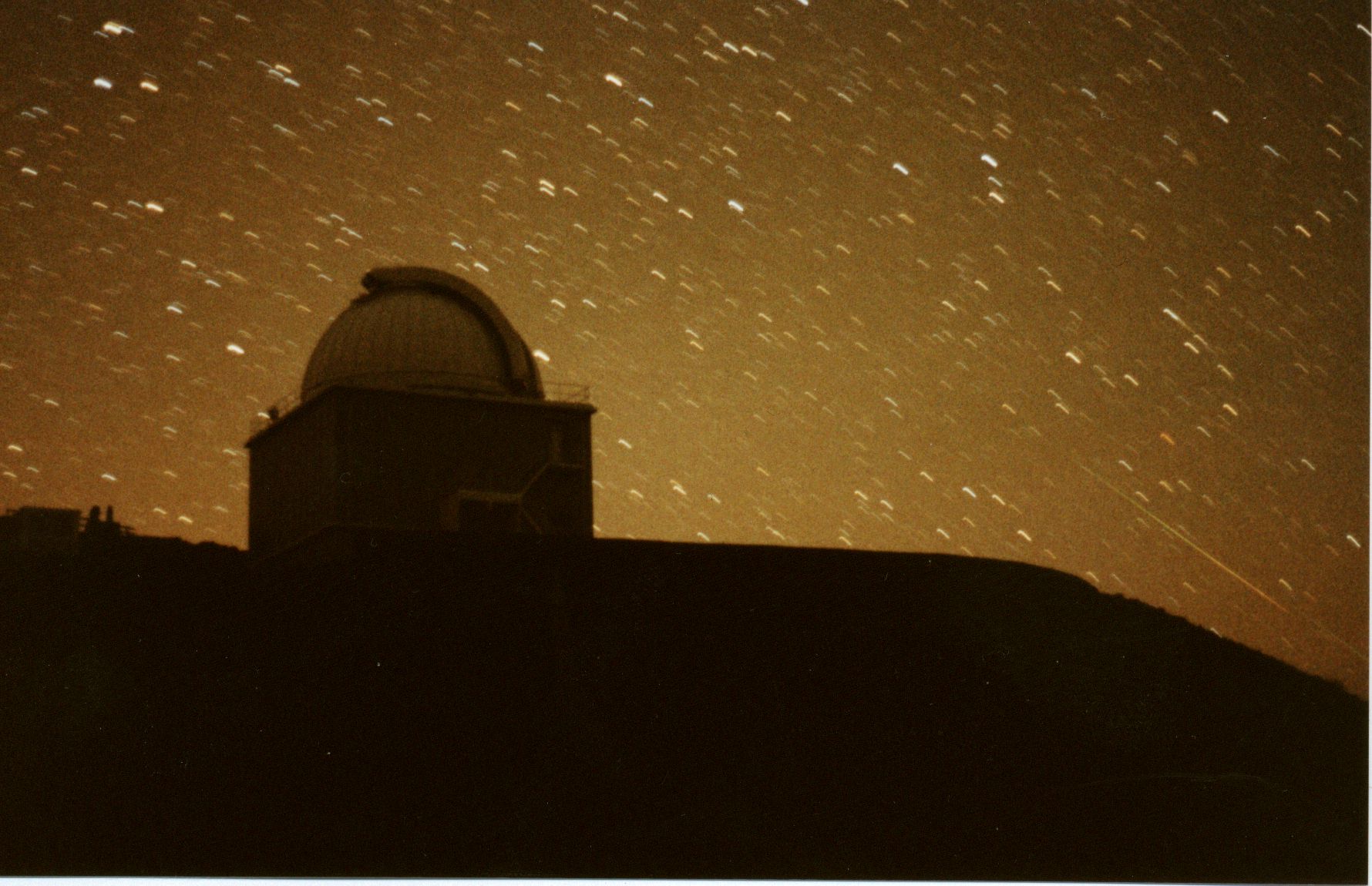
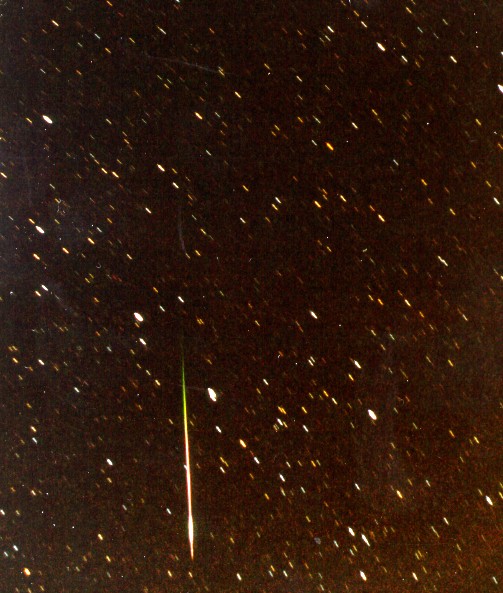
Meteors and zodiacal light
A meteor is a brief luminous trail
observed as a particle of dust or piece of rock from space when it enters
the Earth's upper atmosphere, The popular name for a meteor is shooting
star or falling star.
|
| Top | Back |
|