About WEAVE
WEAVE is a powerful, next-generation multi-fibre spectrograph on the WHT. It uses optical fibres to gather light from celestial sources and transmits it to a two-arm spectrograph, and records them on large-format CCD light detectors. The raw data are transferred over the internet to computers at the Cambridge Centre of Excellence for Astronomical Data (CamCEAD) and the Instituto de Astroífisica de Canarias (IAC), and the science-ready products are stored in an archive at the facilities of the Telescopio Nazionale Galileo (TNG, operated by FGG for INAF) at the Roque de Los Muchachos Observatory, Spain.
WEAVE's versatility is one of its biggest strengths. While the LIFU mode hosts 547 fibres closely-packed to image extended areas of the sky, in the MOS mode up to 960 individual fibres can be separately positioned using two robots to gather light from many hundreds of stars, galaxies or quasars. In the mIFU mode, the fibres are organised into 20 units, each consisting of 37 fibres, that are used to study small extended targets such as nebulae and distant galaxies. Read more at WEAVE - Instrument Overview.
Funding for the WEAVE facility has been provided by UKRI STFC, the University of Oxford, NOVA, NWO, Instituto de Astrofísica de Canarias (IAC), the Isaac Newton Group partners (UKRI STFC, NWO, and Spain, led by the IAC), INAF, CNRS-INSU, the Observatoire de Paris, Région Îlele-de-France, CONACYT through INAOE, the Ministry of Education, Science and Sports of the Republic of Lithuania, Konkoly Observatory (CSFK), Max-Planck-Institut für Astronomie (MPIA Heidelberg), Lund University, the Leibniz Institute for Astrophysics Potsdam (AIP), the Swedish Research Council, the European Commission, and the University of Pennsylvania. The WEAVE Survey Consortium consists of the ING, its three partners, represented by UKRI STFC, NWO, and the IAC, NOVA, INAF, GEPI, INAOE, Vilnius University, FTMC – Center for Physical Sciences and Technology (Vilnius), and individual WEAVE Participants.
See the full list of granting agencies and grants supporting WEAVE, and read more on the WEAVE-project website.
About the William Herschel Telescope
The 4.2m Willliam Herschel Telescope (WHT) is operated on the island of La Palma (Canary Islands, Spain) by the Isaac Newton Group of Telescopes (ING) at the Spanish Observatorio del Roque de los Muchachos of the Instituto de Astrofísica de Canarias (IAC). The ING is funded by the Science and Technology Facilities Council (STFC-UKRI) of the United Kingdom, the Nederlandse Organisatie voor Wetenschappelijk Onderzoek (NWO) of the Netherlands, and the IAC in Spain. The IAC's contribution to the ING is funded by the Spanish Ministry of Science, Innovation and Universities.
Research paper
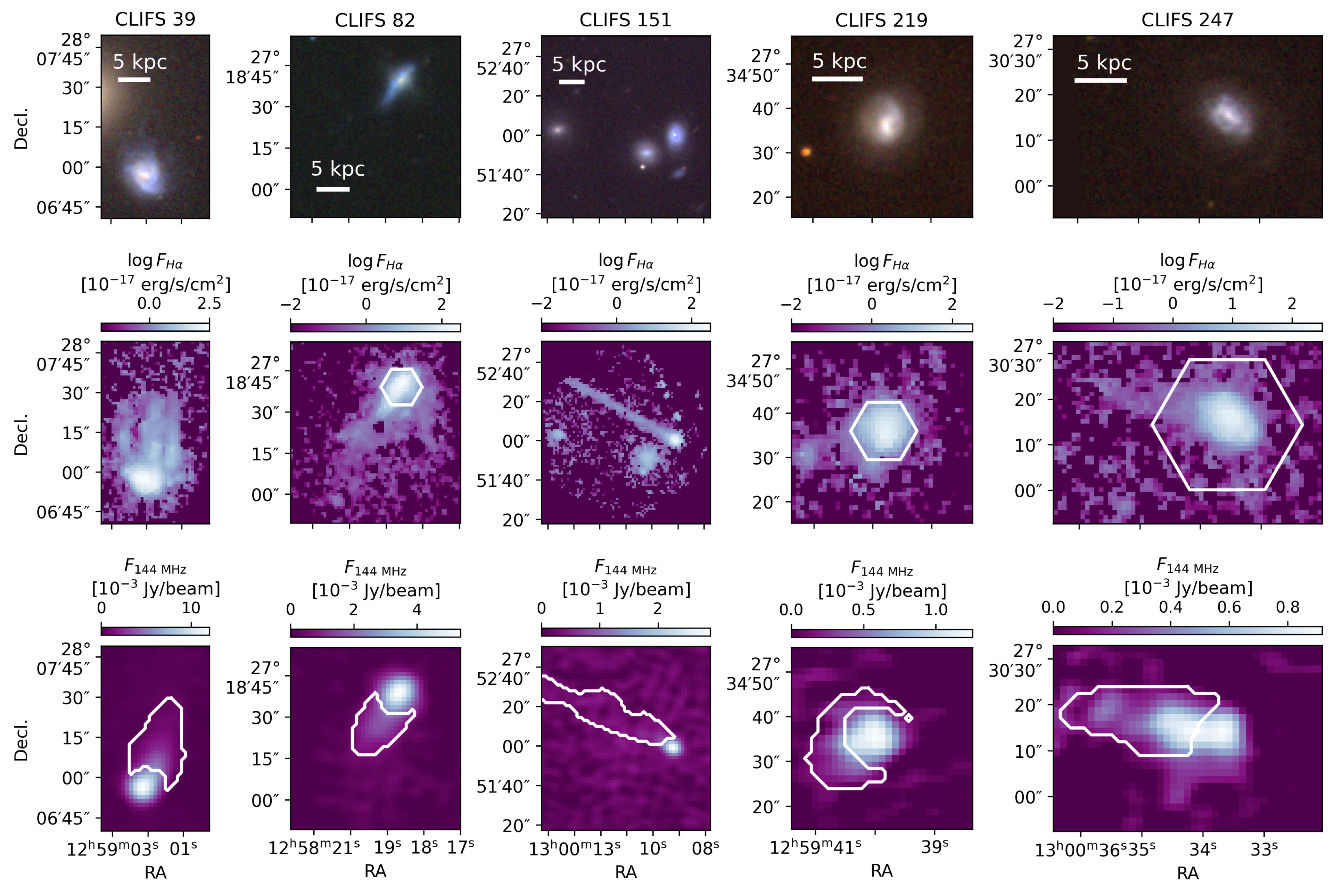
Foster, Lauren et al., 2026, "Early Results from the Coma Legacy IFU Survey (CLIFS): Ram Pressure Induced Shocks and Ionization in Jellyfish Tails", ApJ, 999, 164 [ Paper ].
Science contact
Dr Ian Roberts
Waterloo Centre for Astrophysics, Canada
ianr uwaterloo.ca
Media contact
Javier Méndez
ING PR Officer
Email: outreaching.iac.es