| |||
|

| Home > Public Information > Scientific Highlights > 1997 |
COMET HALE-BOPP:
FIRST EVER IMAGES OF A NEUTRAL GAS TAIL
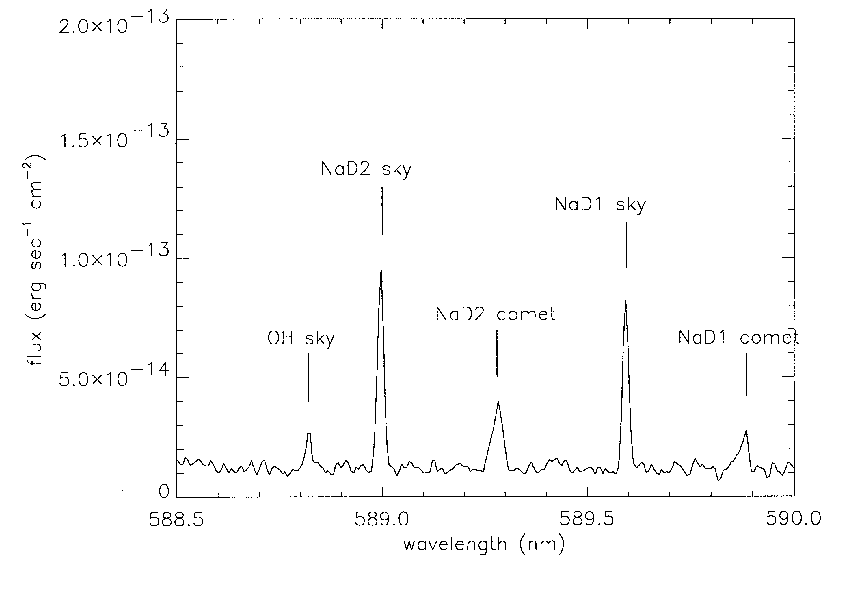
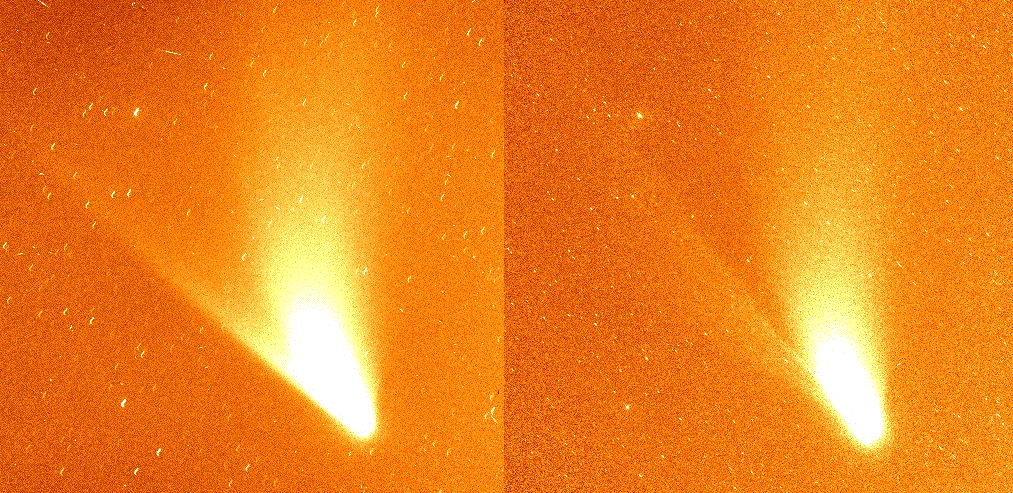
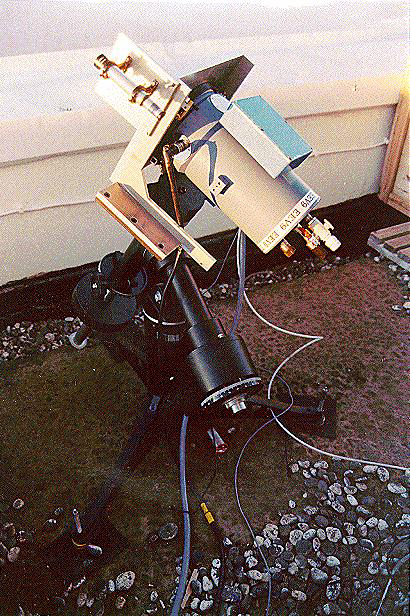
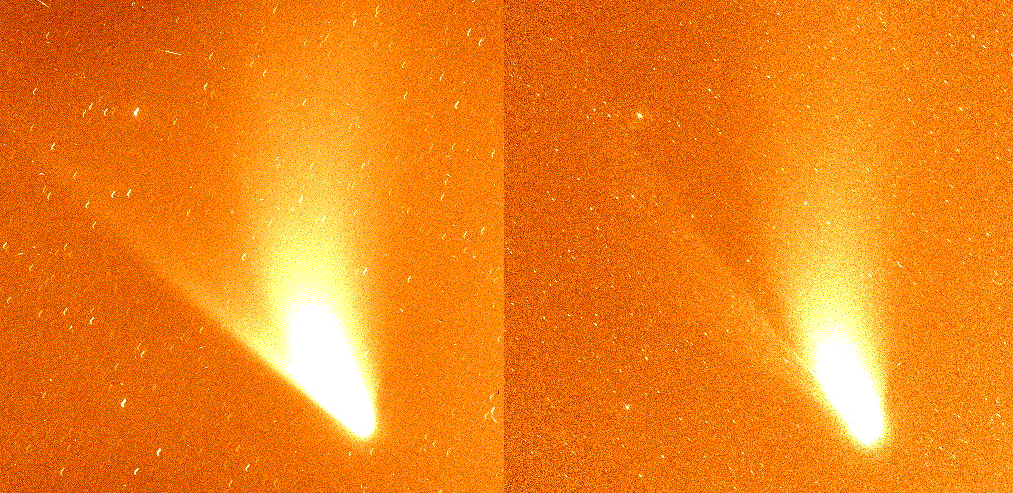
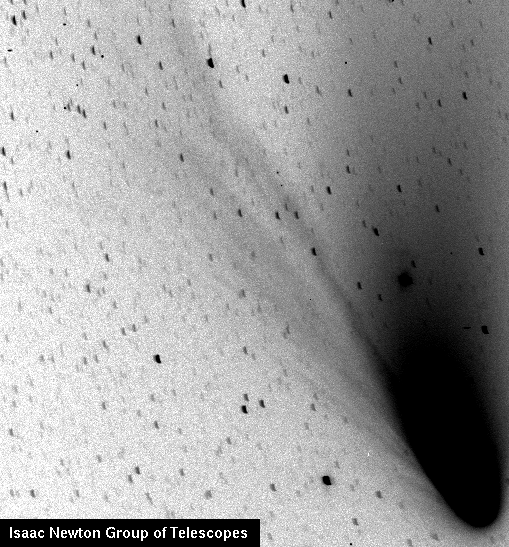
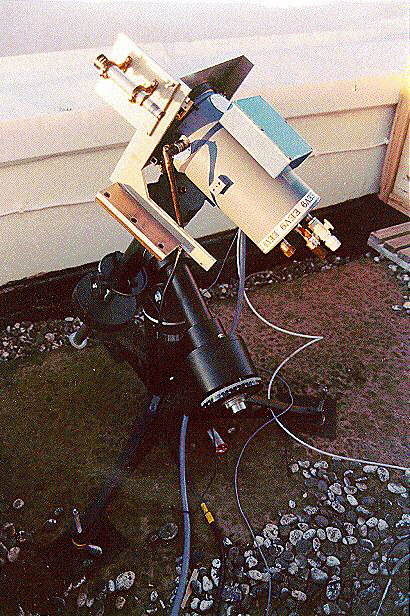
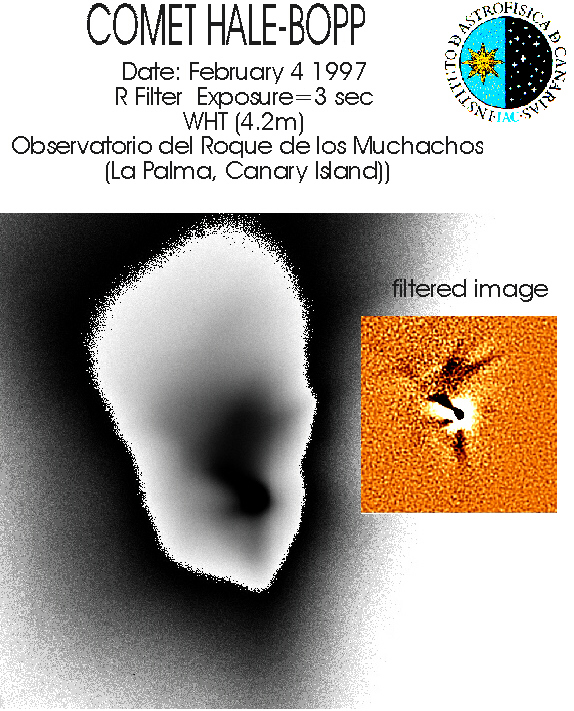
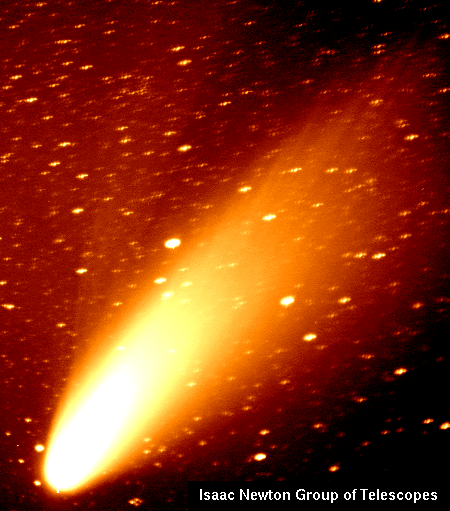
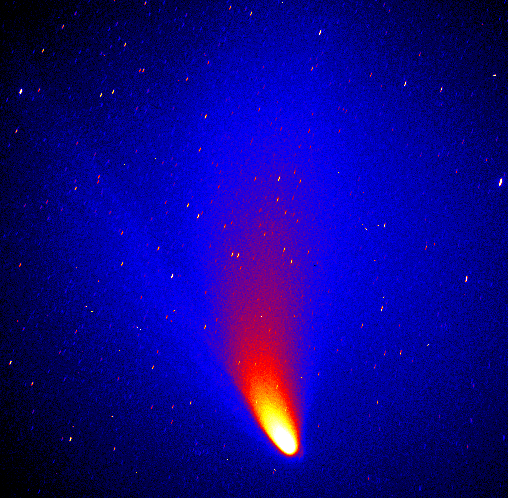
CoCAM, WHT+UES The 1997 International Time Project on comet Hale-Bopp was a great success and several major discoveries were made, including the first detection of a neutral gas tail, the observation of "cyanogen shells" and the detailed study of the rotation of the nucleus. Members of the Comet Hale-Bopp European Team participated in this project. This team was formed in early 1996 to co-ordinate European observing efforts because comet Hale-Bopp provided an extraordinary opportunity for scientists to observe a bright comet in great detail with the most advanced instrumentation, including the last generation of digital detectors. Observations carried out to study the distribution of sodium atoms in comet C/1995 O1 Hale-Bopp led to the discovery of a new type of comet tail. Sodium atoms had previously been seen near the center of other comets, but these observations revealed for the first time a straight tail of sodium 6 degrees long. The discovery images were taken with the CoCAM wide-field CCD camera, built and operated by staff at the Isaac Newton Group, set up next to the INT. CoCAM consists of a 35-mm camera zoom lens working at f/3.5 and imaging onto a 2220 × 1180 pixel EEV CCD chip, whose pixel size of 22.5m square corresponds to 26", thereby achieving on the sky a total field of 17° × 9°. On 16 April members of the European Comet Hale-Bopp Team made several exposures of the comet through a narrow filter that isolates emission from sodium atoms, and to their great surprise they found that these atoms were distributed over an enormous region in and around the comet. Contrary to earlier observations of bright comets near the Sun, the sodium was present not only in the region next to the cometary nucleus, but there were also large amounts in the region of the cometary tails. Following a careful analysis of the observed distribution of these atoms, the astronomers concluded that comet Hale-Bopp displayed a third type of tail never seen before and consisting of sodium atoms. Whereas the well-known ion and dust tails so prominently displayed by Hale-Bopp show a large amount of structure, the new sodium tail had a completely different appearance. It takes the form of a long tail approximately 600,000 km wide and 50 million km long, in a direction close but slightly different to that of the ion tail. While the electrically charged particles in the ion tail are accelerated to large velocities by the solar wind (very fast atomic particles emitted by the Sun), the sodium atoms are released from dust grains and then accelerated in the antisolar direction by simple fluorescence. These latter conclusions were achieved thanks to observations with the William Herschel Telescope. Other interesting features reported
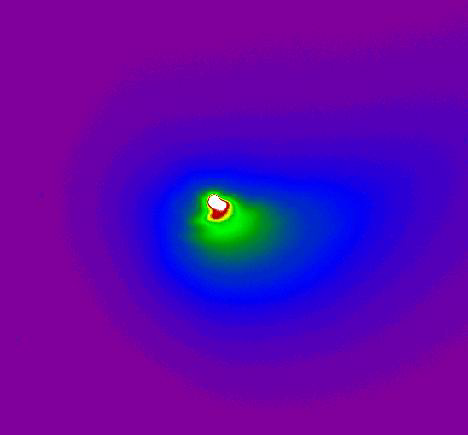
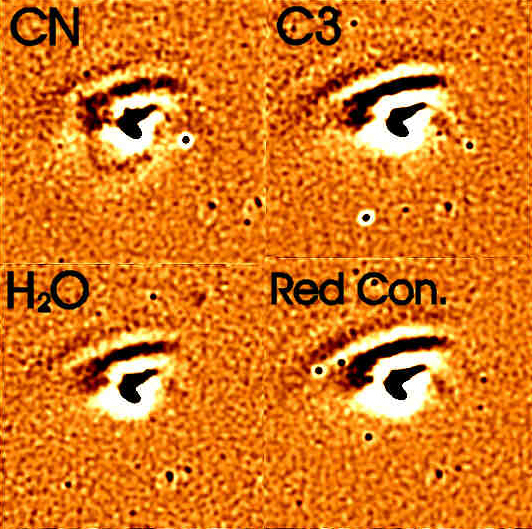
by the European Comet Hale-Bopp Team include the spiral-jet and arc structures
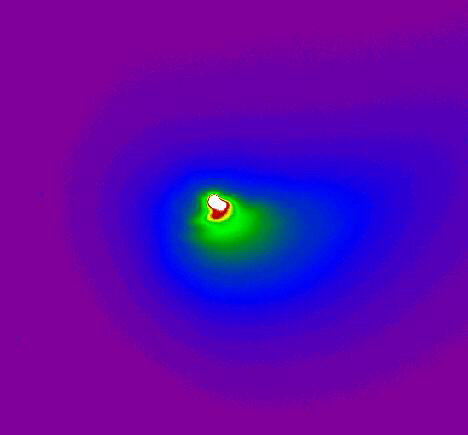
observed with the Jacobus Kapteyn Telescope in the inner coma of the comet.
The astronomers made use of a CN and a blue continuum filter, obtaining
an expansion velocity for CN of 1.3 km/s.
References
| ||||||||||||||||||||||||

| Top | Back |
|