
The international landscape in which ING operates is also changing. First of all, Spain joined the ING as a full partner, contributing to the operating cost and instrument developments of the observatory, in return for a larger fraction of the observing time. Secondly, international collaborations between European observatories are being discussed and will likely become an important feature for the ING. The successful scheme of time sharing between the Italian Telescopio Nazionale Galileo and the WHT is one example of such collaboration. Wider collaborations are being discussed within the OPTICON EU collaboration. Within this framework the competitiveness of the telescopes have to be defined.
ING has identified a number of key areas of instrument development which allow the observatory to continue to offer an attractive and affordable service to its user community. This framework is briefly outlined here.
The current set of instruments on the William Herschel Telescope has been developed over a period of nearly two decades. The WHT supports four workhorse spectroscopic and imaging instruments: the ISIS medium resolution spectrograph, the LIRIS near IR spectrograph, the Prime Focus imaging unit, and the AUTOFIB/WYFFOS multi-object spectrograph. Availability of the LIRIS spectrograph, built at the IAC, has resulted from the new collaboration with Spain. LIRIS is the latest addition to the instrument suit, having started common-user operation in the middle of 2004, and is expected to attract much interest.
Furthermore, the WHT serves as a popular platform for visiting instruments such as the SAURON intergral field spectrograph, the PNS Planetary Nebula Spectrograph, the tripple-beam high-speed camera ULTRACAM, the SCAM super conducting tunnel junction detector, and most recently the CIRPASS fibre-fed IR spectrograph and the extremely high-accuracy polarimeter PLANETPOL. Also in the future it is foreseen that visiting instruments will be a recurrent feature at the observatory
The main areas of development of new common-user instruments and enhancement of existing instruments focus on:

On December 5th 2001 PPARC Council took a number of important decisions on the future of the UK's ground-based astronomy programme. These decisions will have a profound impact on various existing facilities, including those of the ING. PPARC's way forward reflects the reality of the rapidly changing environment of ground-based astronomy, with the deployment of several 8-m class telescopes and the adhesion of the United Kingdom to the European Southern Observatory.
It has been apparent for some time that the annual operating budget for ING would come under pressure, in particular as the UK has to free up funds to contribute towards the annual cost of joining ESO. Over the past year plans have been developed on how ING could be operated at a reduced budget. The decision from PPARC Council is in line with these plans. The key elements of the changes that these plans entail is presented here.
Probably the most important change is presented by the fact that the Instituto de Astrofísica de Canarias will become a full partner in ING as of 2002. An agreement was reached, with strong support from the ING Board and the UK and NL funding agencies, on the terms under which the IAC would join in the operating costs of ING. This agreement significantly alleviates the impact of the budget reductions announced by PPARC and allows ING to remain a strong a vibrant organisation that can deliver quality service to its user community.
The tight collaboration with the IAC is of strategic importance as this institute fulfills a pivotal role in the development of the observatory site, in particular with the construction of the 10-m GRANTECAN and its plans to create a European collaboration for observing facilities in the Northern hemisphere. Moreover, the IAC is developing a new observatory centre at sea level on La Palma, in which the ING will participate.
But nevertheless, the future budget available to ING for the operation of the telescopes will reduce by more than 30%, in spite of the additional contribution of the IAC. The IAC's contribution will commence in 2002, and the Netherlands will leave its annual contribution largely unchanged. This large decrease in the operational budget and the change of balance between the international partners implies a number of important changes, that can be summarised as follows:
1. Balance of obsering time:
The balance of observing time will gradual change over the following
years. The agreed percentage breakdown of observing time will be as follows:
| 2001 | 2002 | 2003 | 2004 | 2005-9 | |
|---|---|---|---|---|---|
| UK | 60.0 | 54.0 | 50.0 | 48.9 | 47.6 |
| NL | 15.0 | 15.0 | 15.9 | 17.0 | 18.3 |
| CAT Spanish additional time | 0.0 | 6.0 | 9.1 | 9.1 | 9.1 |
| CAT Spanish time | 20.0 | 20.0 | 20.0 | 20.0 | 20.0 |
| CCI International time | 5.0 | 5.0 | 5.0 | 5.0 | 5.0 |
2. Service observations:
The existing scheme of service observations that are carried out by
observatory personnel will be discontinued on the JKT from the end of
semester 02A and on the INT from the end of semester 03A.
On the WHT service observation will remain available.
3. Use of the JKT and INT:
The JKT will be taken out of normal service as of September 2003.
Possibly this telescope will continue as a special-purpose telescope
with external funding. But if no additional resources can be found
the JKT will close.
It is the intention to review the longer term future of the INT before
the end of 2004. By that time various other telescopes will be carrying
out imaging surveys and the Liverpool telescope will be well established,
making it timely to review the scientific use of the INT. Until that
time, operation of the INT will have to be carried out at a lower cost.
Cost saving measures envisaged are to operate the INT with only the
Wide Field Camera from some time in 2003, and at the same time fully
withdraw telescope operator support from that telescope.
4. Use of the WHT:
The focus of support and development will shift
fully towards the WHT in order to keep that telescope as attractive
as possible to the community. Although scheduling flexibility and
instrument changes may have to be more strictly limited, the
service delivered will be enhanced through the introduction of
queue observing mode for up to 30% of the time on the WHT. Primarily
queue observing will focus on adaptive optics observations.
5. A common-user IR imager and spectrograph
As part of the agreement with the IAC, the LIRIS IR
imager and spectrograph that is currently being developed at the IAC
will be made available to the general user community for at least 3
years after commissioning and acceptance. Commissioning of LIRIS
is anticipated to take place at the end of 2002. Given the popularity
of ING's IR imager, we expect that this new instrument will attract
much interest from the user community.
The changes mentioned above focus on the impact that the budget reductions will have on the use of the telescopes. Not mentioned here are the complex internal changes and cost saving measures in the way ING operates that will be implemented. It is our intention to minimize the disruption to normal day-to-day operation of the telescopes as much as possible, and ING remain dedicated to deliver the best possible service to our user community.
René Rutten
rgmr@ing.iac.es
Director, ING
21 December 2001
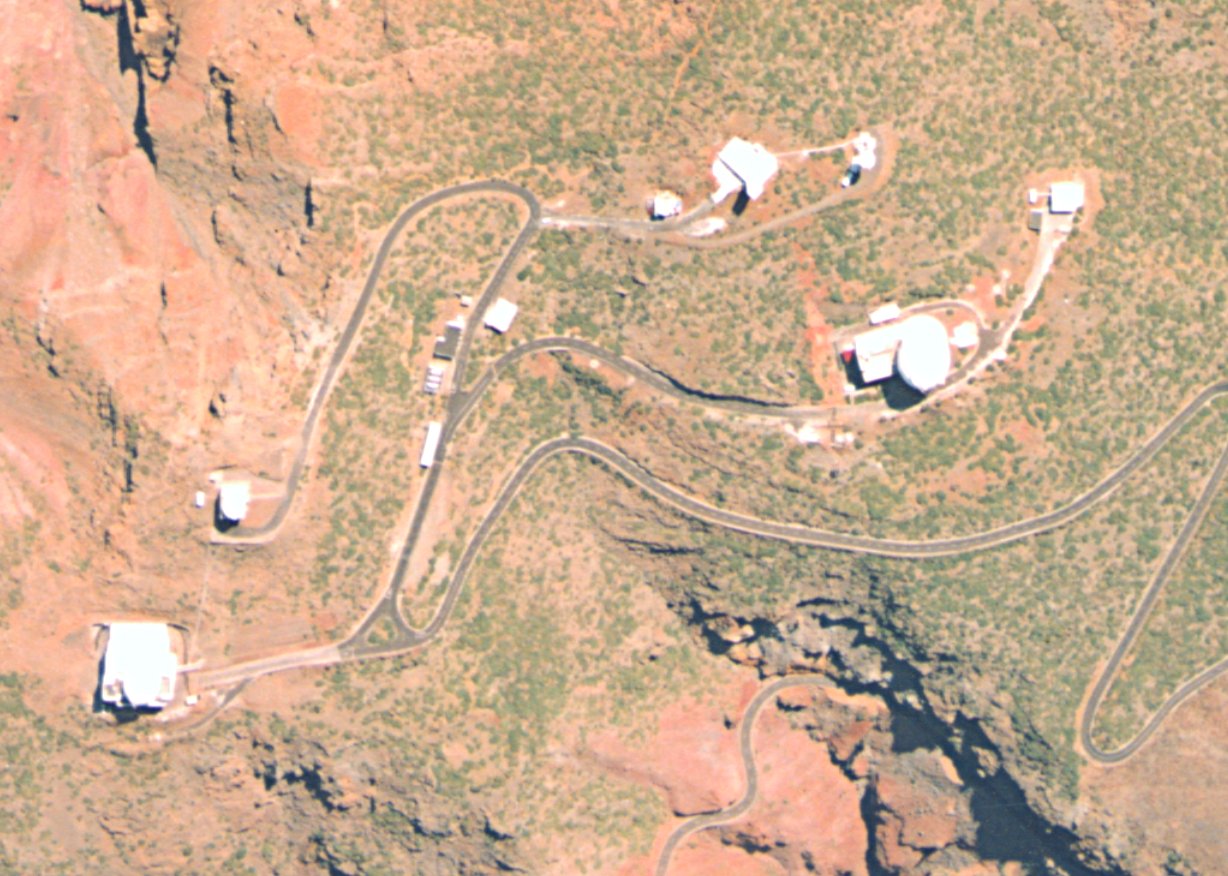
Early in 2001 a second review of ING provided an independent international perspective on current status of the telescopes and the scientific programme of the ING over the next 5-10 years. The Visiting Group, chaired by Prof. K Freeman, considered the likely astronomical prospects for the ING, and the ways in which the ING would continue to meet the strategic needs of the astronomical community. The Visiting Group met with representatives from the astronomical community and visited the observatory where the current state of the telescopes was assessed and progress on ING's ongoing development activities and future instrumentation plans was reviewed.
Membership of the Visiting Group was as follows:
Professor Bruce Carney, University of North Carolina.
Professor Holland Ford, Johns Hopkins University and Space Telescope Science Institute.
Professor Kenneth Freeman (Chairman), Australian National University.
Professor Guy Monnet, European Southern Observatory
The report from the Visiting Group is extremely positive about the way the observatory has developed in recent years, and is supportive of the development strategy for the William Herschel Telescope. The Visiting Group also emphasised the good possibilities that exist to build a wider collaboration on the excellence of the William Herschel Telescope and the La Palma observatory site. The Executive Summary of the report is available, as well as the response from the ING Board.
For reference, reports from the 1998 international review are available
here.
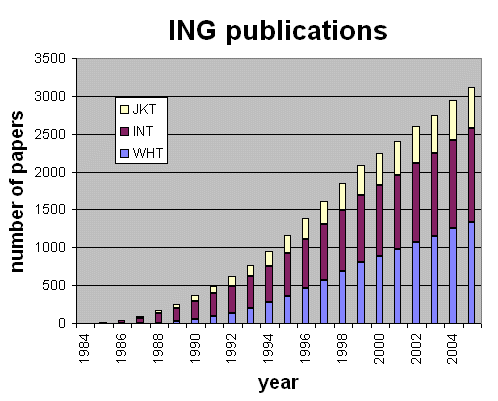
The scientific output from ING remains high, with about 150 to 200 papers published in refereed science journals per year, 80 to 100 per year coming from the WHT alone. This compares extremely well with other UK-funded facilities. The diagram below shows the historic development of the number of papers published on the basis of data from the ING telescopes.
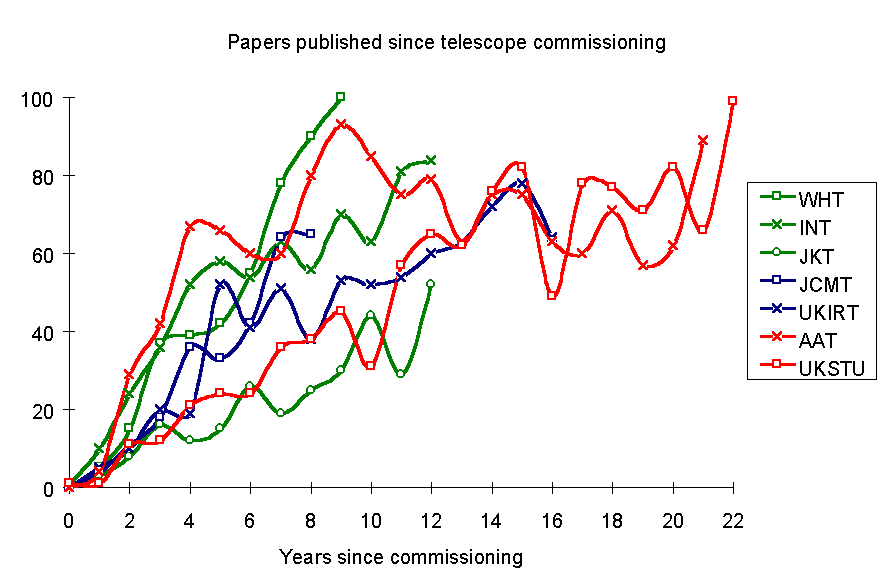
The following graph compares the number of papers published by various facilities as a function of time since original commissioning.
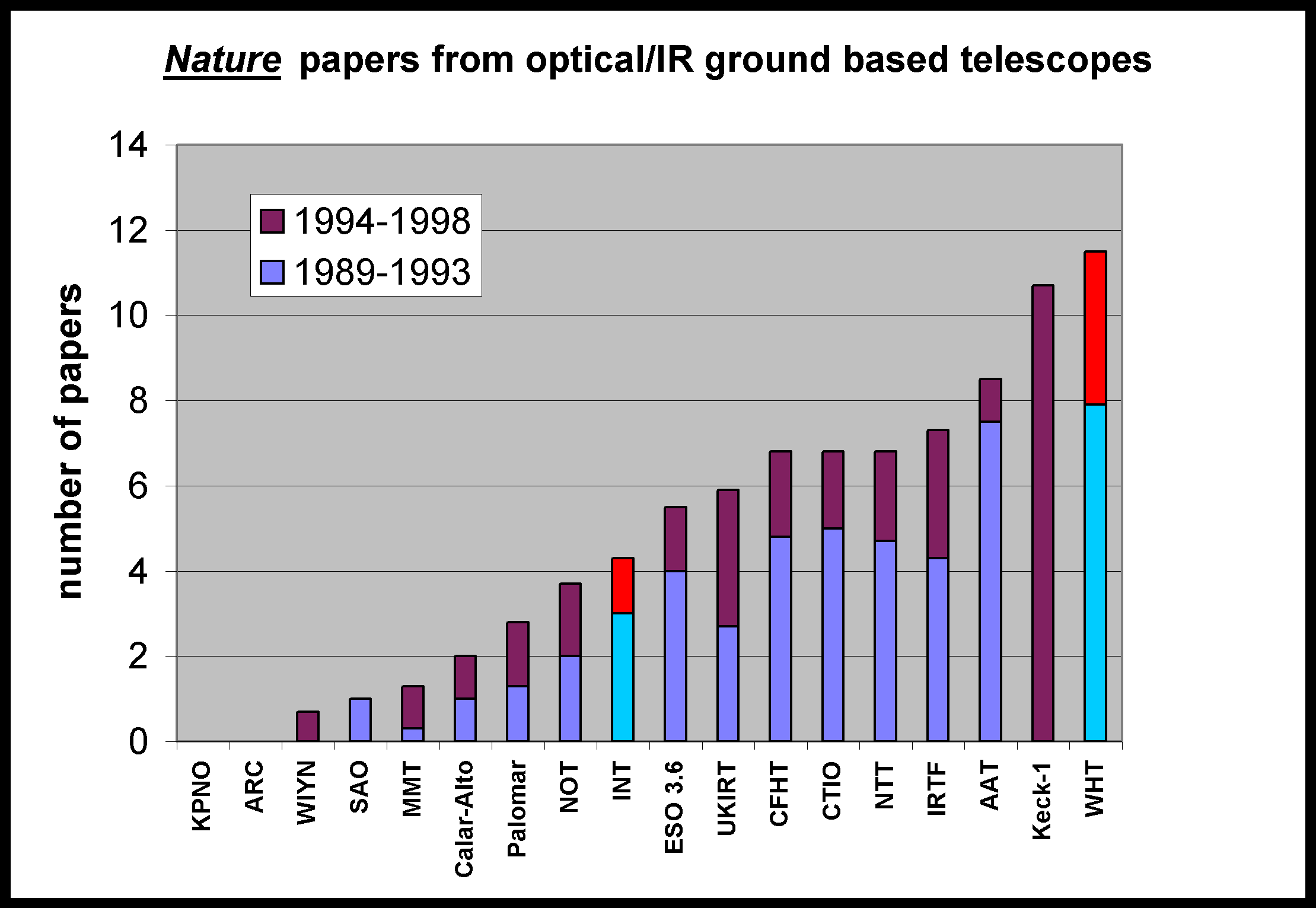
The high productivity of INGs telescopes is also indicated by a study comparing the scientific impact of ground-based optical/IR telescopes, as indicated by the number of papers published in Nature (Benn et al). The advantage of this measure is that it is relatively free from regional bias, and the time delay between discovery and publication is short. The graph below shows the result over the 10 years up till 1998 for the ING telescopes compared with large telescopes elsewhere that have been in operation for a number of years. The sample includes all telescopes with an aperture larger than 3.5-m, plus the Nordic Optical Telescope, the INT and the JKT. (Papers with contributions from more than one telescope are divided equally between those facilities). Clearly the WHT compares very favourably with other telescopes.
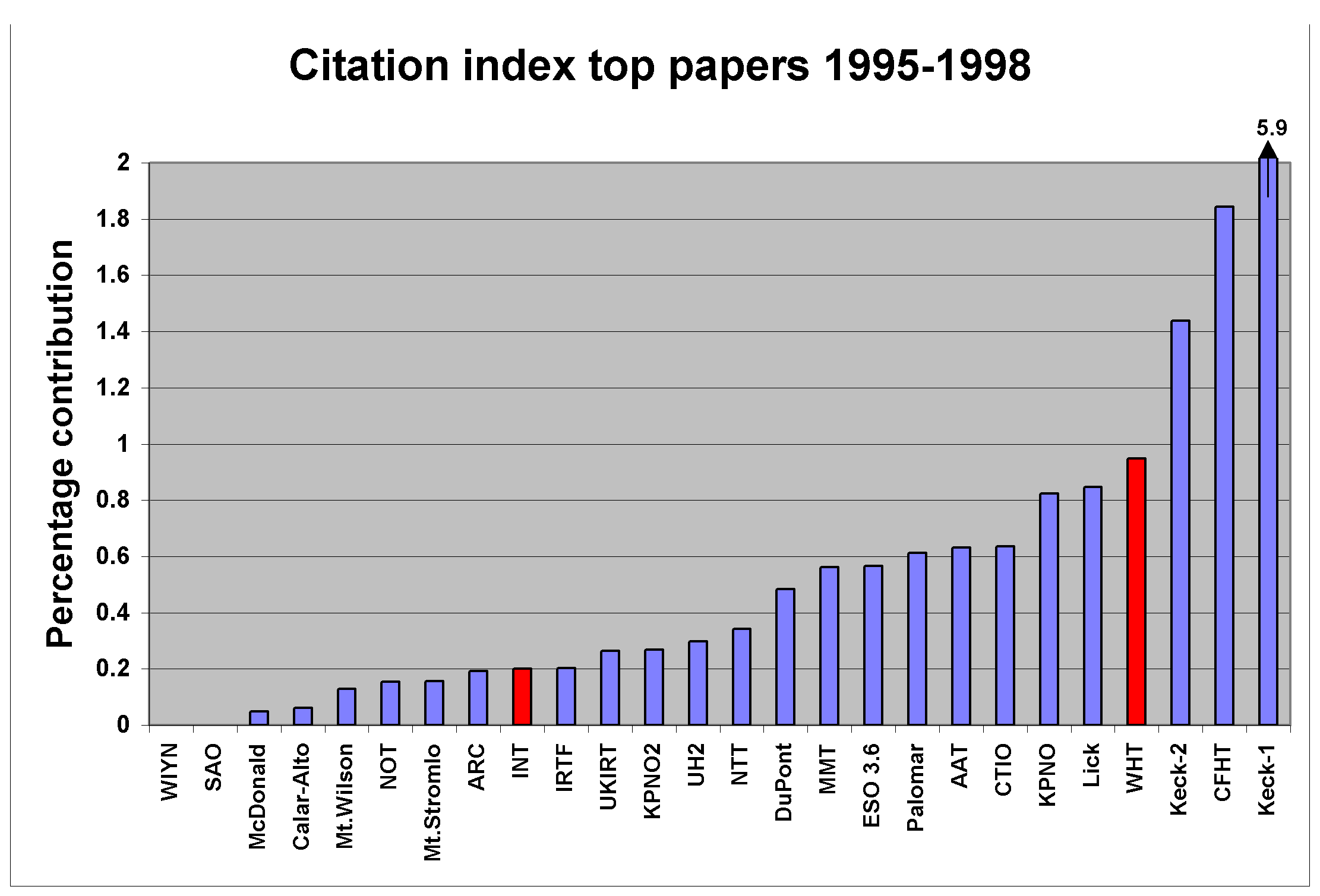
Citation studies demonstrate that the ING telescopes have a substantial impact on world astronomy. The most recent citation study (Benn et al.) shows the fractional contribution to the 125 most cited papers each year of all optical/IR ground-based telescopes. Figures are averaged over a period from 1995 to 1998. This graph shows that the WHT and INT are amongst the telescopes with the highest science impact in their class, the WHT being only rivalled by the Keck Telescopes and CFHT.
The oversubscription rate is another measure of whether the telescopes are fulfilling the needs of the user community. The graph below shows the historic development of the oversubscription statistics for the WHT.

The recent development and performance of ING is summarised in the reports to the ING Board (previously known as the Joint Steering Committee), the international governing body of the ING, chaired by Prof. Janet Drew from the Imperial College London.
The most recent report is dated May 2004, reports can also be seen from October 2003, May 2003, October 2002, May 2002, October 2001, April 2001, October 2000, May 2000, October 1999, June 1999, November 1998, May 1998, October 1997, May 1997, November 1996, May 1996 and October 1995 .
During the May 2000 meeting in Leiden the ING Board agreed the term
for Guaranteed Observing time for instrument builders, which can be
found here.
In April 1998, on invitation from the UK/NL Joint Steering Committee, a Visiting Panel reviewed the operation, competitiveness, effectiveness, and future direction of the ING. The panel consisted of Dr. Russell Cannon (Chair, Anglo-Australian Observatory), Prof. Marijn Franx (University of Leiden), Prof. Ken Freeman (Mount Stromlo and Siding Spring Observatories), Dr. Augustus Oemler (Carnegie Institution of Washington), and Dr. Richard Wade (Rutherford Appleton Laboratories). The summary of the panel's report, and the response from the UK/NL Joint Steering Committee can be seen here.
The report from the Visiting Panel provides a valuable, independent assessment of the current state of ING. It provides an overall favourable impression of ING, and suggests avenues for further improvement and direction in the era of the very large telescopes.
 |
Last Updated: 1 June 2004 René Rutten rgmr@ing.iac.es |